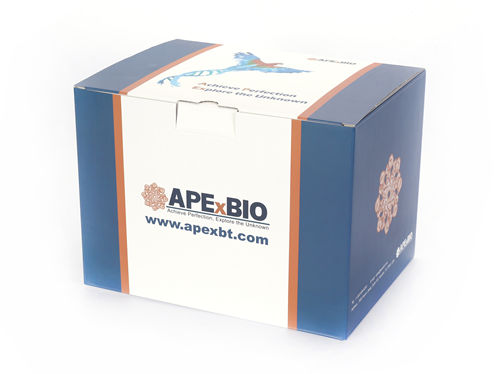
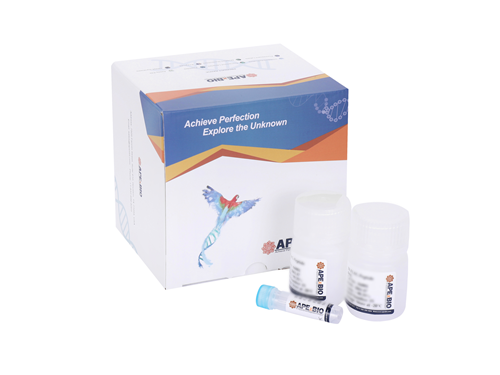
PVDF Membrane, 0.22 μm
Polyvinylidene fluoride (PVDF) membrane is a commonly used solid support in Western blotting. PVDF membrane is highly hydrophobic, mechanically strong, and chemically stable. It is resistant to a variety of organic solvents and tolerates a certain range of acidic and alkaline conditions, making it suitable for protein transfer and subsequent multiple antibody stripping and reprobing experiments. The general protein binding capacity of PVDF membrane is approximately 0.15–0.20 mg/cm² (varies slightly among brands and models), which is generally higher than that of nitrocellulose (NC) membranes, providing higher protein retention and detection sensitivity. PVDF membranes are commonly used in protein transfer, amino acid analysis, glycoprotein staining, and slot blot applications.
Due to its hydrophobic nature, the pores of PVDF membrane in the dry state are filled with air, which prevents aqueous transfer buffers from entering. Therefore, it requires activation with low-surface-tension organic solvents such as methanol or ethanol before use. The alcohol solvent displaces the air in the pores, causing the membrane to change from opaque to translucent, indicating complete wetting. The membrane is then rinsed with water to remove residual alcohol and equilibrated in transfer buffer. During electrophoretic transfer, proteins migrate from the gel onto the PVDF membrane surface under the driving force of an electric field. They are tightly adsorbed onto the membrane through hydrophobic interactions between their hydrophobic regions and the PVDF backbone, as well as other non-covalent forces such as van der Waals forces and hydrogen bonds, thereby achieving efficient transfer and immobilization of proteins from the gel to the membrane support.
The membrane is available in two pore sizes, 0.22 μm and 0.45 μm, which are recommended for small proteins (< 20 kDa) and routine proteins (> 20 kDa), respectively. The 0.22 μm membrane has an internal surface area approximately three times that of the 0.45 μm membrane, offering higher retention and stronger binding for small proteins, though the background may be slightly higher.
High protein binding capacity and high sensitivity
High mechanical strength, suitable for multiple stripping and reprobing
High protein binding capacity and high sensitivity
Low background with high signal-to-noise ratio
Resistant to most organic solvents, acids, and weak bases
High batch-to-batch consistency and stability
Compatible with chemiluminescence, colorimetric, and isotopic detection; not recommended for fluorescence
Suitable for Western, Southern, and Northern blotting
Available in multiple pore sizes: 0.45 μm and 0.22 μm
Requires pre-treatment in 50% (v/v) or higher concentration of alcohol solution
Q: Which membrane should I choose for Western Blot, NC or PVDF?
A: It depends on your experimental needs. NC membrane is suitable for routine single-use detection, offering easy operation (no methanol activation required), clean background, and lower cost, making it ideal for most routine Western Blot applications. PVDF membrane is recommended when higher sensitivity is required, for detection of low-abundance proteins, hydrophobic proteins (such as membrane proteins), and for experiments requiring multiple antibody stripping and reprobing. PVDF membrane has a higher protein binding capacity (150–160 μg/cm² vs. 80–100 μg/cm² for NC membrane) and approximately 6 times stronger binding affinity, but it is more expensive and requires methanol activation.
Q: Can NC membrane be used for stripping and reprobing?
A: Not recommended. NC membrane has low mechanical strength and poor chemical resistance. The strong denaturants (e.g., SDS, β-mercaptoethanol) in stripping buffer may cause the membrane to crack or result in substantial protein loss. Even if stripping is successful, signal attenuation after multiple stripping steps is severe. For multiple stripping and reprobing experiments, PVDF membrane is strongly recommended.
Q: What is the difference between 0.45 μm and 0.2 μm membranes?
A: The main differences are pore size and the applicable protein molecular weight range. The 0.45 μm pore size is the standard choice and is suitable for most routine Western Blot applications, recommended for proteins > 20 kDa. The 0.2 μm pore size has a smaller pore diameter, with an internal surface area approximately three times that of the 0.45 μm membrane, offering higher retention and stronger binding for small proteins. It is recommended for detection of proteins < 20 kDa. Additionally, the 0.2 μm membrane significantly outperforms the 0.45 μm membrane in retaining small peptides and low-abundance small proteins.
Q: Can 0.45 μm membranes be used for nucleic acid detection (Southern/Northern blot)?
A: Yes. NC membrane is a classic and commonly used support for Southern and Northern blotting, and 0.45 μm pore size is generally sufficient for most nucleic acid detection needs. PVDF membrane can also be used for nucleic acid transfer and detection; however, due to its hydrophobic nature, it requires pre-activation with organic solvents such as methanol, followed by equilibration in water and transfer buffer, making the procedure more cumbersome than with NC membrane. Therefore, NC membrane is more commonly used in nucleic acid detection. For routine-length DNA/RNA probes and fragments, 0.45 μm pore size provides adequate retention, and 0.2 μm is generally unnecessary. The 0.2 μm pore size is only recommended when detecting very small nucleic acid fragments (e.g., < 200 bp) to improve retention efficiency.
Q: Why is there no signal or weak signal after transfer?
A: The most likely cause is inefficient protein transfer. Check whether the current/voltage settings are correct, consider extending the transfer time, and ensure good contact between the gel and membrane with no trapped air bubbles. Additionally, confirm that the transfer buffer is correctly prepared (e.g., methanol concentration not too high) and that the target protein is not too large in molecular weight (large proteins require extended transfer time).
Q: How can I resolve high background after transfer?
A: High background is usually caused by insufficient blocking or excessive antibody concentration. It is recommended to extend blocking time (1 hour at room temperature or overnight at 4°C), reduce the working concentration of primary or secondary antibodies, and increase washing frequency (e.g., increase TBST washes from 3 to 5 times, extending each wash to 10 minutes). Ensure consistency between blocking buffer and antibody dilution buffer (e.g., both using 5% non-fat milk or BSA).
Q: What causes bubble-like spots on the membrane?
A: This is caused by trapped air bubbles between layers when assembling the transfer sandwich. It is recommended to gently roll over each layer with a glass rod or roller when assembling the "sandwich" to thoroughly expel all bubbles, paying special attention to the interface between the gel and membrane.
Q: What causes white spots on the membrane after activation?
A: This indicates incomplete methanol wetting, leaving dry areas on the membrane. These dry regions cannot be wetted by transfer buffer, resulting in failure of protein binding and localized transfer failure. Ensure the entire membrane is fully immersed in sufficient methanol and gently agitated until the membrane changes from opaque to uniformly translucent before proceeding to the next step.
Q: What should I do if the membrane dries out and becomes difficult to re-wet?
A: PVDF membrane becomes hydrophobic again after complete drying and is difficult to re-wet with aqueous buffers. The membrane can be reprocessed following standard activation steps (methanol wetting → water washing → buffer equilibration), but some bound protein may be lost and signal intensity may be reduced. It is recommended to keep the membrane wet at all times after transfer, or to cut and activate the membrane just before use.
Q: How can I avoid fingerprint marks on PVDF membrane?
A: This is caused by grease or protein contamination from fingers. PVDF membrane has extremely high protein binding capacity. Grease from fingers will block protein binding and antibody incubation, resulting in fingerprint-shaped background during development. Always wear clean gloves throughout the procedure and handle the membrane by its edges with forceps, avoiding direct contact with the protein-binding area. Once contaminated, it cannot be repaired and the transfer must be repeated.
Q: How should PVDF and NC membranes be blocked after transfer? Are there differences?
A: The blocking principles for both membranes are essentially the same, but PVDF membrane must remain wet at all times before blocking. Common blocking buffers are TBST/PBST containing 5% non-fat milk or 3% BSA, with blocking performed for 1 hour at room temperature or overnight at 4°C. In general: ① BSA is recommended for blocking when detecting phosphorylated proteins (as milk contains phosphatases and casein, which may interfere with phosphoprotein detection); ② BSA is also recommended for detection of biotin-labeled proteins (as milk contains biotin); ③ Non-fat milk is cost-effective and suitable for most routine detections.
Q: Can PVDF membrane be directly stained with Ponceau S to verify transfer efficiency after transfer?
A: Yes. Ponceau S staining is a simple and rapid reversible staining method commonly used to verify successful protein transfer to the membrane. Procedure: immerse the membrane in Ponceau S staining solution and stain for 1–5 minutes at room temperature until red bands become clearly visible, then rinse/destain with deionized water or PBST. Notes: ① Ponceau S staining does not affect subsequent antibody incubation; ② After staining, wash thoroughly with TBST/PBST until the background is clear before blocking; ③ PVDF membrane can be completely destained by multiple rinses with deionized water.
Q: Can NC membrane be stripped and reprobed like PVDF membrane?
A: Not recommended. NC membrane has low mechanical strength and poor chemical resistance. The strong denaturants (e.g., SDS, β-mercaptoethanol) in stripping buffer may cause the membrane to crack or result in substantial protein loss. Even if stripping is successful, signal attenuation after multiple stripping steps is severe. For multiple stripping and reprobing experiments, PVDF membrane is strongly recommended.