


Psychosine
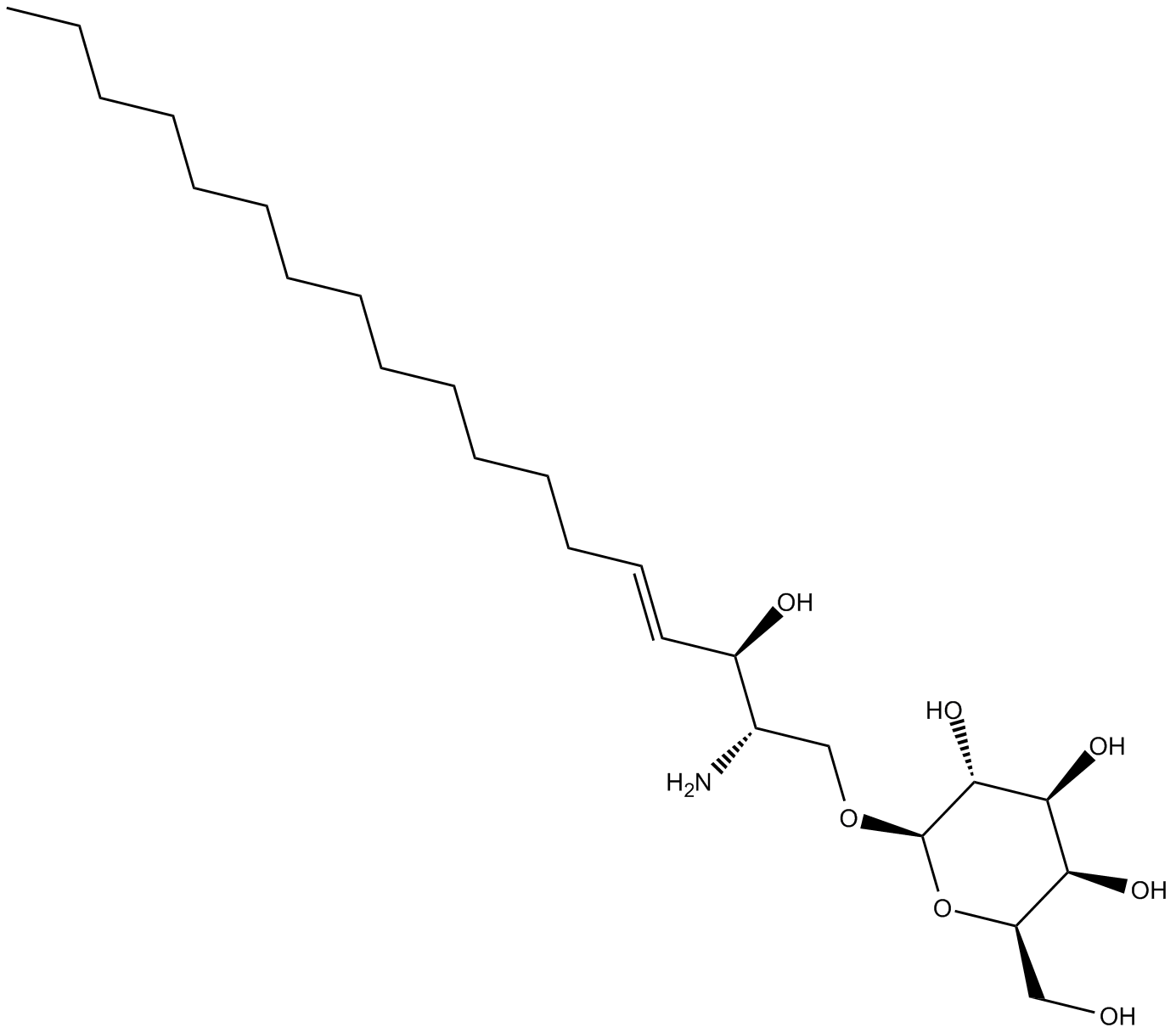
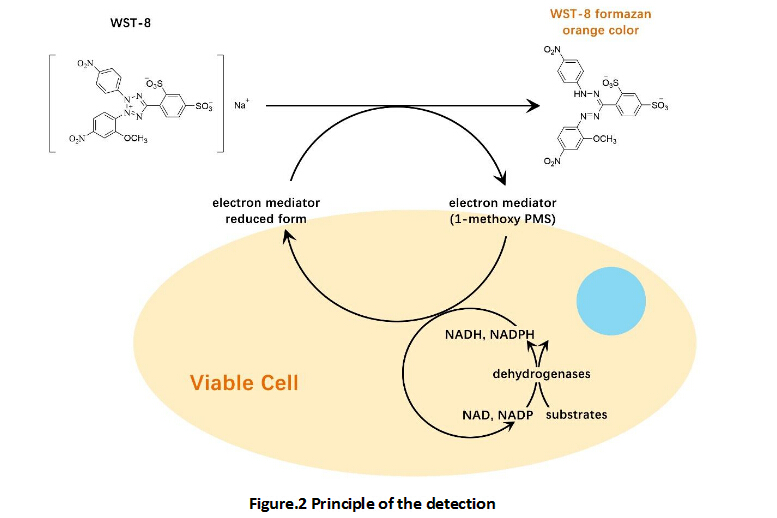
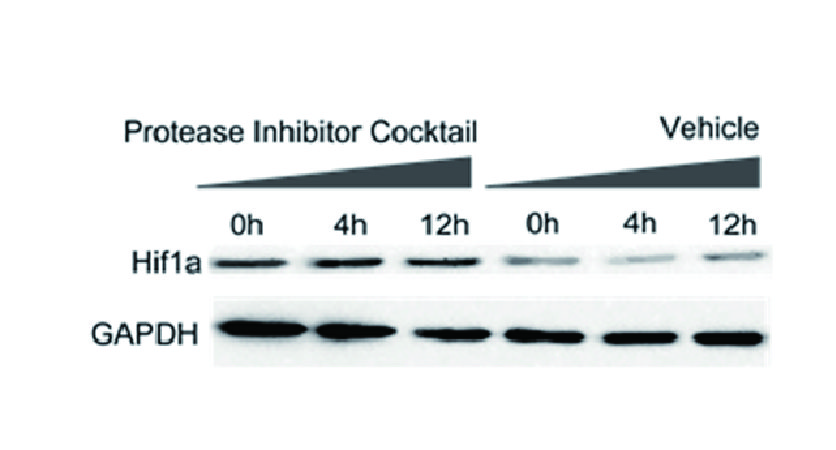
Psychosine (CAS No.: 2238-90-6) is a bioactive sphingolipid, also known as galactosylsphingosine, that serves as a natural substrate of galactocerebrosidase and is extensively studied in the context of lysosomal storage disorders, particularly Krabbe disease. As a pathogenic metabolite that accumulates due to enzymatic deficiency, psychosine is widely used as a biochemical marker and mechanistic probe to investigate disease-associated metabolic dysregulation and neurodegeneration. Functionally, it exhibits pronounced cytotoxicity across multiple cell types, including oligodendrocytes and astrocytes, where it induces cell death at least in part through apoptosis and mitochondrial dysfunction, as well as promotes inflammatory responses such as enhanced cytokine production under stimulatory conditions. Psychosine is also known to modulate intracellular signaling pathways, notably acting as an inhibitor of protein kinase C by interfering with its membrane translocation, and suppressing transcriptional activity mediated by nuclear receptors such as PPARα. In vitro, its biological effects are typically observed in the nanomolar to low micromolar range, depending on cell type and assay conditions. Consequently, psychosine is broadly applied in cellular and tissue-based models to study demyelination, neurotoxicity, lipid metabolism, and signaling pathway modulation, as well as in drug discovery efforts targeting sphingolipid-related pathways, with experimental concentrations tailored to specific research objectives.
| Physical Appearance | A solid |
| Storage | -20°C |
| M.Wt | 461.63 |
| Cas No. | 2238-90-6 |
| Formula | C24H47NO7 |
| Synonyms | Galactosylsphingosine; Psychosine |
| Solubility | ≤1mg/ml in ethanol |
| Chemical Name | (2R,3R,4S,5R,6R)-2-(((2S,3R,E)-2-amino-3-hydroxyoctadec-4-en-1-yl)oxy)-6-(hydroxymethyl)tetrahydro-2H-pyran-3,4,5-triol |
| Canonical SMILES | O[C@@H]1[C@@H](O)[C@@H](O)[C@@H](CO)O[C@H]1OC[C@@H]([C@H](O)/C=C/CCCCCCCCCCCCC)N |
| Shipping Condition | Small Molecules with Blue Ice, Modified Nucleotides with Dry Ice. |
| General tips | We do not recommend long-term storage for the solution, please use it up soon. |