


Propylparaben
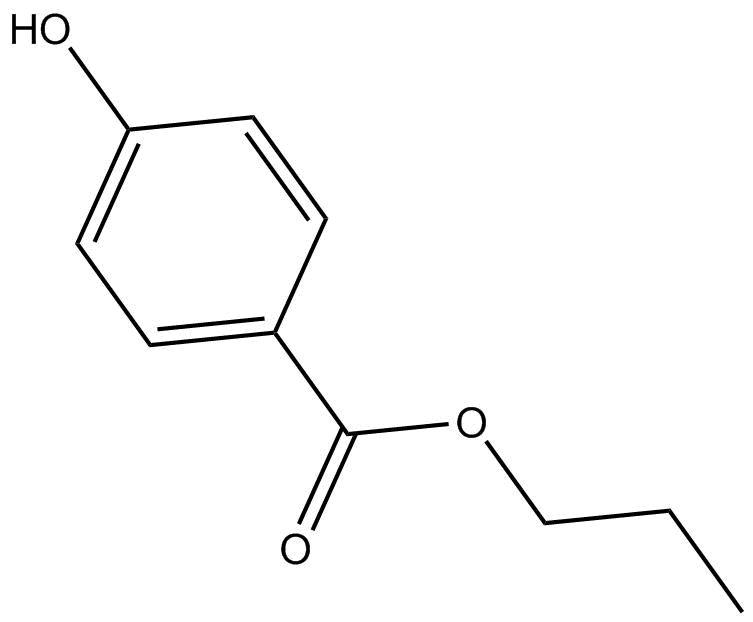
Propylparaben (CAS No.: 94-13-3) is a widely used paraben-class antimicrobial preservative of natural and synthetic origin that is produced by certain plants and microorganisms and is extensively applied in cosmetic, pharmaceutical, and food formulations. In biomedical research, it is primarily utilized as a model compound for investigating endocrine disruption, reproductive toxicology, and steroidogenesis-related mechanisms. Propylparaben exhibits biological activity through interactions with estrogen receptors and modulation of key regulatory pathways governing cell cycle progression, apoptosis, and steroidogenic enzyme expression, leading to altered follicular development and impaired hormonal homeostasis. Experimental studies indicate that exposure to propylparaben can disrupt ovarian follicle growth and reduce sperm count, motility, and circulating testosterone levels in animal models, supporting its classification as a compound of interest in studies of reproductive function and endocrine signaling. In vitro, it demonstrates antimicrobial activity against select bacterial strains at low to moderate micromolar concentrations, while its receptor-binding and endocrine-modulating effects are typically observed across micromolar exposure ranges depending on the cellular context. Propylparaben is therefore commonly employed in cell-based assays and in vivo models to probe hormone-regulated pathways, assess reproductive toxicity, and evaluate the impact of environmental preservatives on endocrine systems, with experimental concentrations or doses varying according to specific study designs and research objectives.
| Physical Appearance | A solid |
| Storage | -20°C |
| M.Wt | 180.2 |
| Cas No. | 94-13-3 |
| Formula | C10H12O3 |
| Synonyms | NSC 8511; NSC 23515; Propyl 4-hydoxybenzoate; Propyl p -hydoxybenzoate; Propyl para -hydoxybenzoate |
| Solubility | insoluble in H2O; ≥34.3 mg/mL in DMSO; ≥39 mg/mL in EtOH |
| Chemical Name | propyl 4-hydroxybenzoate |
| Canonical SMILES | OC1=CC=C(C(OCCC)=O)C=C1 |
| Shipping Condition | Small Molecules with Blue Ice, Modified Nucleotides with Dry Ice. |
| General tips | We do not recommend long-term storage for the solution, please use it up soon. |