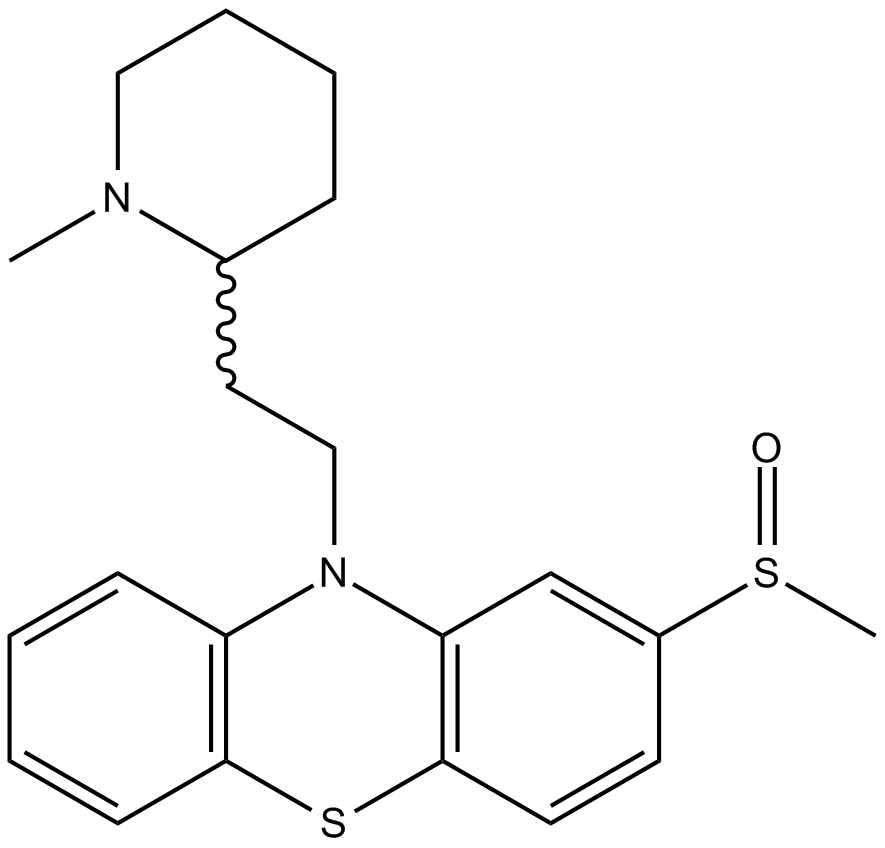
Prochlorperazine
Prochlorperazine (CAS No. 58-38-8) is a phenothiazine derivative. Its core targets include dopamine D₂ receptors (mediating primary antagonistic effects), histamine H₁/H₂ receptors, muscarinic cholinergic receptors, and α₁/α₂ adrenergic receptors. Meanwhile, it exerts antiviral activity by blocking clathrin-mediated endocytosis and altering lipid raft membrane fluidity, and can also regulate the microphthalmia-associated transcription factor (MITF) and tyrosinase in melanoma cells.
Its anticancer activity is characterized by the EC₅₀ value: the EC₅₀ against human melanoma COLO829 cells is 3.76±0.14 μM, and against C32 cells is 2.90±0.17 μM. Commonly used application concentrations: 1–10 μM for in vitro anticancer and cell function experiments (1–4 μM for wound healing assays).
The clinically effective therapeutic concentration corresponds to multi-scenario dosages: for the treatment of nausea, vomiting or migraine, 5–10 mg per dose via oral administration (2–3 times daily); for the prevention of acute mountain sickness, 10 mg per dose orally (3 times daily for 24 consecutive hours); for the management of refractory emergency symptoms, 5–10 mg per dose via intravenous injection.
Its biological activities are manifested as antiemetic effects, migraine relief, inhibition of melanoma cell proliferation and migration (by reducing MITF and tyrosinase levels), and suppression of the invasion of viruses such as HCV and dengue virus. For safety concerns, attention should be paid to extrapyramidal reactions (e.g., dystonia) and the rare neuroleptic malignant syndrome. It is contraindicated in patients with severe cardiovascular diseases and those with hypersensitivity to the drug.
References:
[1] Coralic Z, Kim AS, Vinson DR. Prochlorperazine-Induced Hemidystonia Mimicking Acute Stroke. West J Emerg Med. 2015 Jul;16(4):572-4. doi: 10.5811/westjem.2015.4.26003. Epub 2015 Jul 2. PMID: 26265971; PMCID: PMC4530917.
[2] Otręba M, Pajor M, Warncke JD. Antimelanoma activity of perphenazine and prochlorperazine in human COLO829 and C32 cell lines. Naunyn Schmiedebergs Arch Pharmacol. 2019 Oct;392(10):1257-1264. doi: 10.1007/s00210-019-01668-5. Epub 2019 Jun 6. PMID: 31172223.
[3] Kow CS, Hasan SS. Prochlorperazine for nausea and vomiting accompanied COVID-19. J Gastroenterol Hepatol. 2021 Feb;36(2):524-525. doi: 10.1111/jgh.15301. Epub 2020 Nov 3. PMID: 33068035.
[4] Tee ZJ. Prochlorperazine-induced neuroleptic malignant syndrome. Am J Emerg Med. 2024 Jul;81:160.e1-160.e2. doi: 10.1016/j.ajem.2024.03.032. Epub 2024 Apr 2. PMID: 38575461.
[5] Small E, Goldberg E, Musi M, Strickland B, Paterson R, Phillips C, Keyes LE. Prochlorperazine maleate versus placebo for the prevention of acute mountain sickness: study protocol for a randomized controlled trial. Trials. 2024 Nov 21;25(1):785. doi: 10.1186/s13063-024-08592-x. PMID: 39574186; PMCID: PMC11580417.
| Physical Appearance | A solid |
| Storage | Store at -20°C |
| M.Wt | 373.94 |
| Cas No. | 58-38-8 |
| Formula | C20H24ClN3S |
| Synonyms | Prochlorperazin; Prochloroperazine |
| Solubility | insoluble in H2O; ≥16.5 mg/mL in DMSO; ≥58.5 mg/mL in EtOH |
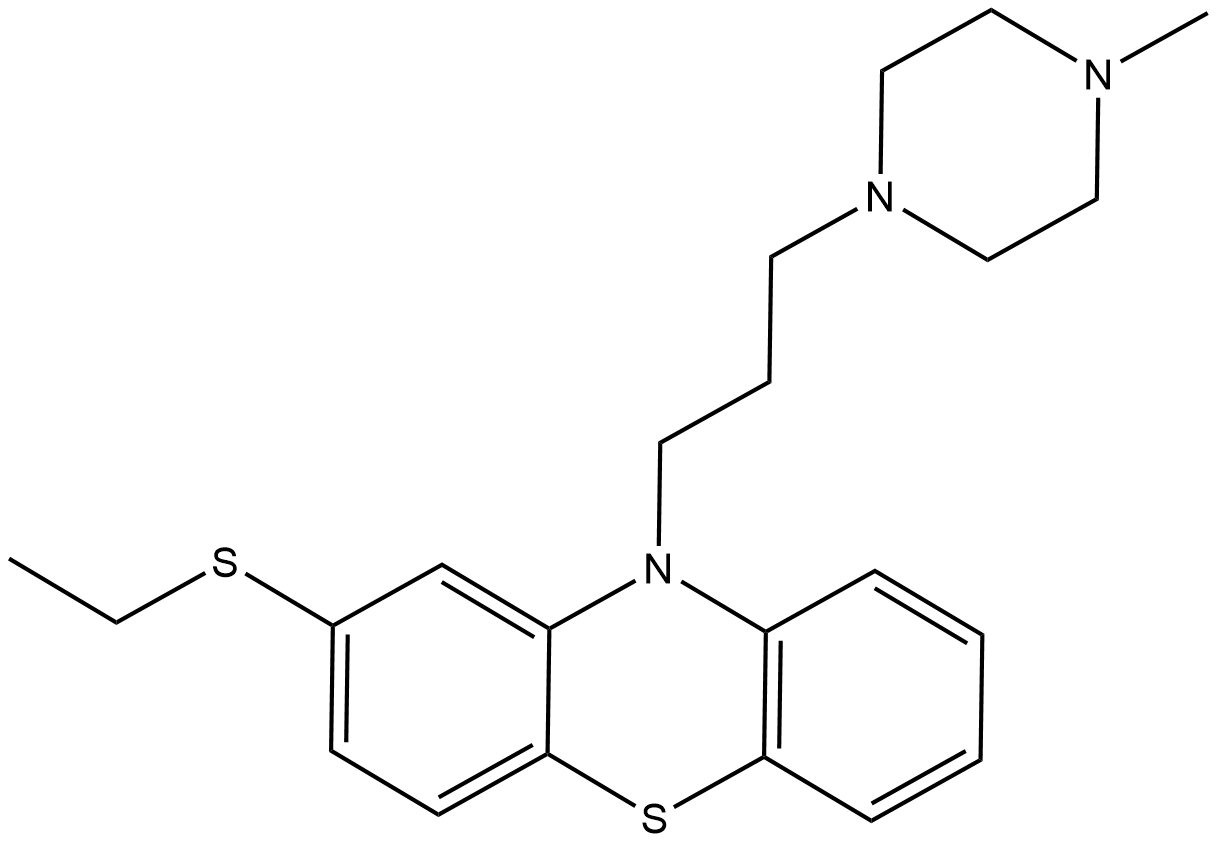
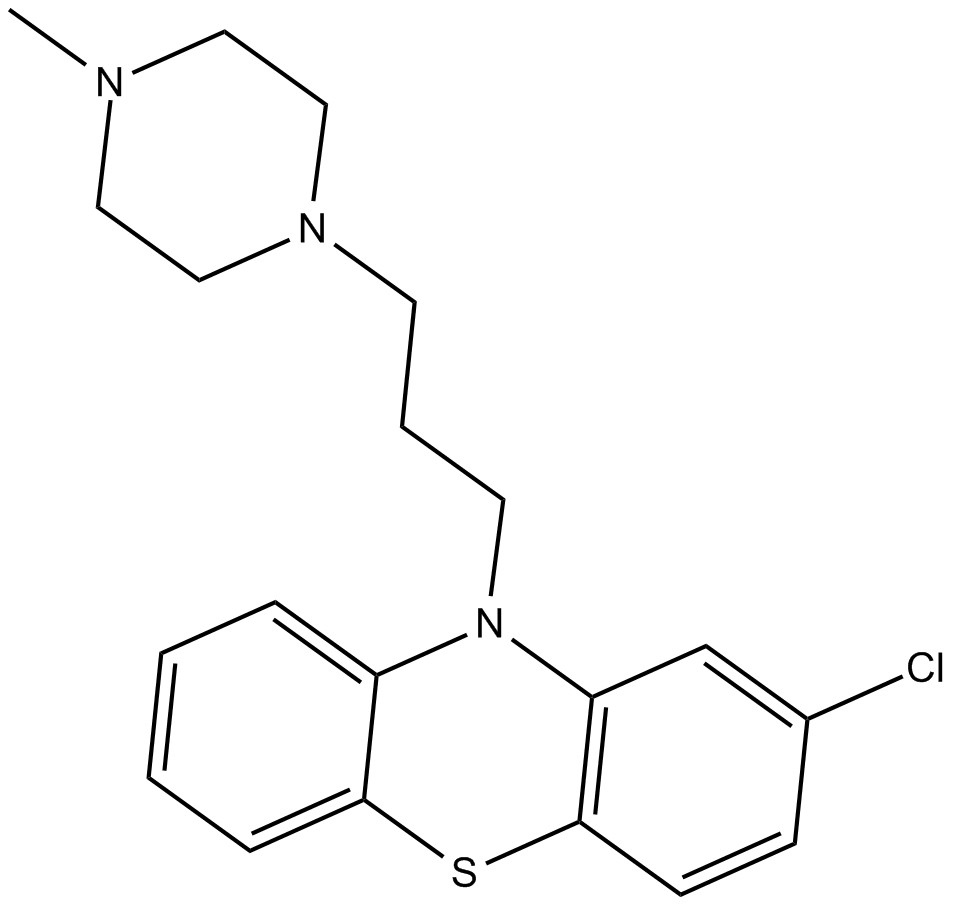
| Chemical Name | 2-chloro-10-(3-(4-methylpiperazin-1-yl)propyl)-10H-phenothiazine |
| Canonical SMILES | CN(CC1)CCN1CCCN2C3=CC=CC=C3SC4=C2C=C(Cl)C=C4 |
| Shipping Condition | Small Molecules with Blue Ice, Modified Nucleotides with Dry Ice. |
| General tips | We do not recommend long-term storage for the solution, please use it up soon. |
| Cell experiment:[1] | |
|
Cell lines |
BT474 cells |
|
Reaction Conditions |
5 μM prochlorperazine for 2 or 5 d incubation |
|
Applications |
In BT474 cells that over-express HER2 and have previously been shown to be tamoxifen resistant, treatment with 5 μM of prochlorperazine in the presence or absence of 4-hydroxytamoxifen significantly inhibited cell proliferation and reduced cyclin E2 mRNA levels. Prochlorperazine has the potential to inhibit proliferation of tamoxifen-resistant breast tumors. |
| Animal experiment:[2] | |
|
Animal models |
Beagle dogs, 8 ~ 16 kg |
|
Dosage form |
0.34 mg/kg Administered subcutaneously |
|
Applications |
Prochlorperazine inhibited emesis induced by apomorphine in dogs, with an ED50 value of 0.34 mg/kg. |
|
Note |
The technical data provided above is for reference only. |
|
References: 1. Huang L, Zhao S, Frasor JM, et al. An integrated bioinformatics approach identifies elevated cyclin E2 expression and E2F activity as distinct features of tamoxifen resistant breast tumors. PLoS One, 2011, 6(7): e22274. 2. Niemegeers CJ. Antiemetic specificity of dopamine antagonists. Psychopharmacology (Berl), 1982, 78(3): 210-213. |
|
Quality Control & MSDS
- View current batch:
Chemical structure