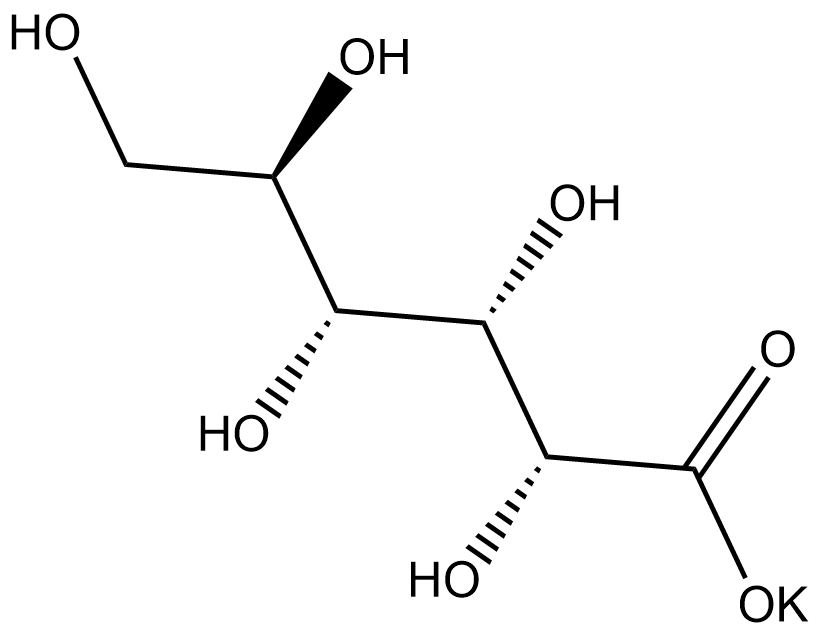
Potassium D-gluconate
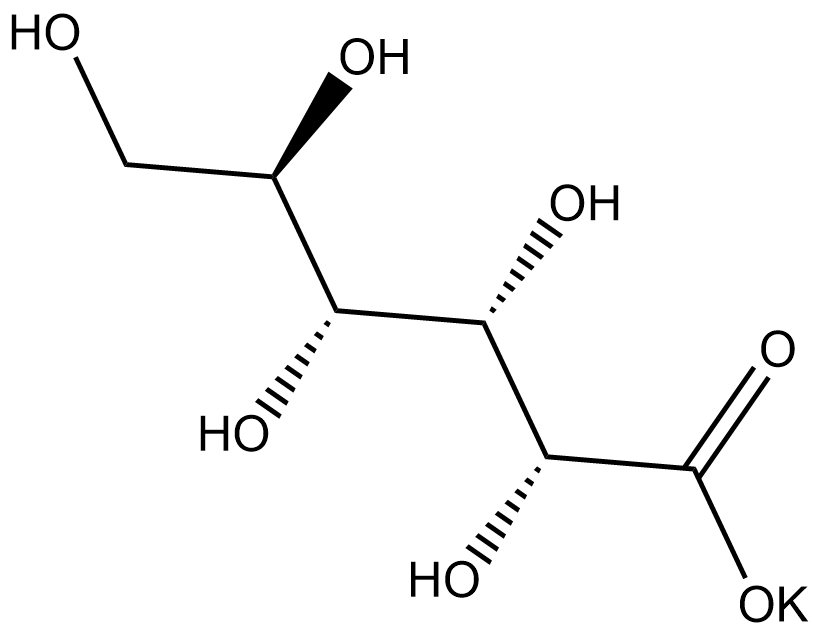





Potassium D-gluconate (CAS No.: 299-27-4) is a potassium salt of D gluconic acid, generally classified in research settings as an oxidized carbohydrate derived carboxylate and functional chelating excipient, and it is commonly positioned within biochemical reagent and formulation science categories for life sciences workflows focused on ionic homeostasis, metal ion coordination, and antimicrobial preservation effects in experimental systems; in biomedical and drug discovery research, its biological origin is linked to gluconate generated by glucose oxidation pathways in microbial or enzymatic contexts, while its functional background is primarily associated with sequestration of divalent and trivalent metal ions that can alter enzyme cofactor availability, membrane stability, oxidative microenvironments, and culture condition robustness, with bactericidal or growth suppressive behavior generally interpreted as context dependent and mediated through physicochemical disruption rather than high affinity engagement of a single canonical protein target, and because compound specific mechanistic mapping is limited, it is more rigorously described as acting through metal chelation driven modulation of metalloprotein function and medium composition effects rather than a defined receptor pathway, with downstream influence potentially intersecting redox sensitive and stress responsive signaling networks in model organisms and cultured cells; direct potency annotations such as IC50, EC50, or MIC are not consistently established as standardized values for this molecule across assay platforms, and reported activity in analogous chelating and preservative paradigms is typically observed across broad concentration windows in the micromolar to millimolar range depending on matrix composition, microbial burden, and ionic competition, so quantitative interpretation should be assay specific; accordingly, typical research applications include use as a control or conditioning component in in vitro cell and microbiology studies, buffer and media optimization, stability and compatibility screening in early formulation studies, and exploratory in vivo preclinical model support where justified by protocol design, and the concentrations or doses used in experiments typically depend on specific experimental designs and research objectives.
| Storage | -20°C for 3 years |
| M.Wt | 234.25 |
| Cas No. | 299-27-4 |
| Formula | C6H11KO7 |
| Chemical Name | potassium (2R,3S,4R,5R)-2,3,4,5,6-pentahydroxyhexanoate |
| Canonical SMILES | O[C@@H](C(O[K])=O)[C@@H](O)[C@H](O)[C@H](O)CO |
| Shipping Condition | Small Molecules with Blue Ice, Modified Nucleotides with Dry Ice. |
| General tips | We do not recommend long-term storage for the solution, please use it up soon. |
Quality Control & MSDS
- View current batch:
Chemical structure