


Poloxamer 407 (F127)
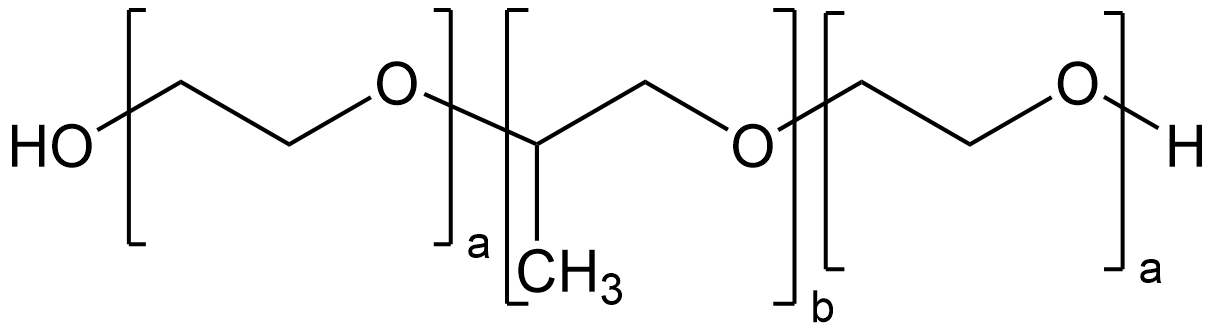
Poloxamer 407 (CAS No. 9003‑11‑6) is a nonionic triblock surfactant with a polyethylene glycol–polypropylene glycol–polyethylene glycol (PEG‑PPG‑PEG) structure, whose biological effects are mainly mediated by its physicochemical properties. As an amphiphilic polymer, it can interact nonspecifically with lipid membranes to dissolve lipid components and solubilize hydrophobic substances. At appropriate concentrations, its aqueous solutions exhibit temperature‑sensitive, reversible gelation, forming the basis for its use in biomaterial construction and in situ drug‑delivery systems.
In animal studies, high‑dose Poloxamer 407 can interfere with lipid metabolism through a physical‑blockade mechanism: a single 1 g/kg dose in mice blocks hepatic lipoprotein uptake pathways and inhibits plasma lipoprotein clearance, and is used to induce an acute hyperlipidemia model. This effect is a nonspecific physical blockade rather than targeted regulation of a particular endogenous metabolic pathway, and the modeling dose is far higher than human exposure levels from daily use or pharmaceutical excipients, so there is no clinically relevant risk of disturbing lipid metabolism at therapeutic concentrations.
In cell‑based and imaging experiments, Poloxamer 407 is commonly used at low concentrations (≤1% w/v) together with hydrophobic fluorescent dyes, acting as a solubilizing adjuvant to help DiI, DiO, Nile Red and similar dyes disperse uniformly in aqueous media, reducing aggregation and precipitation, improving cellular uptake and staining uniformity, and reducing nonspecific membrane damage caused by organic solvents. In 3D cell culture and bioprinting, a 30% (w/v) solution forms a gel at room temperature and liquefies at 4 °C, serving as a sacrificial support and dye carrier to achieve homogeneous embedding and visualization of dyes within hydrogel structures. Experimental designs should include control groups without Poloxamer 407 and avoid high concentrations (>2% w/v), which may alter membrane fluidity or cause cytotoxicity.
| Storage | Store at -20°C |
| M.Wt | 12600(Average) |
| Cas No. | 9003-11-6 |
| Synonyms | Pluronic F-127; Ethylene oxide-propylene oxide copolymer;Poloxalene; Kolliphor P 407; PEG-PPG-PEG, 12600 (Average Mn) |
| Shipping Condition | Small Molecules with Blue Ice, Modified Nucleotides with Dry Ice. |
| General tips | We do not recommend long-term storage for the solution, please use it up soon. |