


PIPES
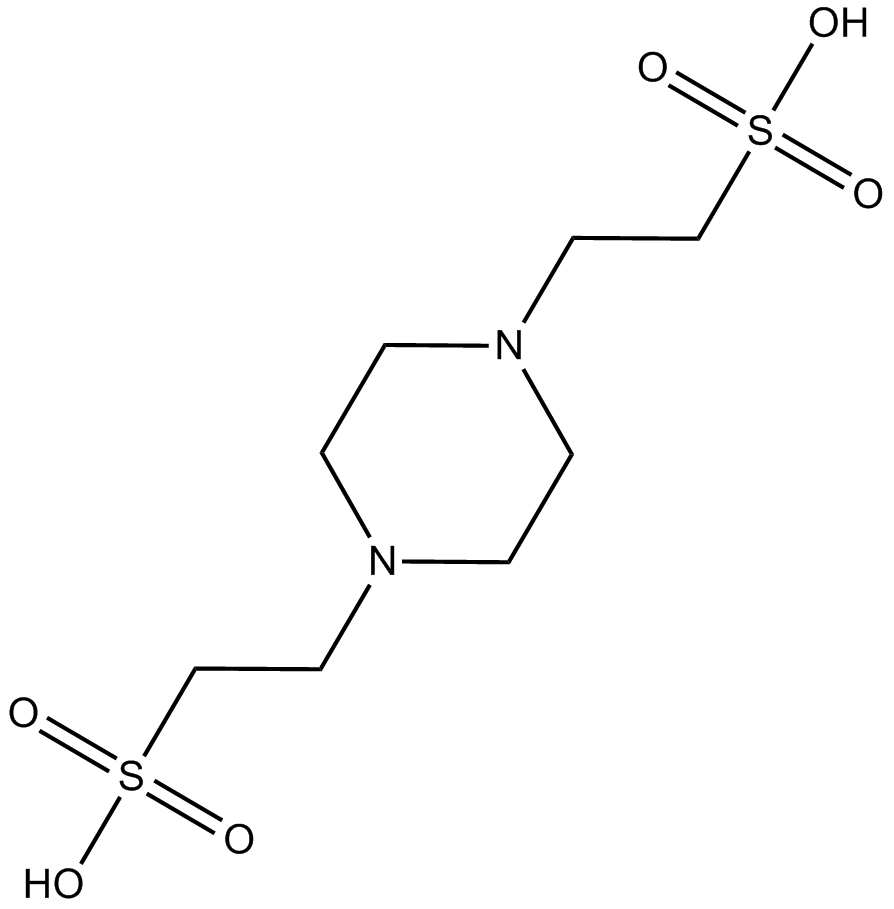





PIPES (CAS No.: 5625-37-6) is a zwitterionic buffering agent widely employed in biochemical and molecular biology research as a core component of PIPES-based buffer systems, valued for its ability to maintain stable pH conditions within the physiological range of approximately 6.1 to 7.5. Classified within the family of Good’s buffers, PIPES is characterized by minimal reactivity with biological macromolecules and low metal ion binding, making it particularly suitable for studies involving proteins, nucleic acids, and cellular systems. Although it does not directly interact with specific molecular targets or signaling pathways, its primary mechanism of action lies in preserving the physicochemical environment required for enzymatic activity, structural integrity of biomolecules, and reproducibility of biochemical reactions. Consequently, it is extensively utilized in enzyme kinetics assays, protein purification workflows, cell culture media formulation, and bioanalytical assay development. In vitro applications typically rely on millimolar concentrations to achieve effective buffering capacity, with exact usage determined by experimental design and system requirements. PIPES is also frequently incorporated into cell-based assays and preclinical research models where precise pH control is critical for evaluating biological responses and screening compounds in drug discovery pipelines.
| Physical Appearance | Solid |
| Storage | -20°C |
| M.Wt | 302.37 |
| Cas No. | 5625-37-6 |
| Formula | C8H18N2O6S2 |
| Solubility | Insoluble in DMSO; insoluble in EtOH; insoluble in H2O |
| Chemical Name | 2,2'-(piperazine-1,4-diyl)diethanesulfonic acid |
| Canonical SMILES | O=S(CCN1CCN(CC1)CCS(=O)(O)=O)(O)=O |
| Shipping Condition | Small Molecules with Blue Ice, Modified Nucleotides with Dry Ice. |
| General tips | We do not recommend long-term storage for the solution, please use it up soon. |