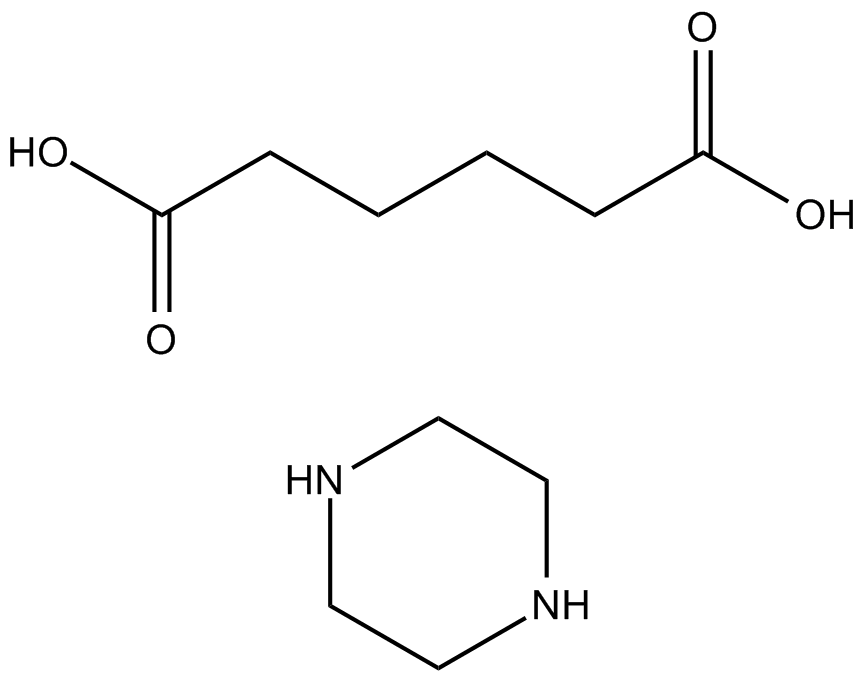
Piperazine adipate
Piperazine adipate (CAS No.: 142-88-1) is a synthetic piperazine salt classified as a broad-spectrum anthelmintic compound widely utilized in parasitology and pharmacological research. It exerts its biological activity primarily by interfering with neuromuscular signal transmission in helminths, likely through modulation of inhibitory neurotransmission pathways, resulting in flaccid paralysis and subsequent detachment of parasites from host tissues. This mechanism makes it a valuable experimental tool for investigating parasite neuromuscular physiology and host–parasite interactions. In vitro and in vivo studies indicate that compounds of this class typically demonstrate activity in the micromolar concentration range, although potency can vary depending on parasite species and experimental conditions. Piperazine adipate is frequently employed in mammalian parasite models to support the study of anthelmintic pharmacodynamics, resistance mechanisms, and comparative efficacy screening of novel antiparasitic agents. Additionally, it serves as a reference compound in mechanistic studies exploring parasite-induced pathophysiological processes. Experimental concentrations or dosing regimens are determined based on specific model systems and research objectives, making this compound a versatile reagent for preclinical investigation in drug discovery and parasitology research.
| Physical Appearance | Solid |
| Storage | -20°C |
| M.Wt | 232.28 |
| Cas No. | 142-88-1 |
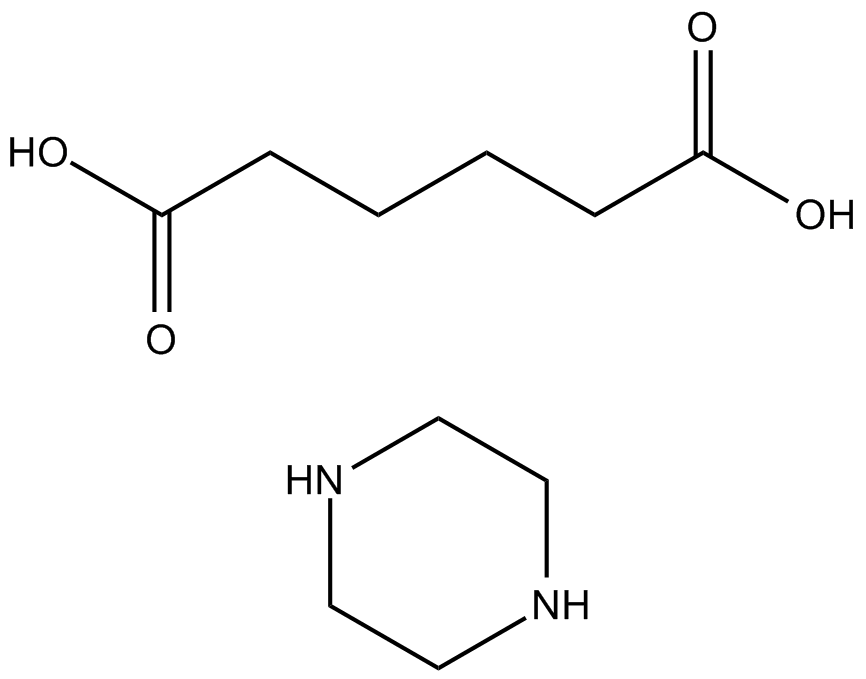
| Formula | C10H20N2O4 |
| Solubility | Insoluble in DMSO; insoluble in EtOH; ≥13.93 mg/mL in H2O with ultrasonic |
| Chemical Name | piperazine adipate |
| Canonical SMILES | O=C(CCCCC(O)=O)O.N1CCNCC1 |
| Shipping Condition | Small Molecules with Blue Ice, Modified Nucleotides with Dry Ice. |
| General tips | We do not recommend long-term storage for the solution, please use it up soon. |
Quality Control & MSDS
- View current batch:
Chemical structure