


pimelate
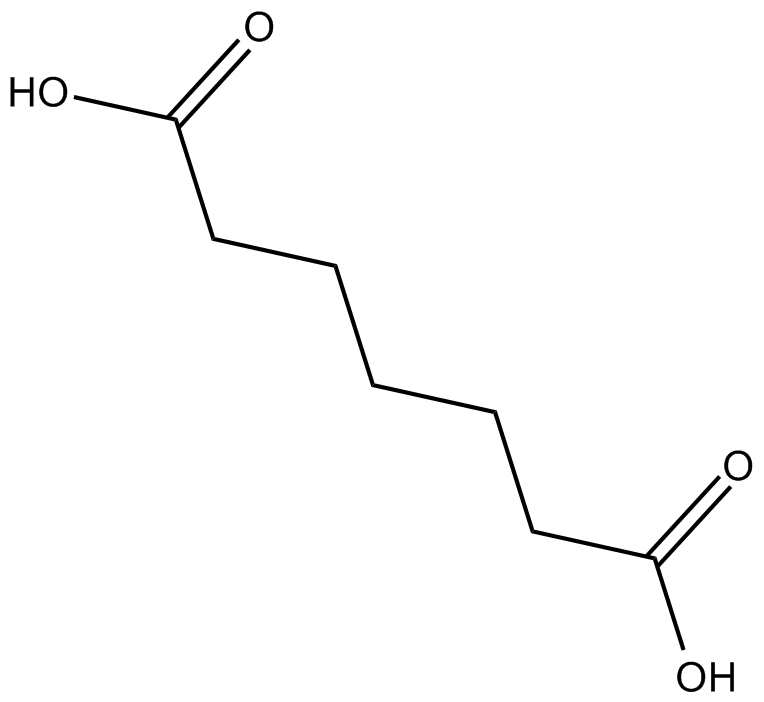





pimelate (CAS No.: 111-16-0) is a class of heptanedioic acid derivatives that function as intermediates within central metabolic networks, particularly in fatty acid metabolism and biotin biosynthesis pathways. As downstream products of fatty acid synthesis, pimelate-related compounds serve as key precursors for the assembly of biotin, a cofactor essential for carboxylation reactions, and are enzymatically converted into activated coenzyme A derivatives by enzymes such as BioW, thereby supporting microbial growth under conditions of limited exogenous biotin. These molecules are also implicated in broader biosynthetic processes, including contributions to lysine biosynthesis in certain organisms, highlighting their role at the interface of primary and secondary metabolism. Mechanistically, pimelate derivatives are studied in the context of enzymatic activation, acyl-CoA formation, and regulation of biotin-dependent metabolic flux, making them relevant tools for investigating microbial physiology, metabolic pathway engineering, and antibiotic response mechanisms. In experimental systems, these compounds have additionally been explored as metabolic indicators in models of oxidative stress and oxygen-induced tissue injury, including retinopathy models in rodents. In vitro and cellular studies typically employ concentrations in the micromolar range, although effective levels vary depending on organism type, metabolic state, and assay design. Consequently, pimelate and its derivatives are widely utilized in biochemical assays, microbial culture studies, and metabolic profiling applications to elucidate cofactor biosynthesis, enzyme function, and pathway regulation in both prokaryotic and eukaryotic systems.
| Physical Appearance | Solid |
| Storage | -20°C |
| M.Wt | 160.17 |
| Cas No. | 111-16-0 |
| Formula | C7H12O4 |
| Solubility | ≥24.9 mg/mL in DMSO; ≥28 mg/mL in EtOH; ≥29.5 mg/mL in H2O |
| Chemical Name | heptanedioic acid |
| Canonical SMILES | O=C(O)CCCCCC(O)=O |
| Shipping Condition | Small Molecules with Blue Ice, Modified Nucleotides with Dry Ice. |
| General tips | We do not recommend long-term storage for the solution, please use it up soon. |