


Phthalic acid
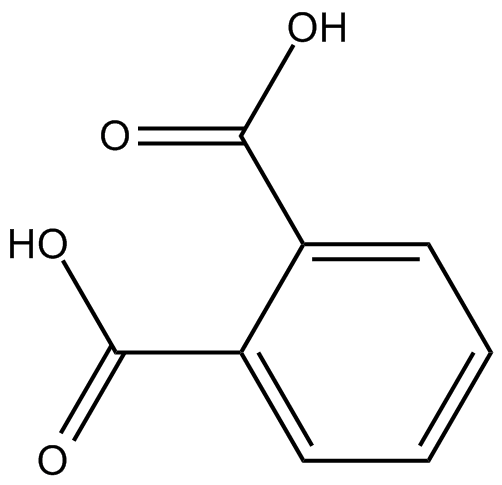
Phthalic acid (CAS No.: 88-99-3) is an aromatic dicarboxylic acid belonging to the benzoic acid class, characterized by a benzene ring bearing carboxyl functional groups, and is widely recognized as a central xenobiotic metabolite derived from the biotransformation of phthalic acid esters in mammalian systems. As a key intermediate in both environmental and metabolic pathways, it serves as an important analytical marker in studies of plasticizer exposure, toxicology, and metabolic profiling. Phthalic acid has also been extensively utilized as a precursor in the synthesis of industrial and research-relevant compounds, including isophthalic acid and terephthalic acid, as well as in the preparation of phthalate ester derivatives. In biomedical research contexts, it is primarily investigated for its potential genotoxic and mutagenic effects, with evidence indicating its capacity to induce genetic damage in mammalian germ cells, thereby supporting its use in mechanistic studies of DNA damage response, oxidative stress pathways, and cellular toxicity. Although specific molecular targets are not fully characterized, its biological effects are commonly associated with disruption of cellular redox balance and interference with genomic stability. In vitro studies typically employ concentrations in the micromolar range to evaluate cytotoxicity, genotoxic endpoints, and metabolic responses, while in vivo investigations focus on exposure-dependent effects within controlled experimental models. Overall, phthalic acid is a valuable tool compound for toxicological assessment, metabolic research, and the investigation of environmental contaminant impacts in drug discovery and life sciences research.
| Physical Appearance | Solid |
| Storage | -20°C |
| M.Wt | 166.13 |
| Cas No. | 88-99-3 |
| Formula | C8H6O4 |
| Solubility | insoluble in H2O; ≥28 mg/mL in EtOH; ≥63.6 mg/mL in DMSO |
| Chemical Name | phthalic acid |
| Canonical SMILES | OC(C1=CC=CC=C1C(O)=O)=O |
| Shipping Condition | Small Molecules with Blue Ice, Modified Nucleotides with Dry Ice. |
| General tips | We do not recommend long-term storage for the solution, please use it up soon. |