


Phenazine
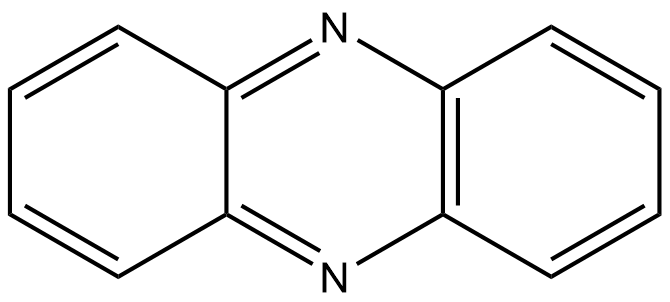





Phenazine (CAS No.: 92-82-0) is a heterocyclic redox-active small molecule belonging to the phenazine family, a class of naturally derived and synthetic compounds widely studied in microbiology, plant biology, and chemical biology research. It functions as an electron shuttle that modulates intracellular redox balance by facilitating electron transfer processes, thereby influencing NAD+/NADH homeostasis and cellular oxidative states. Through these mechanisms, phenazine regulates downstream gene expression associated with biofilm formation, microbial persistence, and stress adaptation pathways in various bacterial systems, making it a valuable tool for investigating redox-dependent signaling networks and microbial physiology. Phenazine derivatives are also recognized for their roles in plant–microbe interactions, where they can affect plant growth and induce systemic resistance responses, supporting their classification as biocontrol-related molecules in agricultural research. In vitro studies indicate that phenazine and related compounds exhibit biological activity across nanomolar to micromolar concentration ranges depending on the assay system and organism, particularly in studies examining electron transport, oxidative stress responses, and biofilm dynamics. As the parent scaffold for numerous bioactive analogs and dye intermediates, phenazine is frequently utilized in structure–activity relationship studies, screening platforms targeting redox-sensitive pathways, and experimental models exploring microbial metabolism and intercellular signaling, with concentrations and experimental conditions tailored to specific research objectives.
| Physical Appearance | A solid |
| Storage | -20°C |
| M.Wt | 180.21 |
| Cas No. | 92-82-0 |
| Formula | C12H8N2 |
| Synonyms | AI3-00065, AI300065, AI3 00065 |
| Solubility | ≥9 mg/mL in DMSO with ultrasonic; ≥8.38 mg/mL in EtOH with ultrasonic; insoluble in H2O |
| Chemical Name | phenazine |
| Canonical SMILES | C12=NC(C=CC=C3)=C3N=C1C=CC=C2 |
| Shipping Condition | Small Molecules with Blue Ice, Modified Nucleotides with Dry Ice. |
| General tips | We do not recommend long-term storage for the solution, please use it up soon. |