


pamoic acid
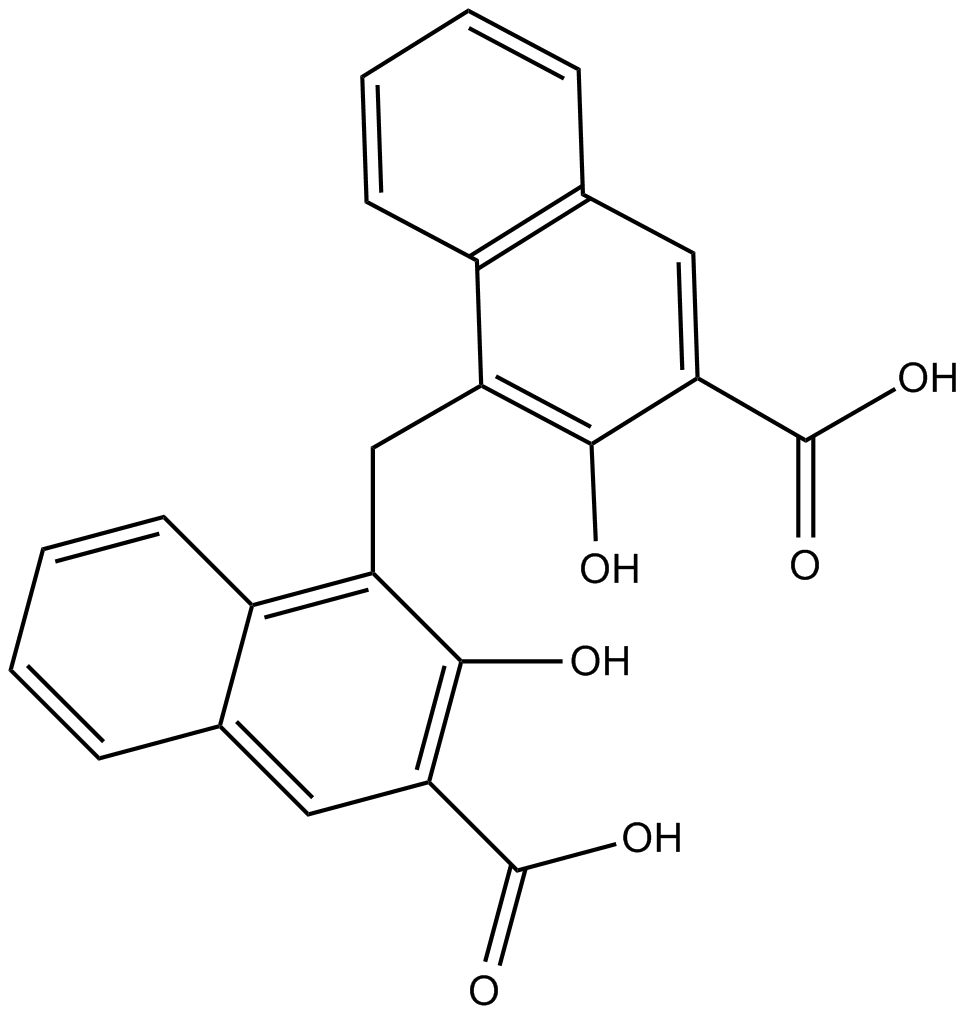
pamoic acid (CAS No.: 130-85-8) is a small-molecule agonist of the orphan G protein-coupled receptor GPR35, widely utilized in biomedical research to investigate receptor-mediated signaling and its implications in inflammation, neurobiology, and pain modulation. It exhibits potent activity in the nanomolar range, as demonstrated by β-arrestin recruitment assays, and promotes receptor internalization and downstream signaling events, including concentration-dependent activation of ERK1/2 pathways in cells expressing human GPR35. Through modulation of GPR35 signaling, pamoic acid has been shown to exert neuroprotective and anti-inflammatory effects in vitro, supporting its relevance in studies of neurodegenerative and inflammatory disorders. In vivo, it displays antinociceptive activity in preclinical models of visceral pain, highlighting its utility in pain research. Additionally, pamoic acid serves as a key component of pamoate salts, which are commonly employed in pharmaceutical formulations to prolong drug action. In experimental settings, it is frequently applied in cell-based assays to dissect GPCR signaling mechanisms and in animal models to evaluate functional outcomes, with concentrations or dosing regimens adjusted according to specific study designs and therapeutic hypotheses.
| Physical Appearance | A solid |
| Storage | -20°C |
| M.Wt | 388.37 |
| Cas No. | 130-85-8 |
| Formula | C23H16O6 |
| Synonyms | Embonic Acid; NSC 30188; NSC 40132 |
| Solubility | insoluble in EtOH; insoluble in H2O; ≥10.68 mg/mL in DMSO |
| Chemical Name | 4,4'-methylenebis(3-hydroxy-2-naphthoic acid) |
| Canonical SMILES | OC(C(C(O)=O)=C1)=C(CC2=C(C=CC=C3)C3=CC(C(O)=O)=C2O)C4=C1C=CC=C4 |
| Shipping Condition | Small Molecules with Blue Ice, Modified Nucleotides with Dry Ice. |
| General tips | We do not recommend long-term storage for the solution, please use it up soon. |