OVA Peptide(257-264) TFA
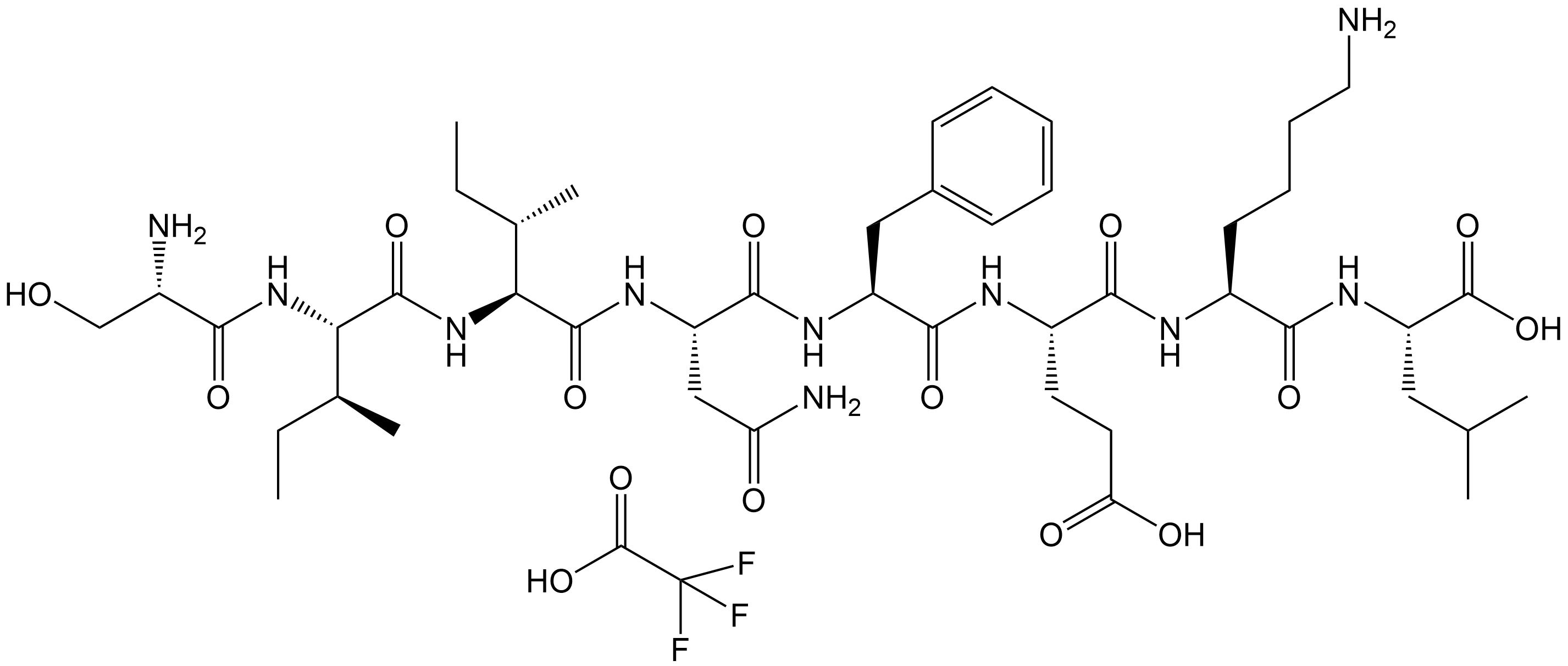
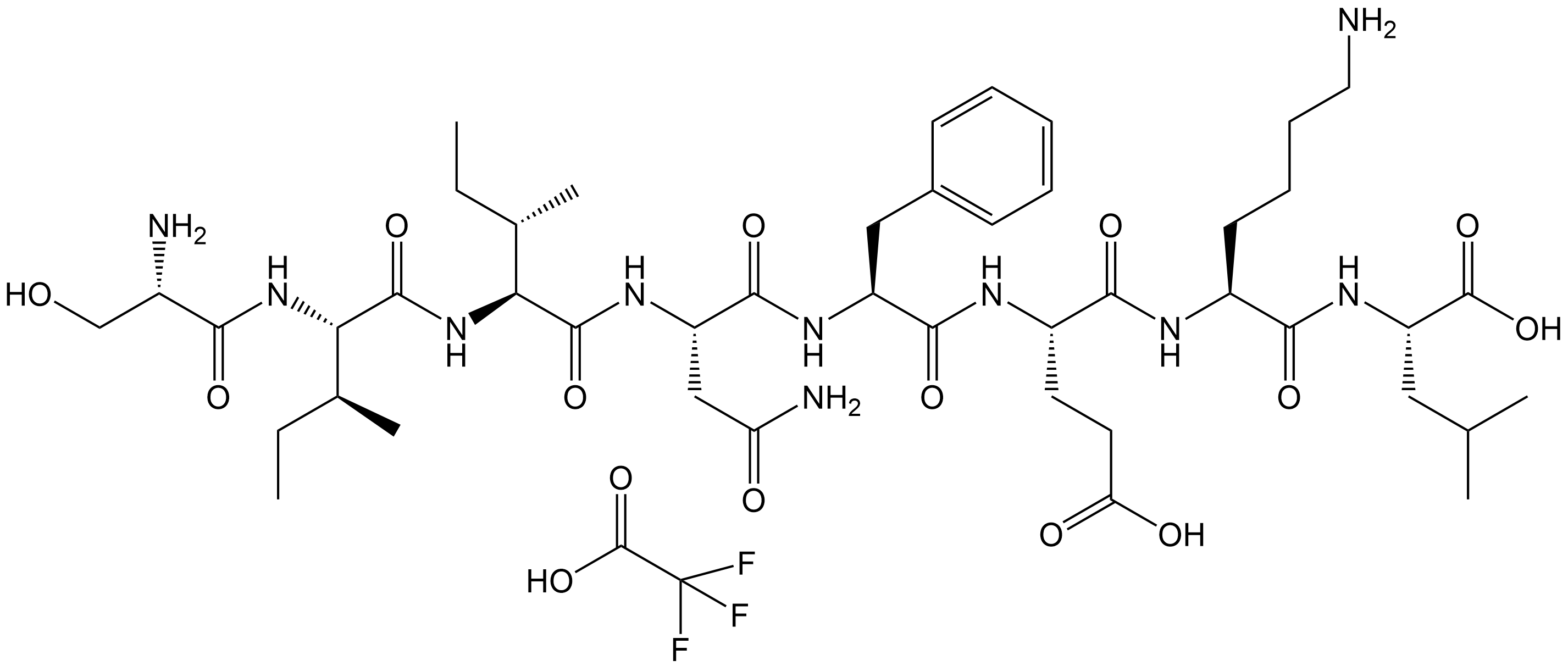
OVA peptide (257–264) (CAS No. 1262751-08-5), with the sequence Ser-Ile-Ile-Asn-Phe-Glu-Lys-Leu, represents the core antigenic epitope of chicken ovalbumin (OVA). It possesses dual activity in both antigen‑specific immune activation and immune tolerance regulation. Its molecular target is well defined, and its functional output shows marked variability across experimental systems: as a specific ligand for the Va2/Vb5 T cell receptor (TCR) expressed on OT‑I mouse CD8⁺ T cells, it precisely triggers the antigen recognition pathway; at the same time, in combination with the DNA methyltransferase inhibitor 5‑Aza‑2′‑deoxycytidine (Aza) and transforming growth factor‑β (TGF‑β), it targets CpG methylation‑regulatory regions within the Foxp3 locus, thereby driving the differentiation of CD8⁺ T cells into a regulatory subset.
At the cellular level, the peptide exhibits dose‑dependent activity with bidirectional functional outcomes. In an antigen‑specific CD8⁺Foxp3⁺ regulatory T cell (Treg) induction system, treatment of OT‑I CD8⁺ T cells for 7 days with 2 μg/ml peptide together with IL‑2 (20 ng/ml), TGF‑β (10 ng/ml) and Aza (0.5 μM) efficiently induces differentiation toward Tregs, yielding a Foxp3⁺ frequency approximately 60% higher than that achieved with TGF‑β alone. The resulting Tregs display high expression of regulatory molecules such as CD39 (MFI ~ 600), CD73 (MFI ~ 800) and CD103 (MFI ~ 1500), and reduced expression of cytotoxic mediators including perforin (MFI only one‑third of activated CD8⁺ T cells) and granzyme B (MFI one‑quarter of the activated group). Functionally, these Tregs markedly suppress naive CD4⁺ T cell proliferation, with an inhibition rate exceeding 70%, and induce Foxp3 expression in about 30% of co‑cultured CD4⁺ T cells. In contrast, stimulation of OT‑I CD8⁺ T cells with the peptide alone rapidly induces an activated CD25^highCD44^highCD69^high phenotype, initiating a robust antigen‑specific immune response.
At the in vivo level, the peptide displays pronounced tissue and function specificity depending on the model. In the K14‑sOVA/OT‑I double‑transgenic mouse model of ear autoimmunity, a regimen of “intravenous injection of 200 μg into pregnant dams at embryonic days E14/E16/E18 (three doses), followed by intraperitoneal injection of 50 μg into neonates on postnatal days 2 and 4 (two doses)” achieves a 100% rescue rate of normal ear development. This protocol reduces OT‑I CD8⁺ T cell infiltration in ear tissue by more than 80%, lowers the mean fluorescence intensity (MFI) of the CD8 co‑receptor on OT‑I cells by approximately 40%, and decreases the proportion of Va2/Vb5⁺ OT‑I cells in the spleen through activation‑induced cell death (with up to a 60% reduction at embryonic day E18).
In an OVA oral tolerance model disrupted by cholera toxin (CTx), OT‑I/Foxp3‑GFP mice are first subcutaneously presensitized with 50 μg peptide emulsified in complete Freund’s adjuvant, and the resulting 3×10⁵ antigen‑specific CD8⁺Foxp3⁺ Tregs are adoptively transferred into model mice. This transfer reduces serum OVA‑specific IgE levels by about 70% and IgG1 levels by about 60%, decreases IgE⁺ cell numbers in Peyer’s patches and colonic tissue by more than 50%, and lowers FcεRI⁺ mast cell numbers by 40%. Concurrently, it significantly increases the proportion of Foxp3⁺ Tregs in gut‑associated lymphoid tissues (by ~35% compared with model controls), thereby effectively restoring intestinal immune homeostasis. Moreover, the antigen‑specific Tregs induced by peptide presensitization express high levels of the gut‑homing receptors CCR6 (MFI ~ 150) and CCR9 (MFI ~ 200), enabling their directed migration to the intestinal mucosa to exert tolerogenic regulatory functions.
References:
[1] Paek SY, Miyagawa F, Zhang H, Linton JT, Hoover SB, Simpson RM, Katz SI. Soluble peptide treatment reverses CD8 T-cell-induced disease in a mouse model of spontaneous tissue-selective autoimmunity. J Invest Dermatol. 2012 Mar;132(3 Pt 1):677-86. doi: 10.1038/jid.2011.347. Epub 2011 Nov 17. PMID: 22089830; PMCID: PMC3395362.
[2] Giri S, Meitei HT, Sonar SA, Shaligram S, Lal G. In vitro-induced Foxp3+ CD8+ regulatory T cells suppress allergic IgE response in the gut. J Leukoc Biol. 2022 Dec;112(6):1497-1507. doi: 10.1002/JLB.5A0122-027R. Epub 2022 Aug 24. PMID: 36000308.
| Storage | -80℃, sealed storage, away from moisture |
| M.Wt | 1077.15 |
| Cas No. | 1262751-08-5 |
| Formula | C47H75F3N10O15 |
| Chemical Name | (2S,5S,8S,11S,14S,17S,20S,23S)-23-amino-14-(2-amino-2-oxoethyl)-5-(4-aminobutyl)-11-benzyl-17,20-di((S)-sec-butyl)-8-(2-carboxyethyl)-24-hydroxy-2-isobutyl-4,7,10,13,16,19,22-heptaoxo-3,6,9,12,15,18,21-heptaazatetracosanoic acid--2,2,2-trifluoroacetic aci |
| Canonical SMILES | O=C(N[C@H](C(N[C@@H]([C@@H](C)CC)C(N[C@@H](CC(N)=O)C(N[C@@H](CC1=CC=CC=C1)C(N[C@@H](CCC(O)=O)C(N[C@@H](CCCCN)C(N[C@@H](CC(C)C)C(O)=O)=O)=O)=O)=O)=O)=O)[C@@H](C)CC)[C@@H](N)CO.OC(C(F)(F)F)=O |
| Shipping Condition | Small Molecules with Blue Ice, Modified Nucleotides with Dry Ice. |
| General tips | We do not recommend long-term storage for the solution, please use it up soon. |
Quality Control & MSDS
- View current batch:
-
Purity = 98.00%
- COA (Certificate Of Analysis)
- MSDS (Material Safety Data Sheet)
Chemical structure