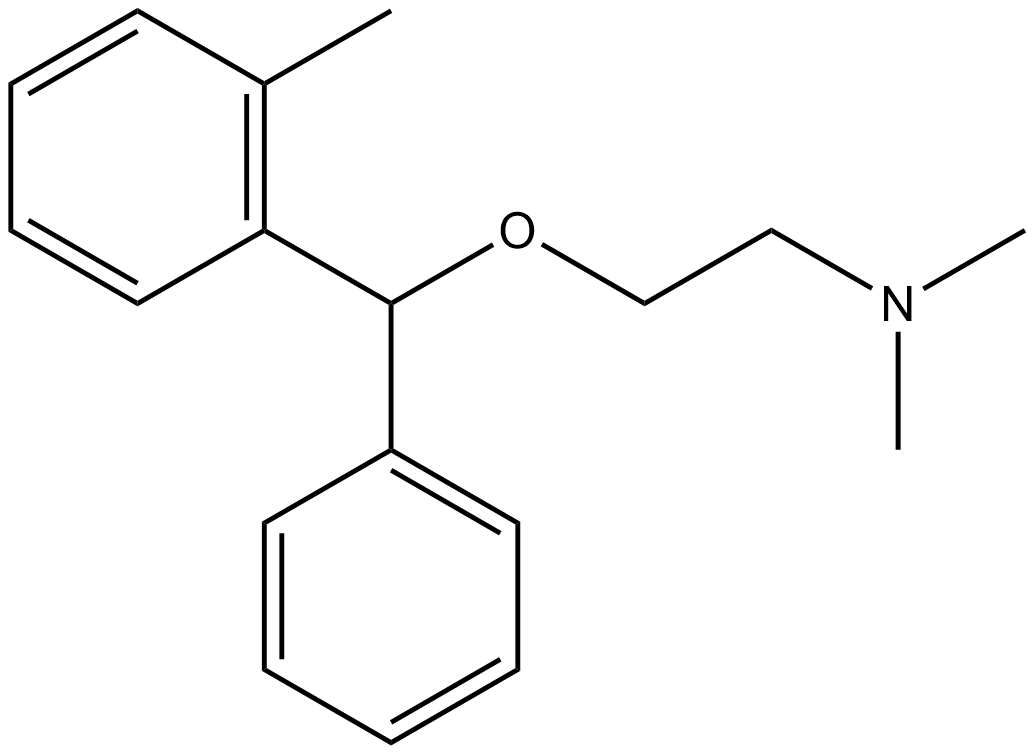
Orphenadrine
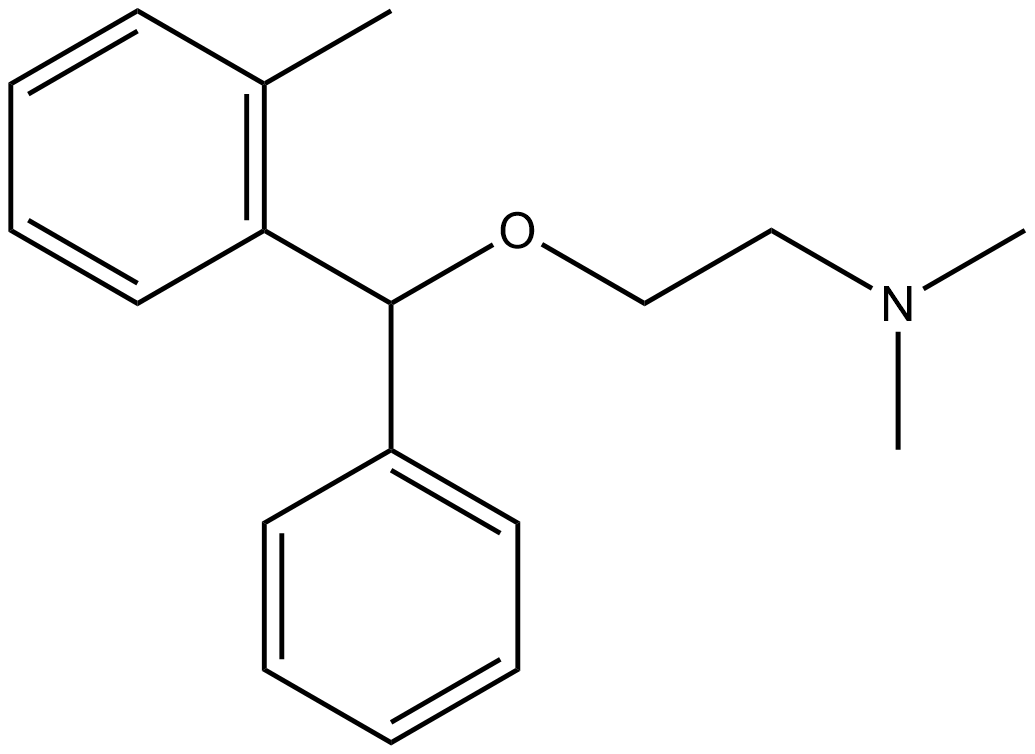





Orphenadrine (CAS No.: 83-98-7) is a multifunctional compound known for its roles as a skeletal muscle relaxant and a non-competitive NMDA receptor antagonist. Its pharmacological profile includes antispasmodic, antihistaminic, and antitremor functions, reflecting its broad applications in biomedical research. Orphenadrine is involved in NMDA receptor-mediated neuroprotective mechanisms by inhibiting [3H] MK-801 binding to the phencyclidine binding site on the NMDA receptor, an effect that is particularly important in studies investigating neurodegenerative diseases, showing protection against glutamate neurotoxicity in vitro and in vivo. In addition, Orphenadrine acts as an antagonist of central and peripheral muscarinic receptors and inhibits cloned HERG channels at low micromolar levels, particularly reaching 0.85μM in HEK cells. Its anticholinergic effects and sodium channel inhibitory capacity further highlight its diverse functions in neurotransmission pathways. In cellular and animal models, Orphenadrine is used in Parkinson's disease research and neuroprotective interventions, with its effects associated with attenuation of NMDA receptor overactivation. Despite its complex biological activity, its application and dosage should be handled with caution in experiments, guided by specific research objectives and designs. In addition, it has been observed to induce CYP2B and may promote tumor effects through the CAR nuclear translocation pathway, leading to microsomal reactive oxygen species generation and oxidative stress. The diverse biochemical and pharmacological activities of Orphenadrine make it an important compound for studying ion channel modulation, receptor antagonism, and neuroprotection, but its use should be strictly limited to controlled research settings.
| Physical Appearance | Solid |
| Storage | -20°C |
| M.Wt | 269.38 |
| Cas No. | 83-98-7 |
| Formula | C18H23NO |
| Synonyms | (±)-Orphenadrine |
| Solubility | ≥46.2 mg/mL in DMSO; ≥46 mg/mL in EtOH; insoluble in H2O |
| Chemical Name | N,N-dimethyl-2-(phenyl(o-tolyl)methoxy)ethan-1-amine |
| Canonical SMILES | O(CCN(C)C)C(C=1C=CC=CC1)C=2C=CC=CC2C |
| Shipping Condition | Small Molecules with Blue Ice, Modified Nucleotides with Dry Ice. |
| General tips | We do not recommend long-term storage for the solution, please use it up soon. |
Quality Control & MSDS
- View current batch:
Chemical structure