ONC201
ONC201 is the first-in-class imipridone compound whose primary molecular targets are dopamine receptor D2 (DRD2) and the mitochondrial serine protease ClpP, and it concurrently inhibits both the AKT and ERK signaling pathways. It exhibits broad-spectrum bioactivity and has been approved by the U.S. Food and Drug Administration (FDA) for the treatment of recurrent diffuse midline glioma harboring H3K27M mutations. In preclinical studies of multiple solid tumors and hematologic malignancies—including colorectal cancer, pancreatic cancer, glioblastoma, small-cell and non–small-cell lung cancer, and triple-negative breast cancer—ONC201 has demonstrated marked antitumor efficacy as a monotherapy and in combination with chemotherapy, targeted agents (such as PARP inhibitors and BCL-2 inhibitors), or radiotherapy. It can selectively induce apoptosis in cancer cells, suppress proliferation and tumor stem cell activity, and is capable of penetrating the blood–brain barrier.
Mechanistically, ONC201, on the one hand, antagonizes DRD2 and activates ClpP to trigger the integrated stress response (ISR), thereby upregulating DR5 and TRAIL expression via the ATF4/CHOP pathway. On the other hand, it promotes dephosphorylation of Foxo3a, restoring its transcriptional activity, while concurrently disrupting mitochondrial function and inducing ATP depletion and other forms of non-apoptotic cell death, ultimately leading to selective tumor cell killing.
ONC201 induces apoptosis in stem and progenitor acute myeloid leukemia (AML) cells and abrogates the engraftment capacity of leukemia stem cells in murine models, while sparing normal bone marrow cells. The ONC201-induced gene expression profile resembles that elicited by the unfolded protein response (UPR) and the integrated stress response (ISR). In hematopoietic cells, ONC201 promotes apoptosis in a manner that does not depend on enhanced eIF2α phosphorylation. Furthermore, ONC201 inhibits signaling through the mechanistic target of rapamycin complex 1 (mTORC1), potentially via ATF4-mediated induction of the mTORC1 inhibitor DDIT4. Overexpression of BCL-2 blocks ONC201-induced apoptosis, whereas combination treatment with ONC201 and the BCL-2 antagonist ABT-199 synergistically enhances apoptotic cell death.
References:
[1] ATF4 induction through an atypical integrated stress response to ONC201 triggers p53-independent apoptosis in hematological malignancies. Sci Signal. 2016 Feb 16;9(415):ra17.Shenoy B, Mandani M, Chintamaneni M, Manohar SM.
[2] Combination of the First-in-Class Imipridone ONC201 and Standard Anticancer Therapies as a Rational Approach for Therapeutic Benefit. Curr Issues Mol Biol. 2025 Sep 18;47(9):775. doi: 10.3390/cimb47090775. PMID: 41020897; PMCID: PMC12468701.
| Physical Appearance | A crystalline solid |
| Storage | Store at -20°C |
| M.Wt | 386.49 |
| Cas No. | 1616632-77-9 |
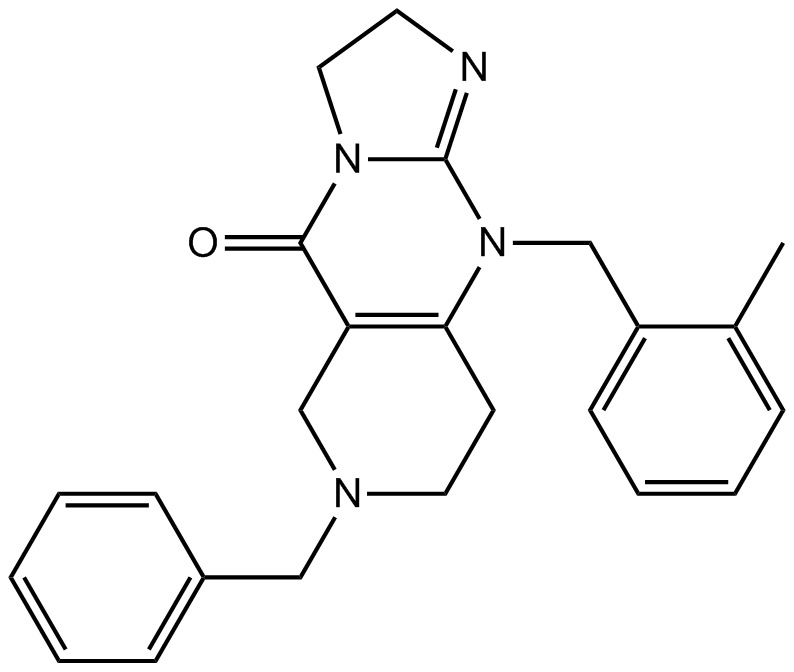
| Formula | C24H26N4O |
| Synonyms | TIC10; Dordaviprone |
| Solubility | insoluble in H2O; ≥10 mg/mL in EtOH with ultrasonic; ≥16 mg/mL in DMSO |
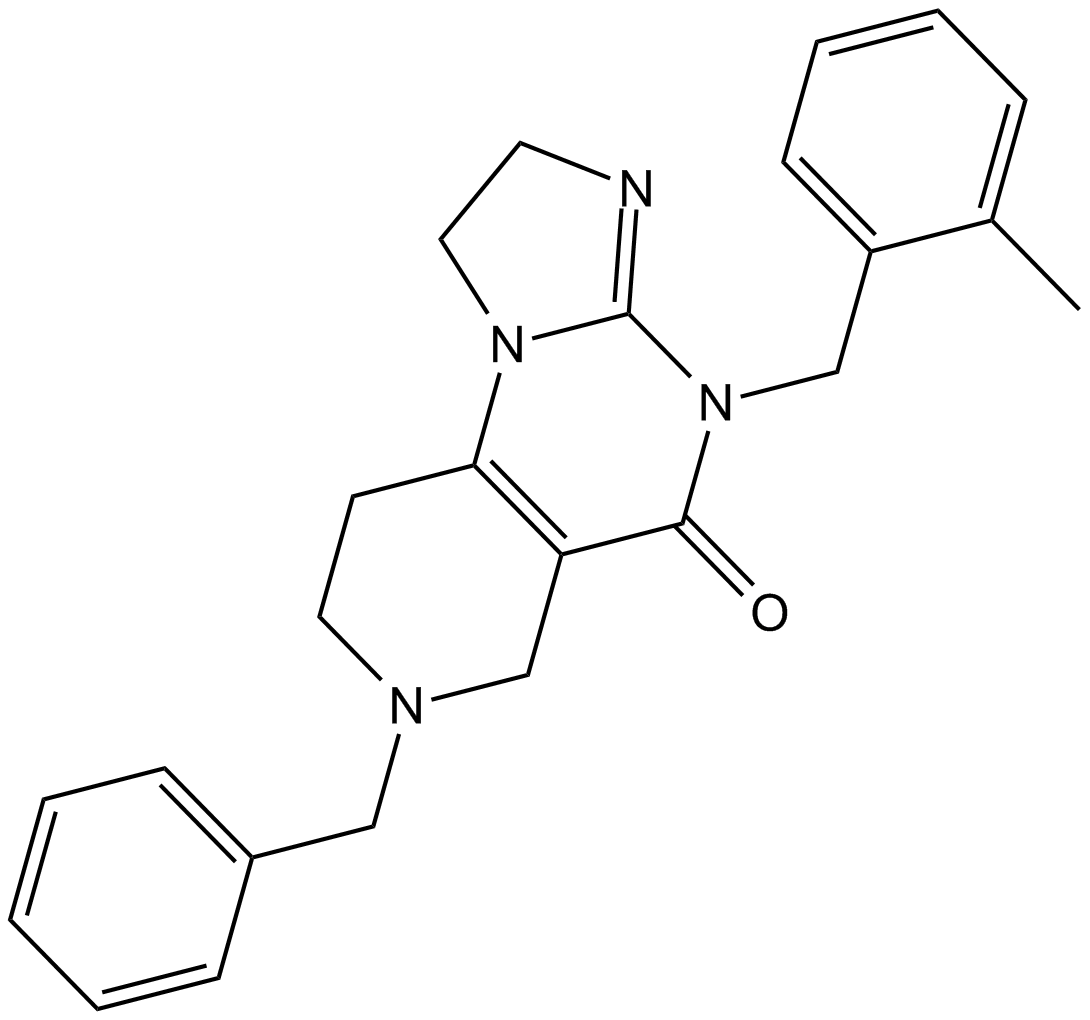
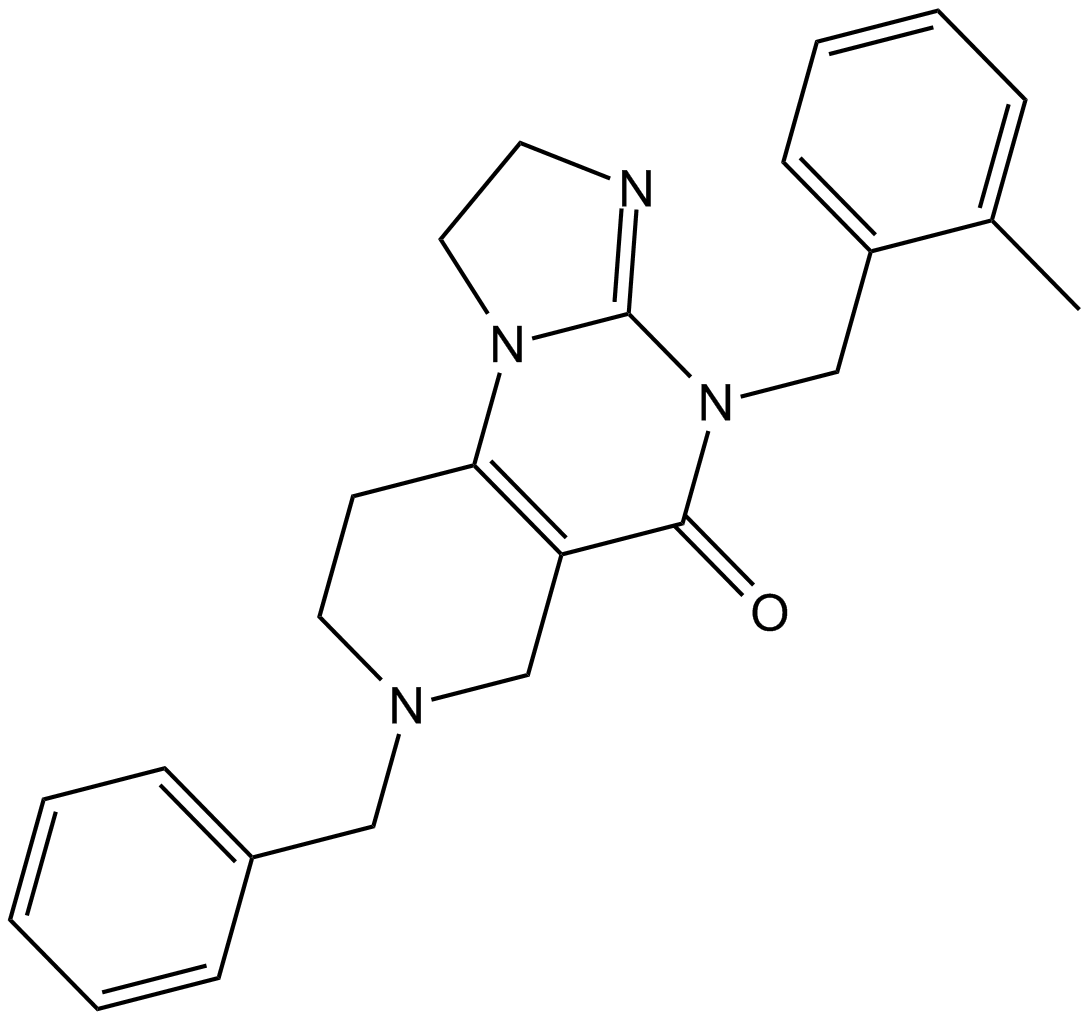
| Chemical Name | 7-benzyl-4-(2-methylbenzyl)-1,2,6,7,8,9-hexahydroimidazo[1,2-a]pyrido[3,4-e]pyrimidin-5(4H)-one |
| Canonical SMILES | Cc1c(CN(C2=NCCN2C2=C3CN(Cc4ccccc4)CC2)C3=O)cccc1 |
| Shipping Condition | Small Molecules with Blue Ice, Modified Nucleotides with Dry Ice. |
| General tips | We do not recommend long-term storage for the solution, please use it up soon. |
Quality Control & MSDS
- View current batch:
Chemical structure