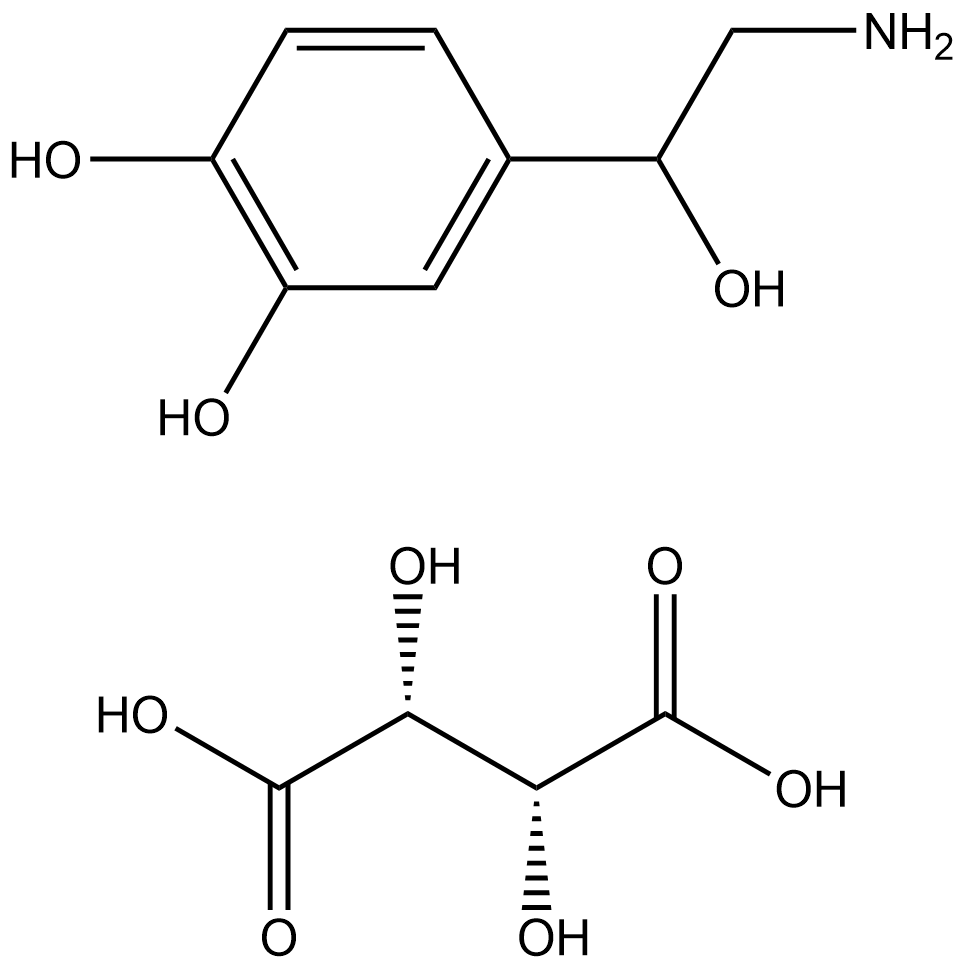
Norepinephrine tartrate
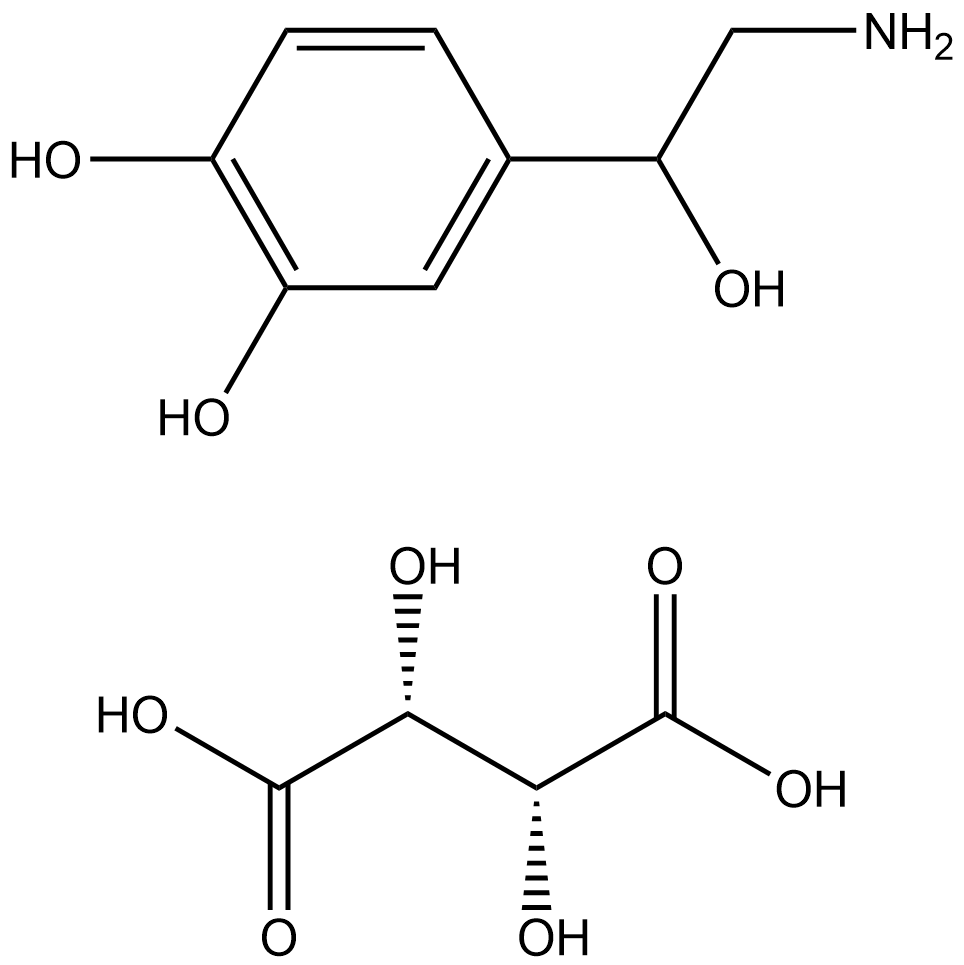
Norepinephrine tartrate (CAS No.: 3414-63-9) is a catecholamine neurotransmitter salt form widely used as a reference adrenergic probe in life sciences research, and in racemic preparations it comprises both the biologically active L enantiomer and a D enantiomer with substantially lower activity, supporting its classification as a neurochemical signaling modulator and receptor pharmacology tool for biomedical investigation and early stage drug discovery workflows. As an adrenergic receptor agonist, it is reported to engage alpha1, alpha2, and beta1 adrenoceptor subtypes, thereby coupling to canonical G protein mediated signaling networks that regulate intracellular calcium mobilization, cyclic AMP dynamics, kinase dependent phosphorylation cascades, and downstream transcriptional responses associated with neuronal communication, vascular tone related biology, and stress response circuitry in experimental systems. In vitro, adrenergic agonist effects for norepinephrine based ligands are commonly characterized within nanomolar to micromolar concentration ranges depending on receptor subtype expression, assay format, and species context, and this material is therefore typically applied in concentration response profiling, receptor deconvolution studies, pathway bias assessments, and counter screening paradigms with careful control of exposure conditions and matrix composition. In translationally oriented nonclinical research, it is frequently used in cell based models and in animal model paradigms to interrogate sympathetic signaling biology, and labeled variants have also been employed as tracers in neurobiology investigations including studies relevant to Parkinsonian mechanisms, while the concentrations or doses used in experiments typically depend on specific experimental designs and research objectives and should be selected using validated laboratory protocols and institutional research compliance standards.
| Storage | -20°C for 3 years |
| M.Wt | 319.26 |
| Cas No. | 3414-63-9 |
| Formula | C12H17NO9 |
| Canonical SMILES | OC1=CC=C(C(O)CN)C=C1O.O=C(O)[C@H](O)[C@@H](O)C(O)=O |
| Shipping Condition | Small Molecules with Blue Ice, Modified Nucleotides with Dry Ice. |
| General tips | We do not recommend long-term storage for the solution, please use it up soon. |
Quality Control & MSDS
- View current batch:
Chemical structure