


Nitrofurantoin
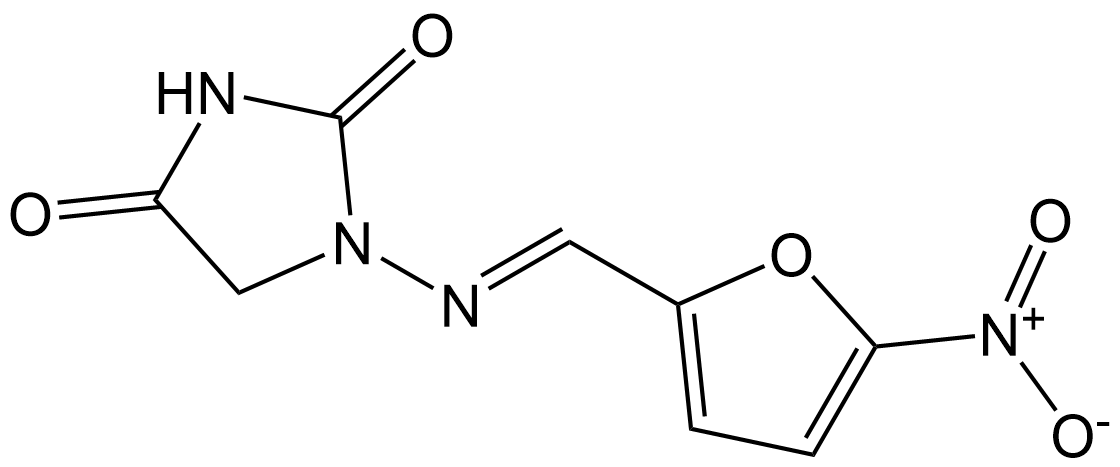
Nitrofurantoin (CAS No. 67-20-9) is a broad-spectrum antibacterial antibiotic with good oral activity, commonly used in the research and treatment of urinary tract infections (UTIs), including cystitis and pyelonephritis. It is classified as an antimicrobial drug with β‑lactamase inhibition-related activity, and can effectively inhibit the replication and colonization of various Gram-negative bacilli (such as E. coli, Proteus mirabilis, and P. vulgaris) in the urinary tract, making it a classic agent for urinary tract infection models.
At the cellular level, Nitrofurantoin exhibits dose-dependent cytotoxic/antiproliferative effects against various human-derived cell lines: for example, in human bladder cancer 5637 cells, IC₅₀ ≈ 21.3 μM; in lung adenocarcinoma A‑427 cells, IC₅₀ ≈ 1.86 μM; in colon cancer Caco‑2 cells, IC₅₀ is approximately 0.115 μM; and in pancreatic cancer DAN‑G cells, IC₅₀ ≈ 6.74 μM; whereas in normal human colon epithelial FHC cells, CC₅₀ > 100 μM, suggesting greater sensitivity of tumor cells within a certain concentration range, and making it a tool compound for exploring the antitumor potential and toxicity window of nitrofuran drugs.
In a rat urinary tract infection model, Nitrofurantoin administered intramuscularly at 25–100 mg/kg dose-dependently reduces E. coli replication and abscess formation in the renal medulla; in a P. mirabilis infection model, it can prevent ascending infection to the kidneys and bladder after bladder inoculation; in a P. vulgaris urinary tract infection model, it can also inhibit urine alkalinization as well as stone and abscess formation. Nitrofurantoin-containing formulations have been widely used in the prevention and treatment of urinary tract infections and in pharmacodynamic studies in clinical and experimental settings, and are commonly used as positive control agents when constructing UTI animal models and evaluating novel antibacterial/protective strategies.
References:
[1] Rocha H, da Silva Teles E, Barros M. Site of action of nitrofurantoin in experimental urinary tract infection. Appl Microbiol. 1969 Oct;18(4):547-9. doi: 10.1128/am.18.4.547-549.1969. PMID: 4905033; PMCID: PMC378032.
[2] HOSSACK DJ. Proteus vulgaris urinary tract infections in rats; treatment with nitrofuran derivatives. Br J Pharmacol Chemother. 1962 Oct;19(2):306-12. doi: 10.1111/j.1476-5381.1962.tb01193.x. PMID: 13964160; PMCID: PMC1482135.
[3] Huttner A, Verhaegh EM, Harbarth S, Muller AE, Theuretzbacher U, Mouton JW. Nitrofurantoin revisited: a systematic review and meta-analysis of controlled trials. J Antimicrob Chemother. 2015 Sep;70(9):2456-64. doi: 10.1093/jac/dkv147. Epub 2015 Jun 11. PMID: 26066581.
| Storage | Store at -20°C |
| M.Wt | 238.16 |
| Cas No. | 67-20-9 |
| Formula | C8H6N4O5 |
| Synonyms | Furantoin, Nifurantin |
| Chemical Name | (E)-1-(((5-nitrofuran-2-yl)methylene)amino)imidazolidine-2,4-dione |
| Canonical SMILES | O=C1NC(=O)CN1N=CC=2OC(=CC2)N(=O)=O |
| Shipping Condition | Small Molecules with Blue Ice, Modified Nucleotides with Dry Ice. |
| General tips | We do not recommend long-term storage for the solution, please use it up soon. |