Nε-(1-Carboxymethyl)-L-lysine
Nε-(1-Carboxymethyl)-L-lysine (CAS No.: 5746-04-3) is a well-characterized advanced glycation end product formed through the non-enzymatic glycoxidation of lysine residues in proteins by reducing sugars under conditions of oxidative stress, and is widely recognized as a biomarker and mediator of carbonyl stress in aging and chronic disease. As a biologically active AGE, it exerts its effects primarily through interaction with the receptor for advanced glycation end products (RAGE), leading to activation of downstream signaling pathways including MAPKs, ERK, and NF-κB, thereby modulating oxidative stress, inflammatory responses, and gene expression programs. Nε-(1-Carboxymethyl)-L-lysine has been shown to influence cellular processes such as centrosome amplification, epithelial–mesenchymal transition, and malignant transformation, partly through upregulation of proteins such as PLK1 and CEP20, contributing to tumor progression and metastasis in relevant models. Its accumulation is associated with pathological conditions including diabetes, cardiovascular disease, neurodegeneration, and cancer, making it a valuable tool for investigating AGE-RAGE axis signaling and oxidative damage mechanisms. In vitro, it is commonly applied in the micromolar concentration range to stimulate oxidative and inflammatory responses in various cell systems, while in vivo studies utilize dosing regimens tailored to disease models to assess its role in tissue injury and metabolic dysfunction. Consequently, Nε-(1-Carboxymethyl)-L-lysine is extensively used in biomedical research and drug discovery for studying AGE-mediated cellular dysfunction and for evaluating therapeutic strategies targeting glycation-related pathways.
| Physical Appearance | A solid |
| Storage | -20°C |
| M.Wt | 204.22 |
| Cas No. | 5746-04-3 |
| Formula | C8H16N2O4 |
| Synonyms | CML |
| Solubility | insoluble in DMSO; insoluble in EtOH; ≥20.4 mg/mL in H2O |
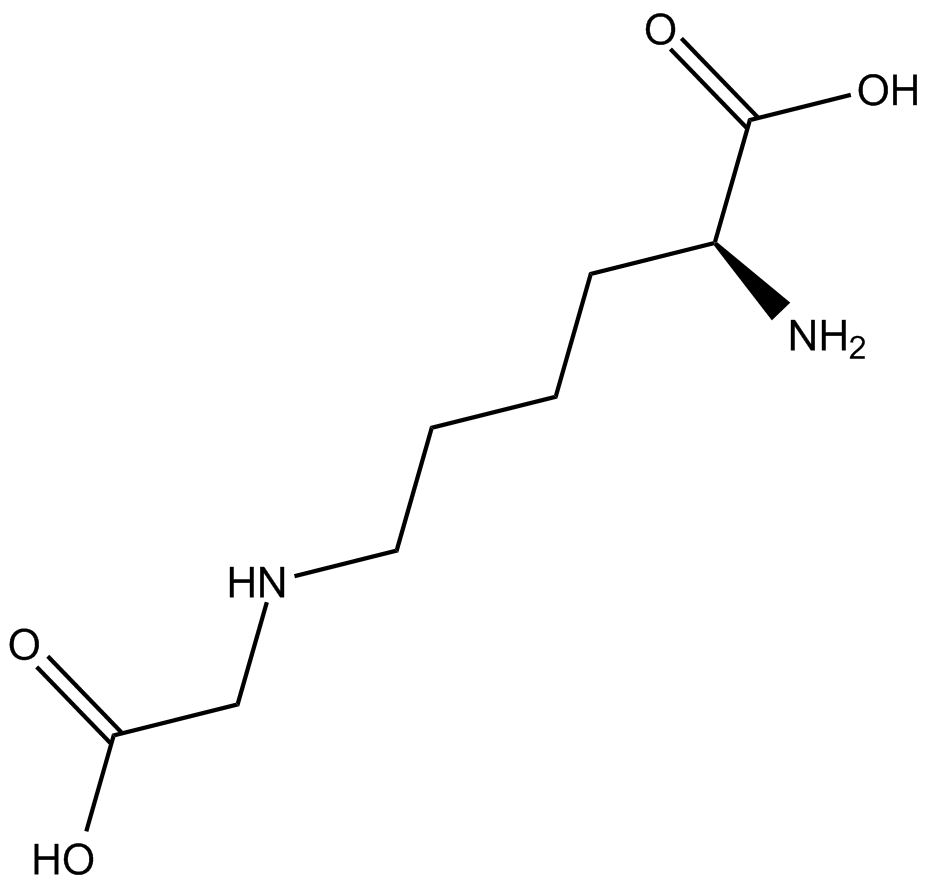
| Chemical Name | (S)-2-amino-6-((carboxymethyl)amino)hexanoic acid |
| Canonical SMILES | OC(CNCCCC[C@H](N)C(O)=O)=O |
| Shipping Condition | Small Molecules with Blue Ice, Modified Nucleotides with Dry Ice. |
| General tips | We do not recommend long-term storage for the solution, please use it up soon. |