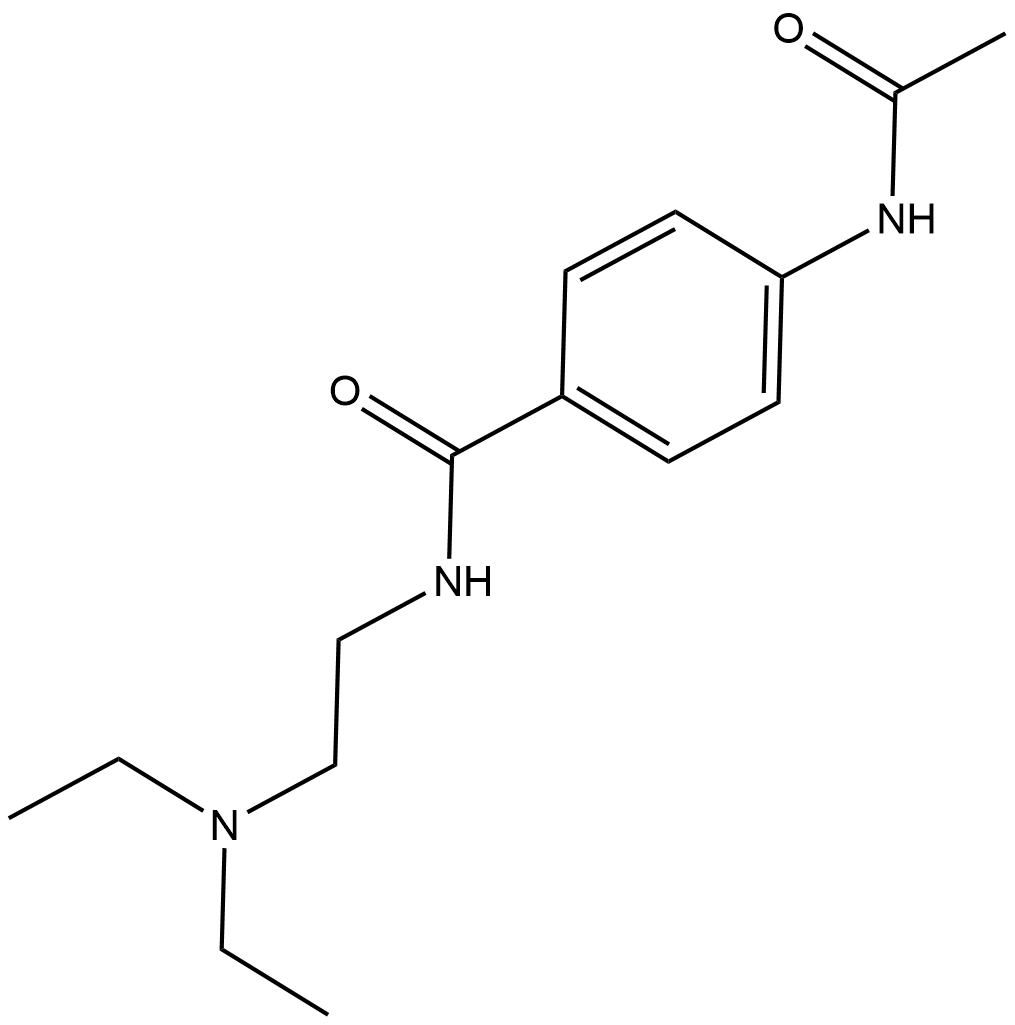
N-Acetylprocainamide
N-Acetylprocainamide (CAS No.: 32795-44-1) is an important Class III antiarrhythmic compound with potassium channel-blocking activity. As the N-acetylated metabolite of procainamide, N-Acetylprocainamide provides nuanced insights into the cardiac electrophysiology of its parent compound’s Class Ia classification. It has broad applications in biomedical research, particularly in the investigation of arrhythmias. By modulating ion channel activity, it affects action potential duration and plays an important role in elucidating repolarization phenomena. Researchers commonly use this compound in various biochemical assays, employing in vitro and in vivo models to explore its pharmacodynamic and pharmacokinetic properties. Although specific experimental activity levels, such as IC50 values, vary depending on the method, general effectiveness is typically in the nanomolar to micromolar range. Researchers use N-Acetylprocainamide in drug screening models to evaluate its effects on cardiomyocytes, with concentrations depending on experimental conditions and research objectives, contributing valuable data to the field of cardiac research without involving any direct therapeutic applications.
| Physical Appearance | Solid |
| Storage | -20°C |
| M.Wt | 277.36 |
| Cas No. | 32795-44-1 |
| Formula | C15H23N3O2 |
| Synonyms | Acecainide; NAPA |
| Solubility | ≥52.1 mg/mL in DMSO; ≥50.5 mg/mL in EtOH; insoluble in H2O |
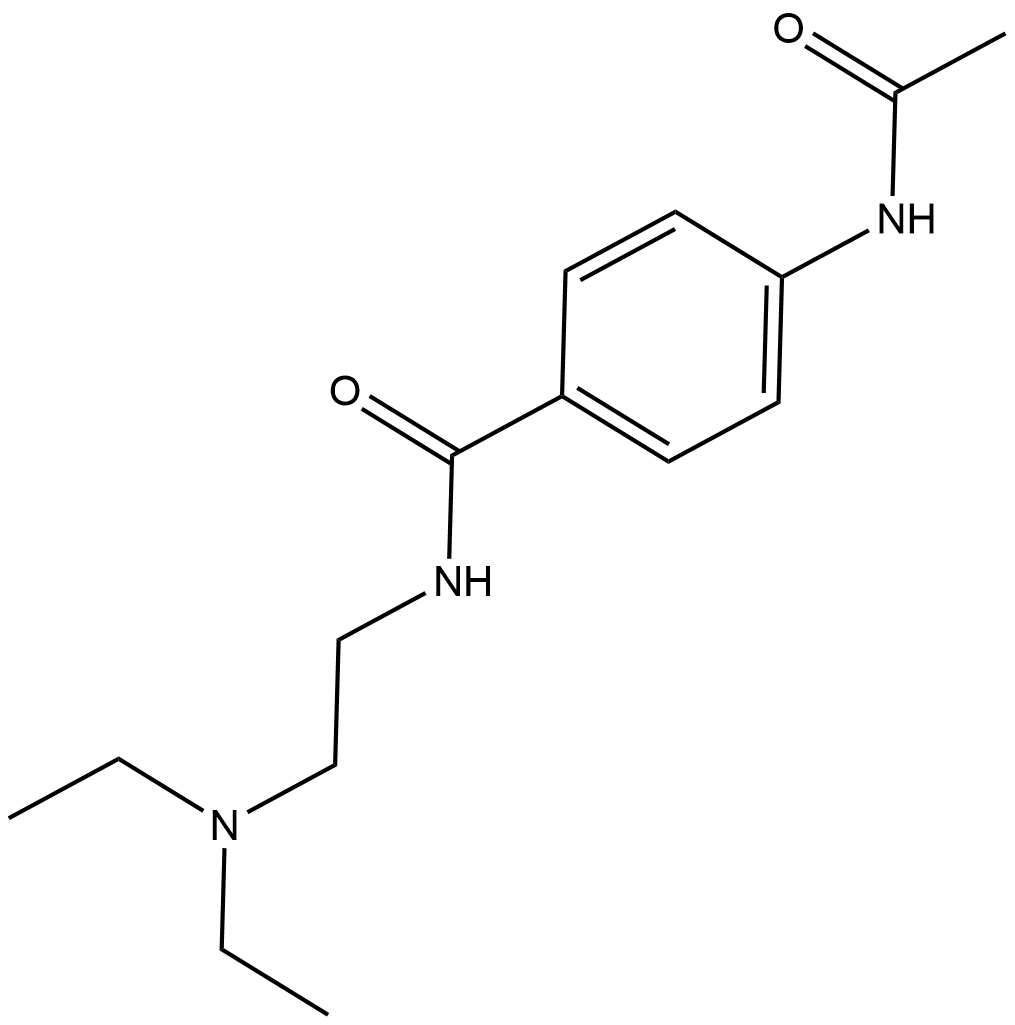
| Chemical Name | 4-acetamido-N-(2-(diethylamino)ethyl)benzamide |
| Canonical SMILES | O=C(NCCN(CC)CC)C1=CC=C(C=C1)NC(=O)C |
| Shipping Condition | Small Molecules with Blue Ice, Modified Nucleotides with Dry Ice. |
| General tips | We do not recommend long-term storage for the solution, please use it up soon. |
Quality Control & MSDS
- View current batch:
Chemical structure