


N-acetylornithine
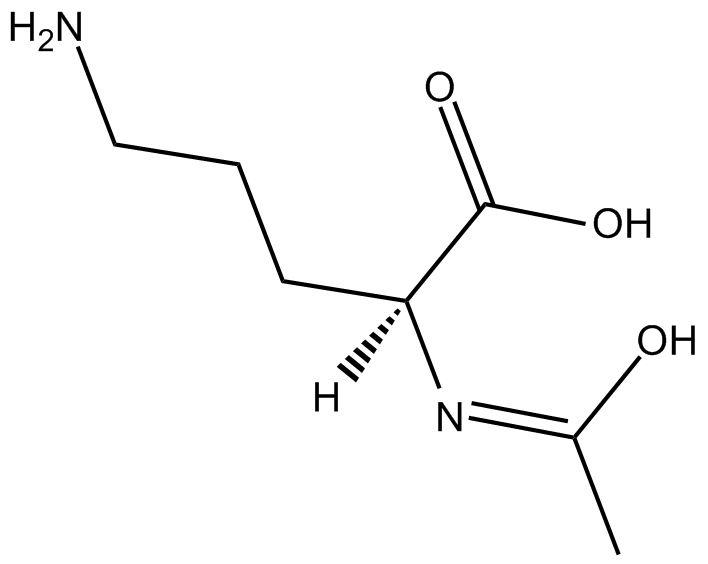
N-acetylornithine (CAS No.: 6205-08-9) is a small endogenous acetylated amino acid intermediate involved in the enzymatic conversion of L-glutamate to L-arginine, functioning as a key metabolic node in arginine and proline biosynthesis pathways. As a precursor to ornithine and a contributor to the formation of γ-glutamic semialdehyde, it plays an important role in amino acid homeostasis and nitrogen metabolism. This compound has been implicated in the regulation of enzymatic activities and metabolic signaling networks associated with amino acid flux, and emerging evidence links its dysregulation to metabolic disorders, including type 2 diabetes, suggesting relevance in studies of metabolic reprogramming. Although specific molecular targets are not fully characterized, its biological effects are thought to arise from modulation of pathway enzymes and associated regulatory circuits within mitochondrial and cytosolic compartments. In vitro studies typically evaluate N-acetylornithine at concentrations spanning the micromolar range, consistent with its role as a metabolic intermediate rather than a high-affinity ligand. It is widely utilized in biochemical assays, metabolomics investigations, and cellular or animal models to probe amino acid metabolism, redox balance, and disease-associated metabolic alterations, with experimental dosing tailored to the specific system and research objectives.
| Physical Appearance | A solid |
| Storage | -20°C |
| M.Wt | 174.2 |
| Cas No. | 6205-08-9 |
| Formula | C7H14N2O3 |
| Synonyms | N α -acetyl-L-Ornithine |
| Solubility | insoluble in DMSO; insoluble in EtOH; ≥55.9 mg/mL in H2O |
| Chemical Name | (S,Z)-5-amino-2-((1-hydroxyethylidene)amino)pentanoic acid |
| Canonical SMILES | C/C(O)=N/[C@@](C(O)=O)([H])CCCN |
| Shipping Condition | Small Molecules with Blue Ice, Modified Nucleotides with Dry Ice. |
| General tips | We do not recommend long-term storage for the solution, please use it up soon. |