MQAE
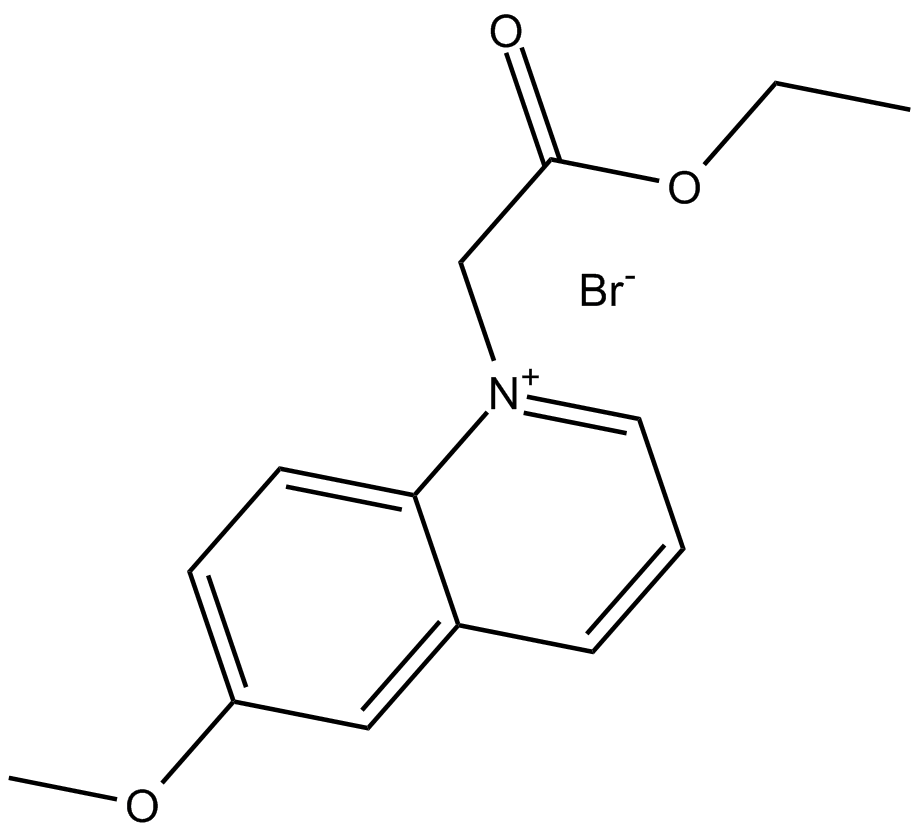
MQAE (CAS No.: 162558-52-3) is a widely utilized quinolinium-based fluorescent probe designed for the quantitative assessment of chloride ion dynamics in biological systems, serving as a non-ratiometric indicator whose fluorescence is quenched in a concentration-dependent manner by chloride through diffusion-limited collisional interactions. Exhibiting excitation and emission maxima around 350/460 nm, MQAE enables sensitive detection of intracellular and extracellular chloride levels, typically within the sub-50 mM range, with minimal interference from physiological pH variations. Its high aqueous solubility and membrane permeability facilitate efficient cellular loading, making it particularly suitable for live-cell imaging applications, including confocal microscopy and flow cytometry. Compared to structurally related probes, MQAE demonstrates enhanced sensitivity and higher fluorescence quantum yield, supporting its use in studies of ion transport, epithelial physiology, neuronal signaling, and regulation of chloride channels and transporters such as CFTR and GABA-associated pathways. While not acting on a specific molecular target in the traditional pharmacological sense, MQAE functions as a reporter of chloride flux and homeostasis, enabling indirect investigation of ion channel activity and related signaling mechanisms. In vitro applications commonly employ micromolar concentrations, with experimental conditions tailored to cell type and assay design, and the probe is frequently integrated into screening platforms and mechanistic studies aimed at understanding ion-dependent cellular processes in health and disease.
| Physical Appearance | A solid |
| Storage | -20°C |
| M.Wt | 326.19 |
| Cas No. | 162558-52-3 |
| Formula | C14H16BrNO3 |
| Synonyms | MQAE |
| Solubility | ≥45 mg/mL in DMSO; ≥48 mg/mL in EtOH; ≥48.3 mg/mL in H2O |
| Chemical Name | 1-(2-ethoxy-2-oxoethyl)-6-methoxyquinolin-1-ium bromide |
| Canonical SMILES | O=C(C[N+]1=CC=CC2=CC(OC)=CC=C21)OCC.[Br-] |
| Shipping Condition | Small Molecules with Blue Ice, Modified Nucleotides with Dry Ice. |
| General tips | We do not recommend long-term storage for the solution, please use it up soon. |