Mepivacaine
Mepivacaine (CAS No.: 96-88-8) is an amide-type local anesthetic widely used in biomedical research and drug discovery. As a well-studied anesthetic, Mepivacaine inhibits sodium ion influx and subsequent membrane depolarization by binding to specific voltage-gated sodium channels located on neuronal cell membranes. This mechanism is important in neurophysiological research and helps deepen the understanding of sodium channel regulation and its effects in neural signaling pathways. Although this compound is primarily used in nerve block and epidural studies in animal models, its applications also extend to various laboratory settings, where it plays a key role in the study of ion channel behavior. Its applications include cellular models and in vivo models for evaluating the pharmacodynamic properties of local anesthetics. Although specific in vitro activity data for Mepivacaine, such as IC50 values, are lacking, this compound exhibits pharmacological properties consistent with other amide anesthetics and is typically used across a broad concentration range determined by experimental parameters and objectives. The specific concentration required for experiments usually depends on the particular cell line or animal model being studied. In the study of the physiological and pharmacological properties of sodium channel inhibitors, Mepivacaine is a valuable tool, strictly used in research contexts and not involving any applications outside clinical or therapeutic use.
| Physical Appearance | Solid |
| Storage | -20°C |
| M.Wt | 246.35 |
| Cas No. | 96-88-8 |
| Formula | C15H22N2O |
| Solubility | ≥44.6 mg/mL in DMSO; ≥44 mg/mL in EtOH; insoluble in H2O |
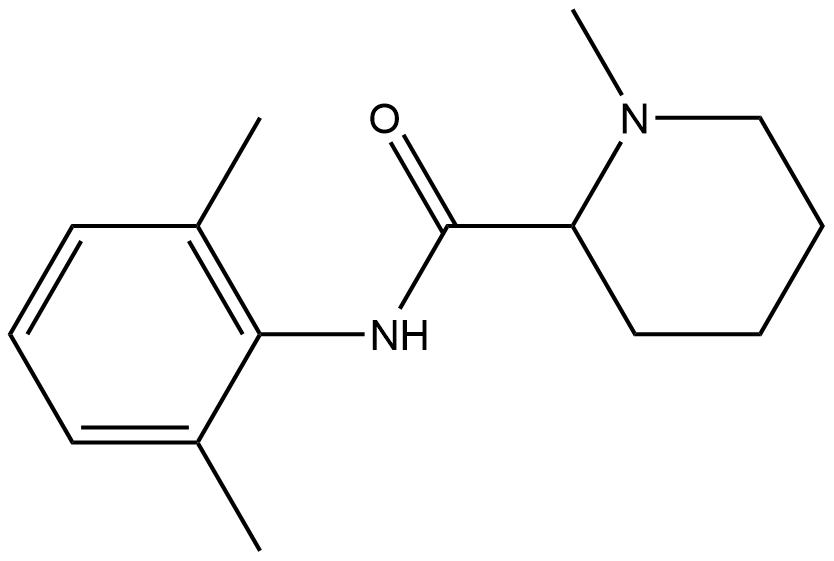
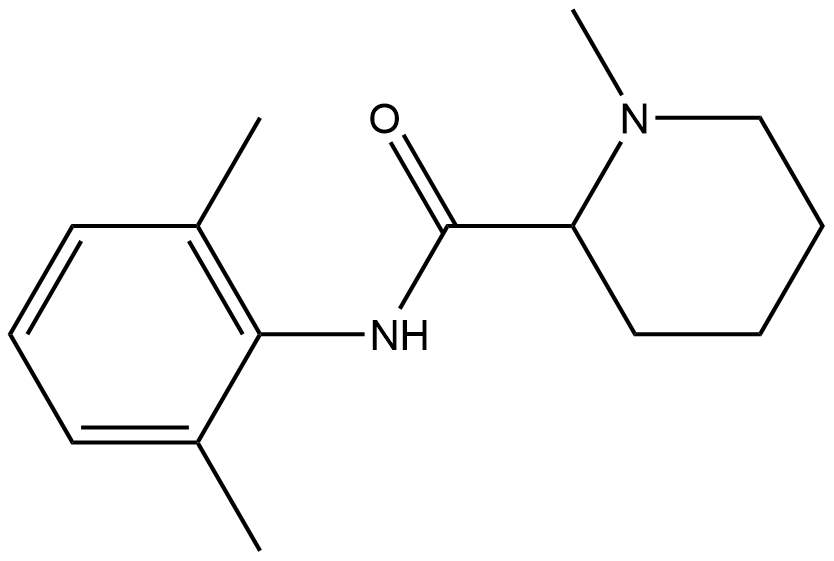
| Chemical Name | N-(2,6-dimethylphenyl)-1-methylpiperidine-2-carboxamide |
| Canonical SMILES | O=C(NC=1C(=CC=CC1C)C)C2N(C)CCCC2 |
| Shipping Condition | Small Molecules with Blue Ice, Modified Nucleotides with Dry Ice. |
| General tips | We do not recommend long-term storage for the solution, please use it up soon. |
Quality Control & MSDS
- View current batch:
Chemical structure