


Melamine
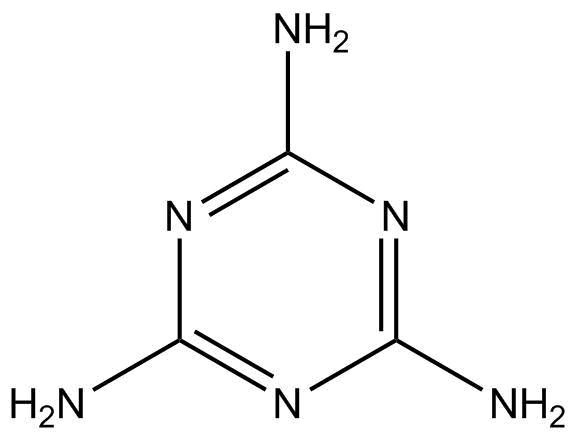





Melamine (CAS No.: 108-78-1) is a nitrogen-rich heterocyclic compound widely utilized as an industrial intermediate and as a research tool in toxicology, metabolism, and biomaterials science. It is recognized as a metabolic product of cyromazine in mammals and is frequently employed to investigate metabolic pathways and biotransformation processes associated with triazine compounds. In biological systems, melamine is known to induce apoptosis and modulate cellular functions, including effects on Sertoli cell activity, making it relevant for studies of male reproductive biology. It exhibits well-documented nephrotoxic and neurotoxic properties, and has been used to establish experimental models of acute kidney injury, cognitive impairment, urinary stone formation, and bladder carcinogenesis, thereby supporting mechanistic investigations of tissue injury and disease progression. In vitro and in vivo studies typically report activity within micromolar concentration ranges, although effective dosing varies depending on experimental design and model system. Additionally, melamine serves as a precursor in the synthesis of polymeric resins and advanced materials, contributing to research in biomaterials development. Its defined toxicological profile and reproducible biological effects make it a valuable probe for cell-based assays, metabolic studies, and preclinical model generation in biomedical research.
| Physical Appearance | Solid |
| Storage | -20°C |
| M.Wt | 126.12 |
| Cas No. | 108-78-1 |
| Formula | C3H6N6 |
| Solubility | insoluble in EtOH; ≥2.59 mg/mL in H2O with ultrasonic; ≥27.7 mg/mL in DMSO |
| Chemical Name | 1,3,5-triazine-2,4,6-triamine |
| Canonical SMILES | NC1=NC(N)=NC(N)=N1 |
| Shipping Condition | Small Molecules with Blue Ice, Modified Nucleotides with Dry Ice. |
| General tips | We do not recommend long-term storage for the solution, please use it up soon. |