


Mebhydrolin napadisylate
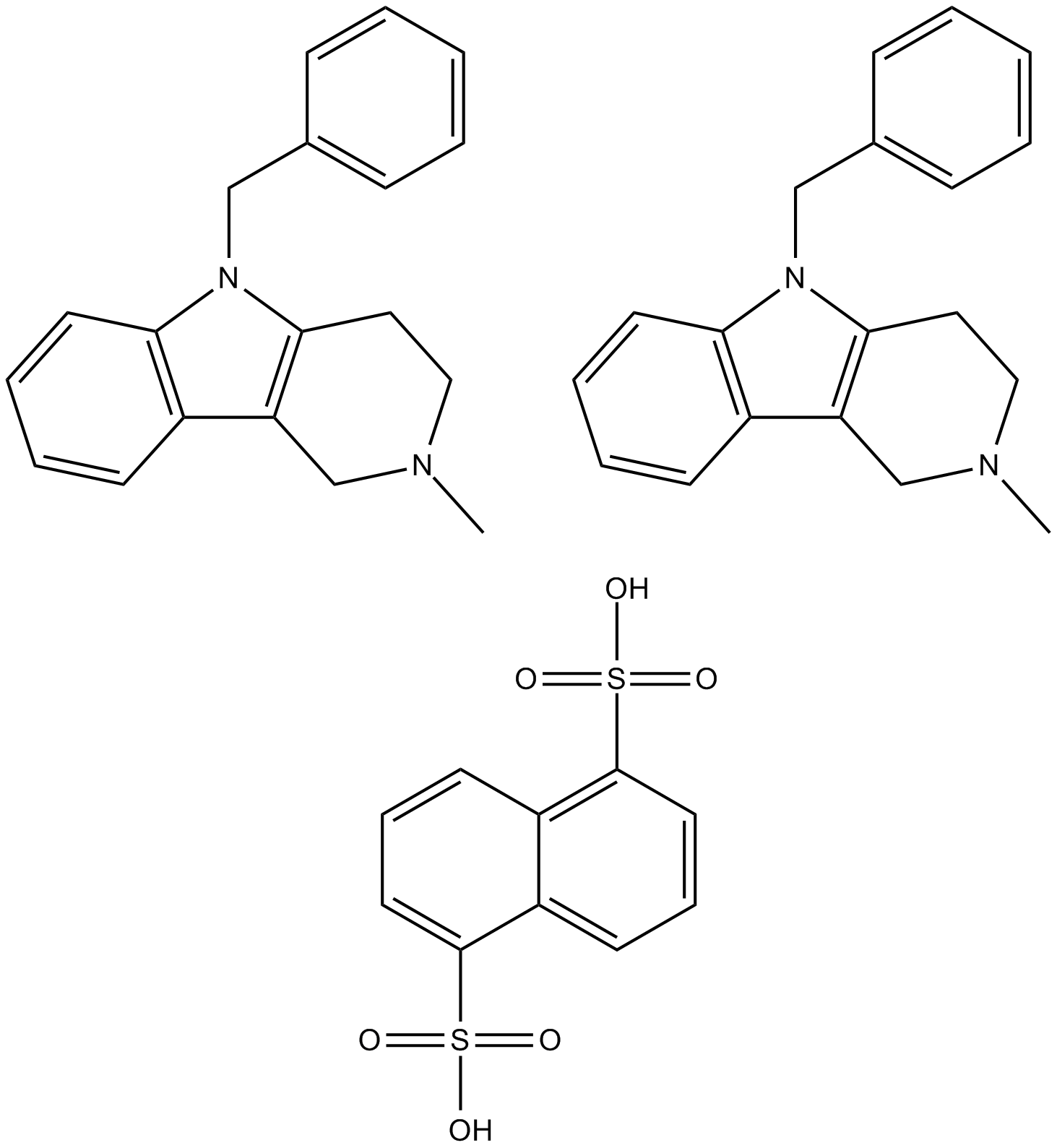
Mebhydrolin napadisylate (CAS No.: 6153-33-9) is a selective histamine H1 receptor antagonist widely utilized in biomedical research as a pharmacological tool for investigating histamine-mediated signaling pathways and allergic responses. By competitively inhibiting histamine binding to H1 receptors, it effectively modulates immune and inflammatory processes, making it relevant for studies of hypersensitivity, neuroimmune interactions, and receptor pharmacology. The compound demonstrates strong in vitro inhibitory activity in the nanomolar to low micromolar range and exhibits selectivity over muscarinic acetylcholine receptors, supporting its use in dissecting receptor-specific mechanisms. Beyond classical antihistaminic activity, mebhydrolin has been reported to influence additional biological targets, including inhibition of acid sphingomyelinase, interaction with the farnesoid X receptor leading to modulation of receptor transactivation, and binding to viral RNA-dependent RNA polymerase, thereby reducing viral replication in cell-based models. In vivo studies further suggest potential metabolic effects, such as modulation of glucose homeostasis in diabetic models. This compound is therefore broadly applied in cell-based assays, receptor binding studies, and animal models to explore immunological, metabolic, and antiviral pathways, with experimental concentrations or dosing regimens tailored to specific study designs and research objectives.
| Physical Appearance | A solid |
| Storage | -20°C |
| M.Wt | 841.05 |
| Cas No. | 6153-33-9 |
| Formula | C48H48N4O6S2 |
| Synonyms | Mebhydrolin napadisylate |
| Solubility | Insoluble in DMSO; insoluble in EtOH; insoluble in H2O |
| Chemical Name | 5-benzyl-2-methyl-2,3,4,5-tetrahydro-1H-pyrido[4,3-b]indole heminaphthalene-1,5-disulfonate |
| Canonical SMILES | O=S(C1=C2C=CC=C(C2=CC=C1)S(=O)(O)=O)(O)=O.CN3CC(C4=C5C=CC=C4)=C(N5CC6=CC=CC=C6)CC3.CN7CC(C8=C9C=CC=C8)=C(N9CC%10=CC=CC=C%10)CC7 |
| Shipping Condition | Small Molecules with Blue Ice, Modified Nucleotides with Dry Ice. |
| General tips | We do not recommend long-term storage for the solution, please use it up soon. |