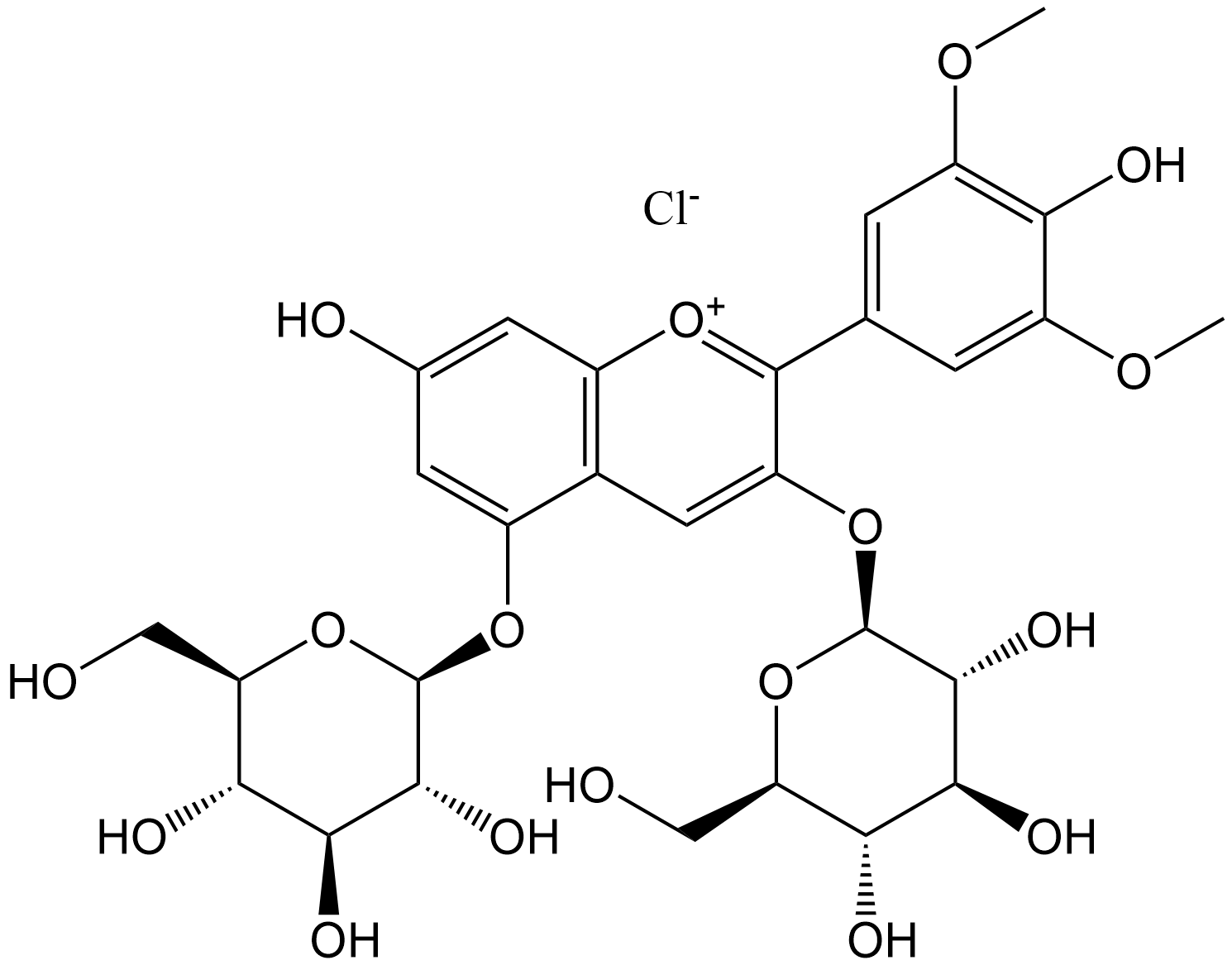
Malvidin-3,5-O-diglucoside chloride
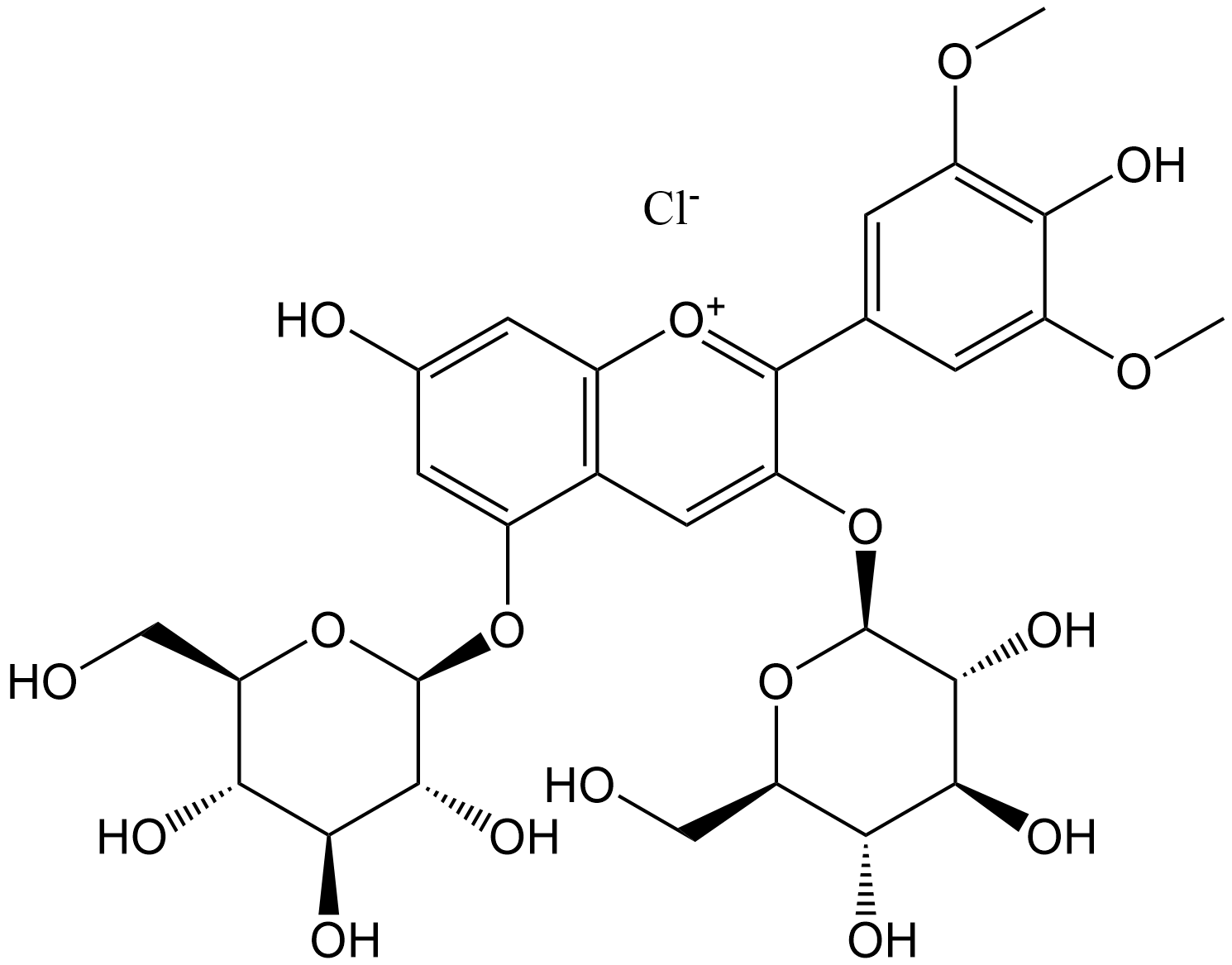





Malvidin-3,5-O-diglucoside (CAS 16727-30-3) is a major anthocyanin component in the peels of grapes. It primarily exerts its effects by regulating hepatic glycolipid metabolism-related genes (e.g., KHK, PEPCK, FASN, ChREBP-β, SREBP-1c, PPAR-α), improving pancreas and liver functions, modulating gut microbiota, and inhibiting inflammatory oxidative stress, thereby showing significant efficacy in alleviating glycolipid metabolic disorders (GLMDs). Its bioactivities are reflected as follows: at a dose of 50 mg/kg body weight, it effectively inhibits body weight gain and fat accumulation in high-fructose diet-fed mice, improves insulin resistance (reducing the HOMA-IR index), hyperglycemia, and abnormal glucose tolerance, restores pancreatic islet morphology and β-cell function (increasing the HOMA-β index), and regulates lipid homeostasis (lowering serum triglycerides (TG) and low-density lipoprotein cholesterol (LDL-C), increasing high-density lipoprotein cholesterol (HDL-C), and reducing hepatic lipid deposition)—with more potent effects than its monoglucoside counterpart Malvidin-3-O-glucoside (M3G). It alleviates oxidative damage by decreasing hepatic malondialdehyde (MDA) content and enhancing the activities of superoxide dismutase (SOD), catalase (CAT), and glutathione peroxidase (GSH-Px); it also mitigates hepatic inflammation by downregulating proinflammatory factors such as tumor necrosis factor-alpha (TNF-α) and interleukin-6 (IL-6) while upregulating the anti-inflammatory factor IL-10. Additionally, it remodels the gut microbiota structure, enriches probiotics like Akkermansia and Parasutterella, and increases the production of short-chain fatty acids (SCFAs) such as acetate, propionate, and butyrate, thereby improving the balance of the intestinal microecology. This compound has good biocompatibility and serves as a potential functional food ingredient or pharmaceutical lead for diseases such as metabolic syndrome and nonalcoholic fatty liver disease.
References:
[1] Yue W, Shi Z, Yang L, Yang Z, Tian X, Chen Q, Cheng Y, Zhang Z, Xu Z, Han F. Malvidin-3-O-glucoside and Malvidin-3,5-O-diglucoside Alleviate Glycolipid Metabolic Disorder by Modulating Pancreas and Liver Functions and Gut Microbiota. J Agric Food Chem. 2025 Jul 30;73(30):18717-18732. doi: 10.1021/acs.jafc.5c00716. Epub 2025 Jul 14. PMID: 40653937.
| Storage | -20℃, sealed storage, away from moisture and light |
| M.Wt | 691.03 |
| Cas No. | 16727-30-3 |
| Formula | C29H35ClO17 |
| Chemical Name | 7-hydroxy-2-(4-hydroxy-3,5-dimethoxyphenyl)-3,5-bis(((2S,3R,4S,5S,6R)-3,4,5-trihydroxy-6-(hydroxymethyl)tetrahydro-2H-pyran-2-yl)oxy)chromenylium chloride |
| Canonical SMILES | OC1=C(OC)C=C(C2=[O+]C3=C(C=C2O[C@@H]4O[C@H](CO)[C@@H](O)[C@H](O)[C@H]4O)C(O[C@@H]5O[C@H](CO)[C@@H](O)[C@H](O)[C@H]5O)=CC(O)=C3)C=C1OC.[Cl-] |
| Shipping Condition | Small Molecules with Blue Ice, Modified Nucleotides with Dry Ice. |
| General tips | We do not recommend long-term storage for the solution, please use it up soon. |
Quality Control & MSDS
- View current batch:
-
Purity = 98.00%
- COA (Certificate Of Analysis)
- MSDS (Material Safety Data Sheet)
Chemical structure