


Malic acid
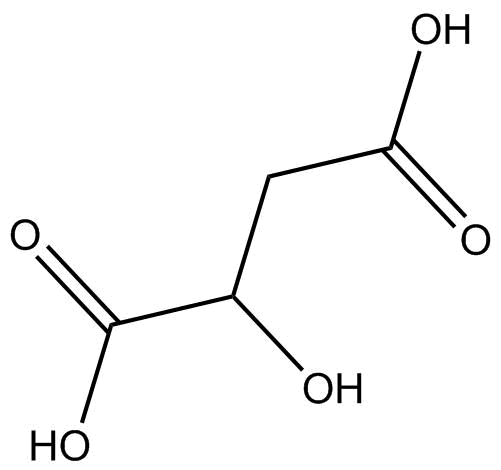
Malic acid (CAS No.: 6915-15-7) is a naturally occurring dicarboxylic acid widely distributed in fruits such as apples and pears and functions as a key intermediate in the tricarboxylic acid cycle, positioning it as an important metabolic regulator in cellular bioenergetics and redox balance. In biomedical research, malic acid and its racemic form are commonly classified as small-molecule metabolic modulators with additional roles in inflammation and epithelial biology. Experimental evidence indicates that malic acid can modulate pro-inflammatory signaling pathways, including the suppression of cytokine-induced expression of adhesion molecules such as CCL2 and ICAM in keratinocyte models, suggesting involvement in pathways downstream of IFN-γ and TNF-α stimulation. In vitro studies typically demonstrate activity at low millimolar to micromolar concentrations, while in vivo applications, including topical administration in murine models, have shown attenuation of epidermal and dermal thickening and reduced immune cell infiltration in inflammatory skin conditions. Beyond its metabolic and anti-inflammatory properties, malic acid has been explored in clinical and translational contexts for conditions such as xerostomia, depression, and hypertension, although its mechanisms in these indications remain under investigation. Due to its favorable biocompatibility and multifunctional profile, malic acid is frequently utilized in cell-based assays, metabolic flux studies, and preclinical disease models, with concentrations or doses adjusted according to specific experimental designs and therapeutic hypotheses.
| Physical Appearance | A solid |
| Storage | -20°C |
| M.Wt | 134.09 |
| Cas No. | 6915-15-7 |
| Formula | C4H6O5 |
| Synonyms | E 296; Hydroxybutanedioic Acid; (±)-Malic Acid; NSC 25941; 2-hydroxy Succinic acid |
| Solubility | ≥21.05 mg/mL in H2O; ≥24 mg/mL in EtOH; ≥47 mg/mL in DMSO |
| Chemical Name | 2-hydroxysuccinic acid |
| Canonical SMILES | OC(C(O)=O)CC(O)=O |
| Shipping Condition | Small Molecules with Blue Ice, Modified Nucleotides with Dry Ice. |
| General tips | We do not recommend long-term storage for the solution, please use it up soon. |