


maleate
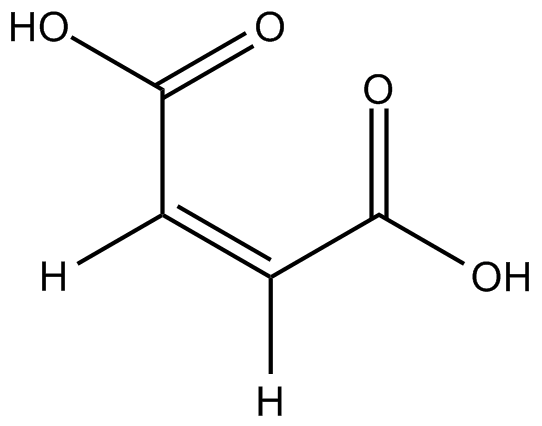
maleate (CAS No.: 110-16-7) is a small organic molecule belonging to the class of dicarboxylic acids and their derivatives, characterized by the presence of two carboxyl functional groups and widely utilized as a biochemical reagent in life sciences research. It is commonly studied for its role as an inhibitor of glutamate decarboxylase (GAD) in bacterial systems such as Escherichia coli and Listeria monocytogenes, where it interferes with glutamate-dependent acid resistance pathways and cellular metabolic regulation. Through modulation of GAD activity, maleate serves as a useful tool for investigating amino acid decarboxylation processes, intracellular pH homeostasis, and stress response mechanisms in microbial models. In vitro studies indicate that its inhibitory effects are typically observed in the low micromolar to millimolar concentration range, depending on enzyme source and assay conditions. In research settings, maleate is applied in enzymology assays, metabolic pathway analyses, and antimicrobial mechanism studies, as well as in broader investigations of dicarboxylic acid metabolism and transport. Experimental concentrations and protocols vary according to specific study designs, cell types, or organismal models, making it a versatile reagent for probing fundamental biochemical and microbiological processes.
| Physical Appearance | Solid |
| Storage | -20°C |
| M.Wt | 116.07 |
| Cas No. | 110-16-7 |
| Formula | C4H4O4 |
| Solubility | ≥15.43 mg/mL in EtOH; ≥27.95 mg/mL in DMSO; ≥28.85 mg/mL in H2O |
| Chemical Name | maleic acid |
| Canonical SMILES | O=C(O)/C([H])=C([H])\C(O)=O |
| Shipping Condition | Small Molecules with Blue Ice, Modified Nucleotides with Dry Ice. |
| General tips | We do not recommend long-term storage for the solution, please use it up soon. |