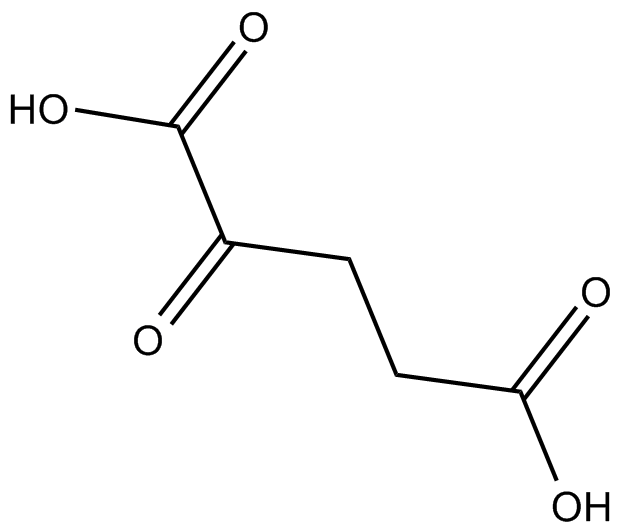
malate
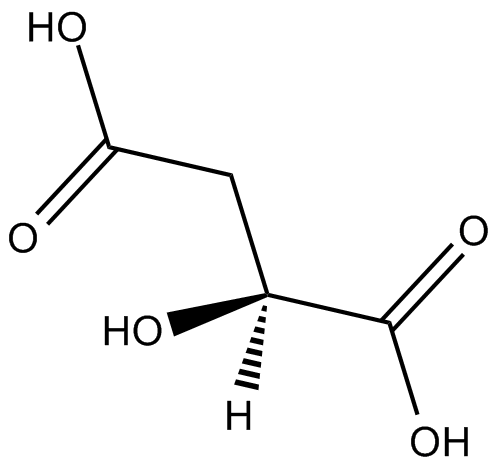
malate (CAS No.: 97-67-6) is a naturally occurring dicarboxylic acid and a central metabolic intermediate in the tricarboxylic acid cycle, widely utilized as a biochemical reagent in studies of cellular metabolism and mitochondrial function. As an ionized form of malic acid, malate participates in key enzymatic reactions including its reversible conversion to oxaloacetate by malate dehydrogenase, contributing to redox balance through the malate–aspartate shuttle and supporting NADH transfer across mitochondrial membranes. It is also involved in anaplerotic pathways linking glycolysis and the TCA cycle, thereby influencing energy production under both aerobic and hypoxic conditions. In experimental systems, malate has been employed to investigate metabolic flux, enzyme activity modulation, and signaling pathways associated with energy homeostasis and oxidative stress. Although it does not function as a direct ligand for a single defined molecular target, its regulatory roles extend to multiple enzyme systems and metabolic networks, making it relevant for studies of metabolic disorders and mitochondrial dynamics. In vitro and in vivo studies typically use concentrations ranging from low micromolar to millimolar levels depending on the experimental design, with applications spanning cell-based assays, isolated mitochondrial preparations, and animal models to assess bioenergetic responses and metabolic adaptation.
| Physical Appearance | Solid |
| Storage | -20°C |
| M.Wt | 134.09 |
| Cas No. | 97-67-6 |
| Formula | C4H6O5 |
| Solubility | ≥13.47 mg/mL in DMSO with ultrasonic; ≥20.2 mg/mL in EtOH; ≥24.8 mg/mL in H2O |
| Chemical Name | (S)-2-hydroxysuccinic acid |
| Canonical SMILES | O[C@@](C(O)=O)([H])CC(O)=O |
| Shipping Condition | Small Molecules with Blue Ice, Modified Nucleotides with Dry Ice. |
| General tips | We do not recommend long-term storage for the solution, please use it up soon. |