


Lyso-Sphingomyelin
Lyso-Sphingomyelin (CAS No.: 1670-26-4) is a bioactive sphingolipid metabolite, also known as sphingosylphosphorylcholine, that functions as an important regulator of cellular signaling pathways and is commonly detected as a component of plasma lipoproteins. It acts as an agonist of multiple G protein-coupled receptors, including sphingosine-1-phosphate receptors S1P1, S1P2, and S1P3, as well as OGR1, where it induces intracellular calcium mobilization and downstream signaling events with activities typically observed in the nanomolar to low micromolar range. Mechanistically, Lyso-Sphingomyelin modulates diverse biological processes such as cell proliferation, differentiation, apoptosis, and inflammatory responses, in part through pathways involving Smad2 phosphorylation, TRPM3 activation, and upregulation of markers such as α-smooth muscle actin, uPA, and its receptor. It has been reported to exert anti-apoptotic and cytoprotective effects, contribute to wound healing responses, and influence cardiovascular and immune-related processes. Elevated levels have been associated with pathological conditions including atopic dermatitis and lysosomal storage disorders, supporting its relevance as both a biomarker and signaling mediator. In biomedical research, Lyso-Sphingomyelin is widely utilized in studies of tumor biology, receptor pharmacology, lipid signaling networks, and disease modeling in cell-based and animal systems, where experimental concentrations are selected based on specific assay requirements and mechanistic endpoints.
| Physical Appearance | A crystalline solid |
| Storage | -20°C |
| M.Wt | 464.62 |
| Cas No. | 1670-26-4 |
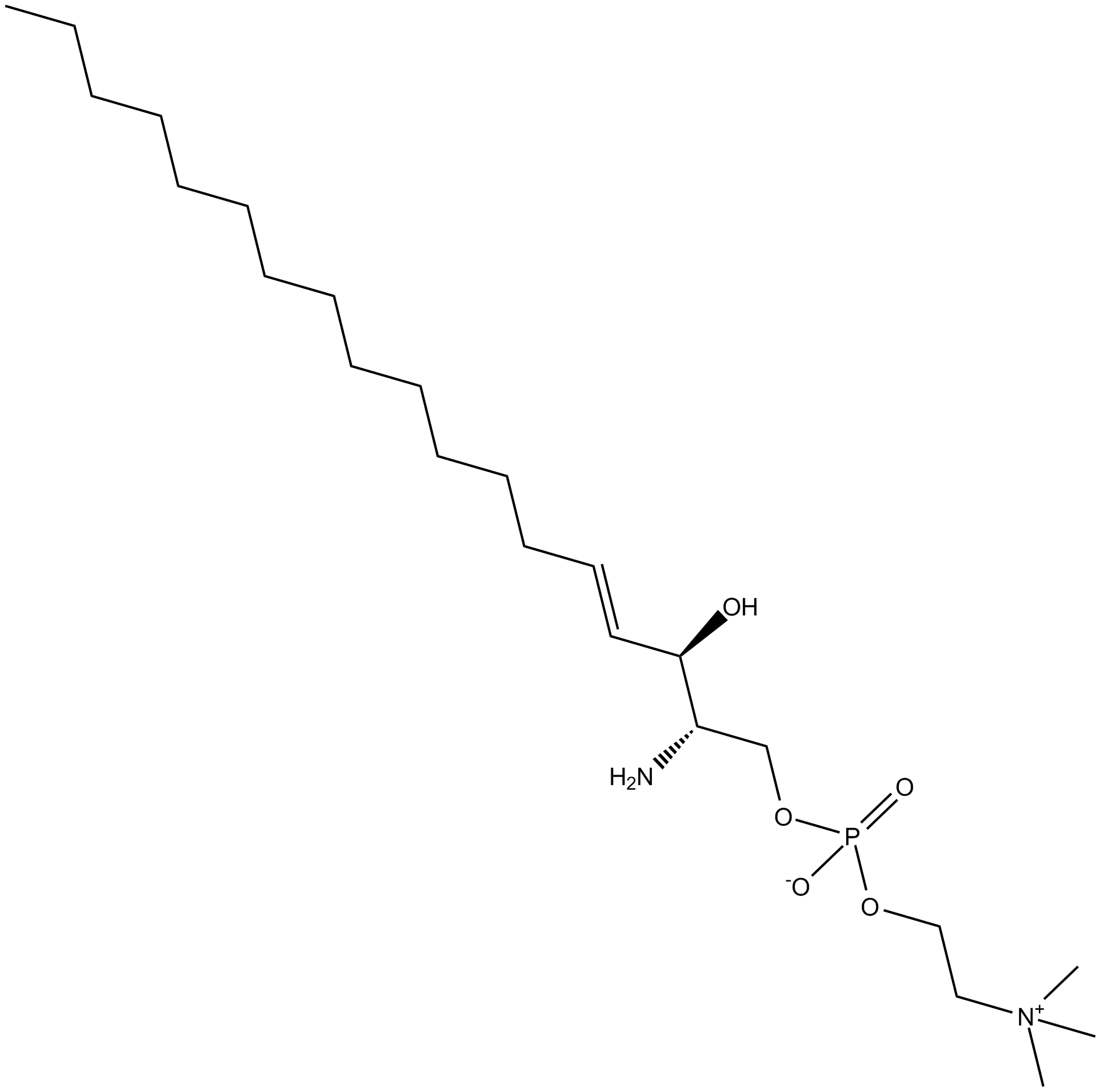
| Formula | C23H49N2O5P |
| Synonyms | D- erythro Lyso SM(18:1); D- erythro -Sphingophosphorylcholine; D- erythro Sphingosine-1-Phosphocholine (d18:1); Lyso-SM(d18:1); Lysosphingomyelin (d18:1) |
| Solubility | ≤15mg/ml in ethanol |
| Chemical Name | (2S,3R,E)-2-amino-3-hydroxyoctadec-4-en-1-yl (2-(trimethylammonio)ethyl) phosphate |
| Canonical SMILES | CCCCCCCCCCCCC/C=C/[C@@H](O)[C@@H](N)COP([O-])(OCC[N+](C)(C)C)=O |
| Shipping Condition | Small Molecules with Blue Ice, Modified Nucleotides with Dry Ice. |
| General tips | We do not recommend long-term storage for the solution, please use it up soon. |