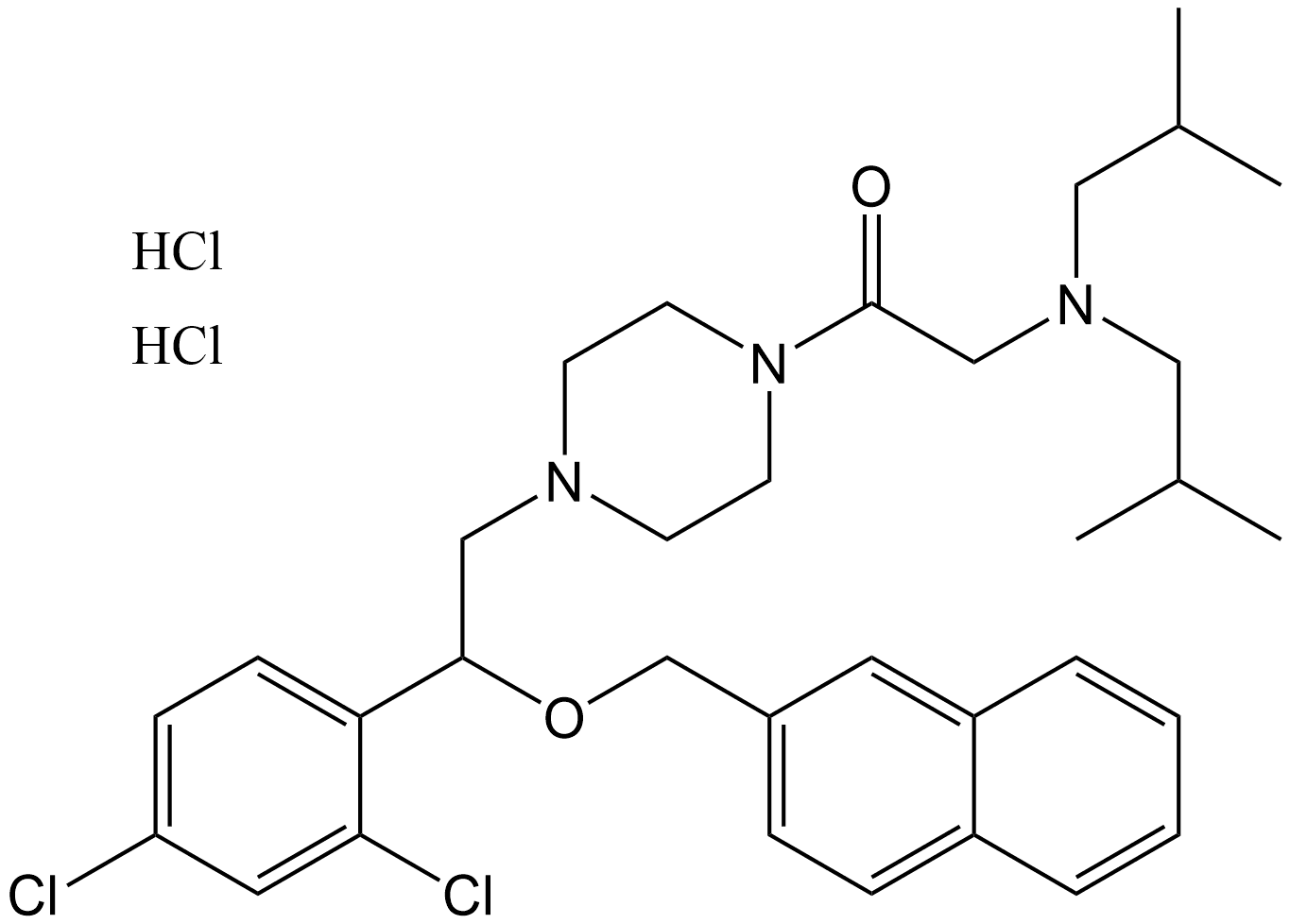
LYN-1604 2HCl
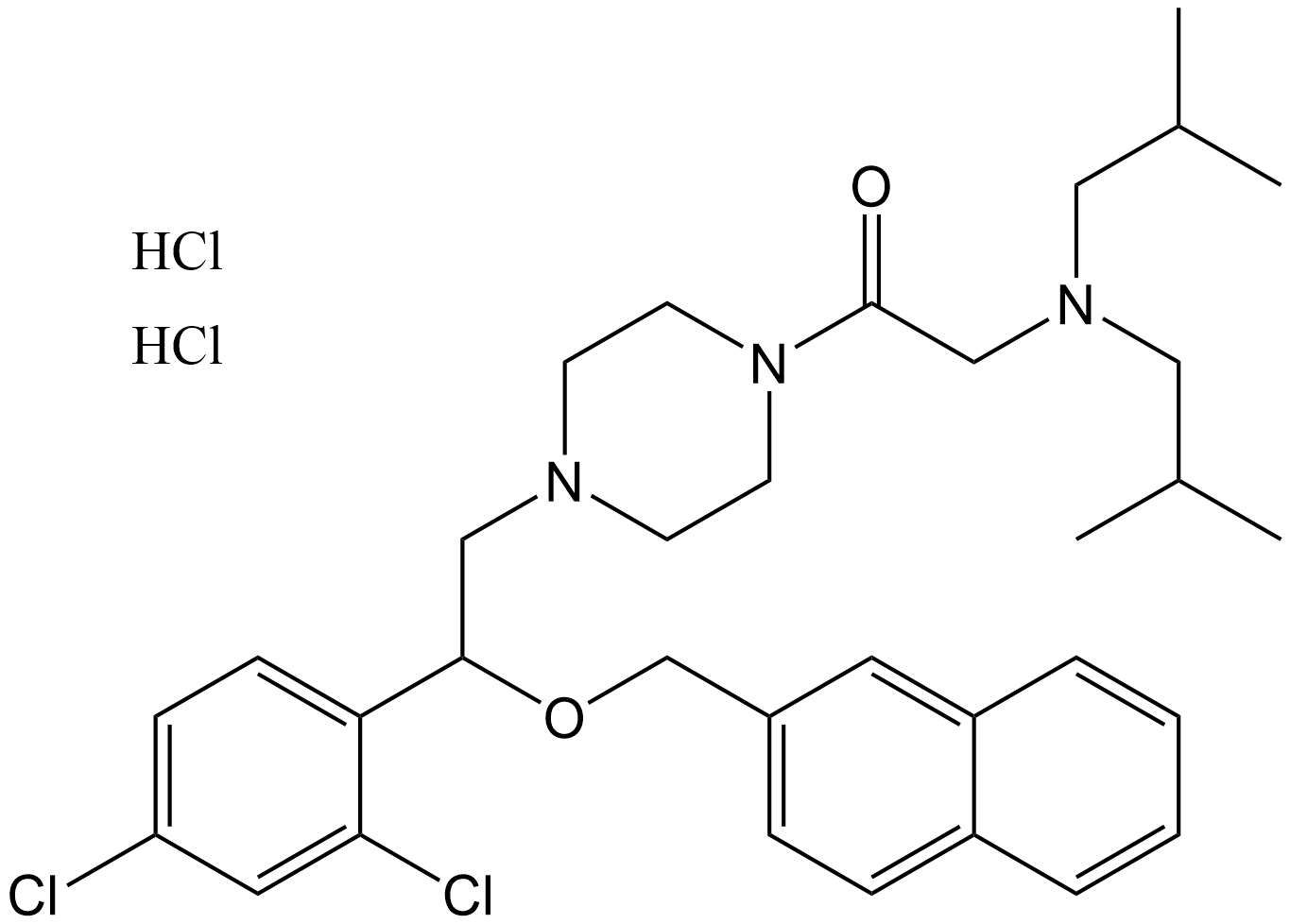
LYN-1604 dihydrochloride (CAS No.: 2310109-38-5) is a highly selective ULK1 activator that participates in the regulation of multiple pathways by directly enhancing ULK1 kinase activity: in the canonical autophagy pathway, it upregulates ULK1 phosphorylation, promotes autophagosome formation and the conversion of LC3-I to LC3-II, and enhances overall autophagic flux; in asthma-related pathways, it affects Golgi structure through the ULK1/Atg9a/Rab9 axis, and promotes NLRP3 inflammasome activation and upregulation of pro-inflammatory factors such as caspase-1 and IL-1β via mitochondrial oxidative stress; in models of muscle aging and corneal hyperosmotic stress, it activates the AMPKα1–ULK1 autophagy axis and mitophagy, helping to clear damaged mitochondria and reduce oxidative stress and cellular senescence; in triple-negative breast cancer cells, ULK1-mediated autophagy activation reprograms transcriptional, translational, and immune-related networks and downregulates multiple tumor-associated hub proteins.
At the cellular level, in human triple-negative breast cancer MDA-MB-231 cells, the EC₅₀ of LYN-1604 for inducing ULK1 phosphorylation is 29.8 μM, and approximately 29.8 μM treatment for 24 h is commonly used to induce autophagy and conduct quantitative proteomics studies; in human corneal epithelial cells, continuous treatment with 2 μM is commonly used to enhance autophagy and mitophagy and alleviate hyperosmolarity-induced oxidative stress and cellular senescence; in mouse C2C12 myotubes, 2 μM treatment for 48 h is often used to activate the AMPKα1–ULK1 autophagy axis and improve the D-galactose-induced myotube senescence phenotype; in human bronchial epithelial Beas-2b cells, this compound is used to dissect the regulatory role of ULK1–Atg9a signaling on the NLRP3 inflammasome and Golgi homeostasis, and existing literature has not reported inhibitory parameters such as IC₅₀ or MIC.
In animal experiments, in a house dust mite-induced mouse model of asthma, LYN-1604 administered by intraperitoneal injection at 20 mg/kg/day with continuous dosing from days 17–27 after model induction significantly activates ULK1 in lung tissue, promotes phosphorylation of Atg9a at Ser14, and enhances NLRP3 inflammasome activation, thereby aggravating Golgi fragmentation and pulmonary inflammatory responses, suggesting its pro-pathological role in excessive autophagy and inflammation amplification.
References:
[1] Xu C, Song Y, Liu W, Liu R, Bai Q, Li L, Wang C, Yan G. IL-4 activates ULK1/Atg9a/Rab9 in asthma, NLRP3 inflammasomes, and Golgi fragmentation by increasing autophagy flux and mitochondrial oxidative stress. Redox Biol. 2024 May;71:103090. doi: 10.1016/j.redox.2024.103090. Epub 2024 Feb 15. PMID: 38373380; PMCID: PMC10878789.
[2] Yang JH, Gao J, E YQ, Jiao LJ, Wu R, Yan QY, Wei ZY, Yan GL, Liang JL, Li HZ. Hydrogen sulfide inhibits skeletal muscle ageing by up-regulating autophagy through promoting deubiquitination of adenosine 5'-monophosphate (AMP)-activated protein kinase α1 via ubiquitin specific peptidase 5. J Cachexia Sarcopenia Muscle. 2024 Oct;15(5):2118-2133. doi: 10.1002/jcsm.13560. Epub 2024 Aug 27. PMID: 39189428; PMCID: PMC11446701.
[3] Zhang Y, Fan T. Hyperosmolarity-Induced Oxidative Stress Leads to Senescence in Human Corneal Epithelial Cells (HCEPC) via DNA Damage, Metabolic Disturbance and Mitophagy Decline. Antioxidants (Basel). 2025 Nov 19;14(11):1381. doi: 10.3390/antiox14111381. PMID: 41300537; PMCID: PMC12649220.
[4] Bal Albayrak MG, Yanar S, Korak T, Akpinar G, Kasap M. ULK1-driven autophagy modulation alters tumor-promoting pathways in triple-negative breast cancer. Med Oncol. 2026 Mar 3;43(4):163. doi: 10.1007/s12032-026-03274-x. PMID: 41774346; PMCID: PMC12956968.
| Storage | Store at -20°C away from moisture |
| M.Wt | 657.54 |
| Cas No. | 2310109-38-5 |
| Formula | C33H43Cl2N3O2·2HCl |
| Chemical Name | 1-(4-(2-(2,4-dichlorophenyl)-2-(naphthalen-2-ylmethoxy)ethyl)piperazin-1-yl)-2-(diisobutylamino)ethan-1-one dihydrochloride |
| Canonical SMILES | [H]Cl.ClC1=CC=C(C(CN2CCN(C(CN(CC(C)C)CC(C)C)=O)CC2)OCC3=CC=C(C=CC=C4)C4=C3)C(Cl)=C1.[H]Cl |
| Shipping Condition | Small Molecules with Blue Ice, Modified Nucleotides with Dry Ice. |
| General tips | We do not recommend long-term storage for the solution, please use it up soon. |
Quality Control & MSDS
- View current batch:
Chemical structure