Loperamide HCl
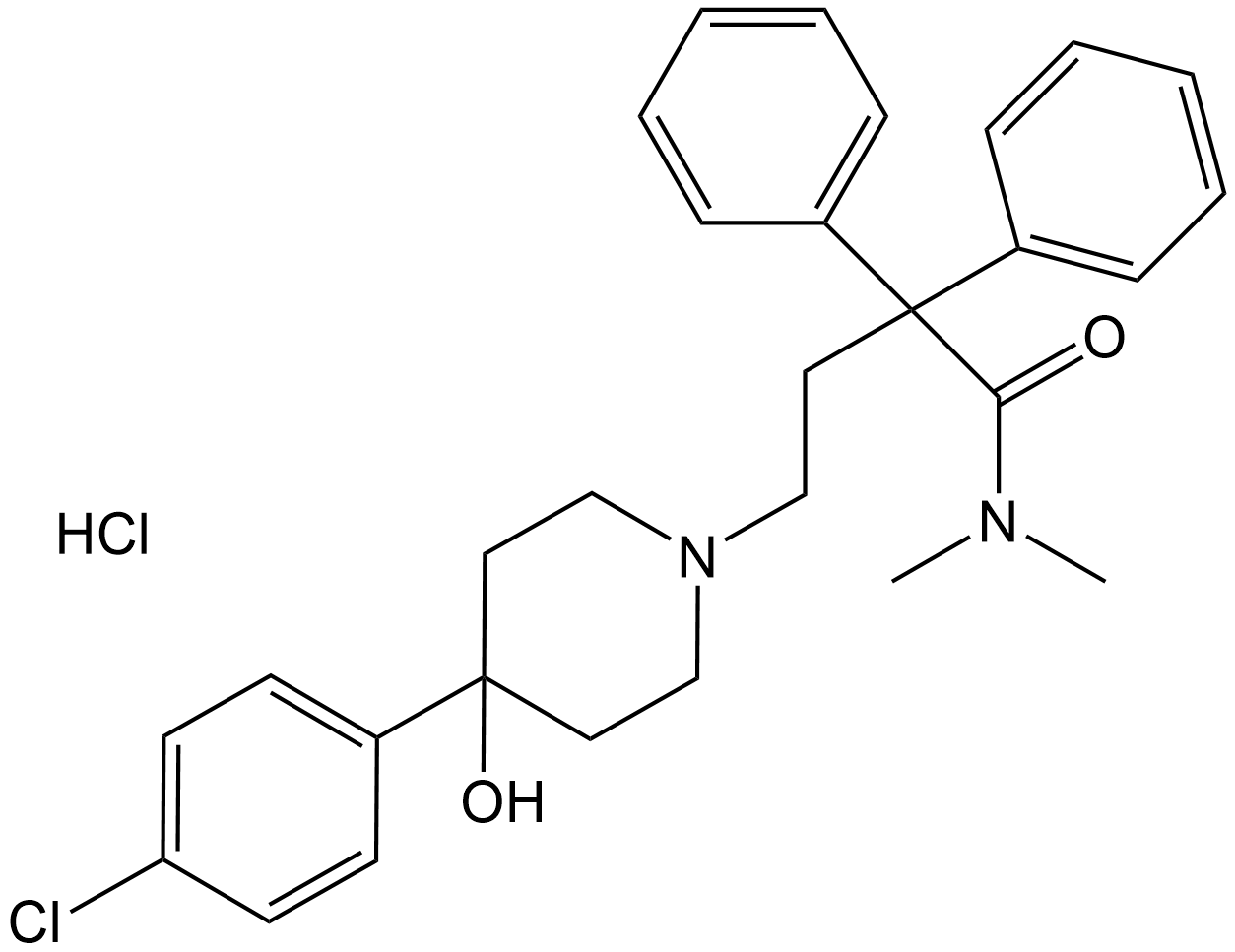
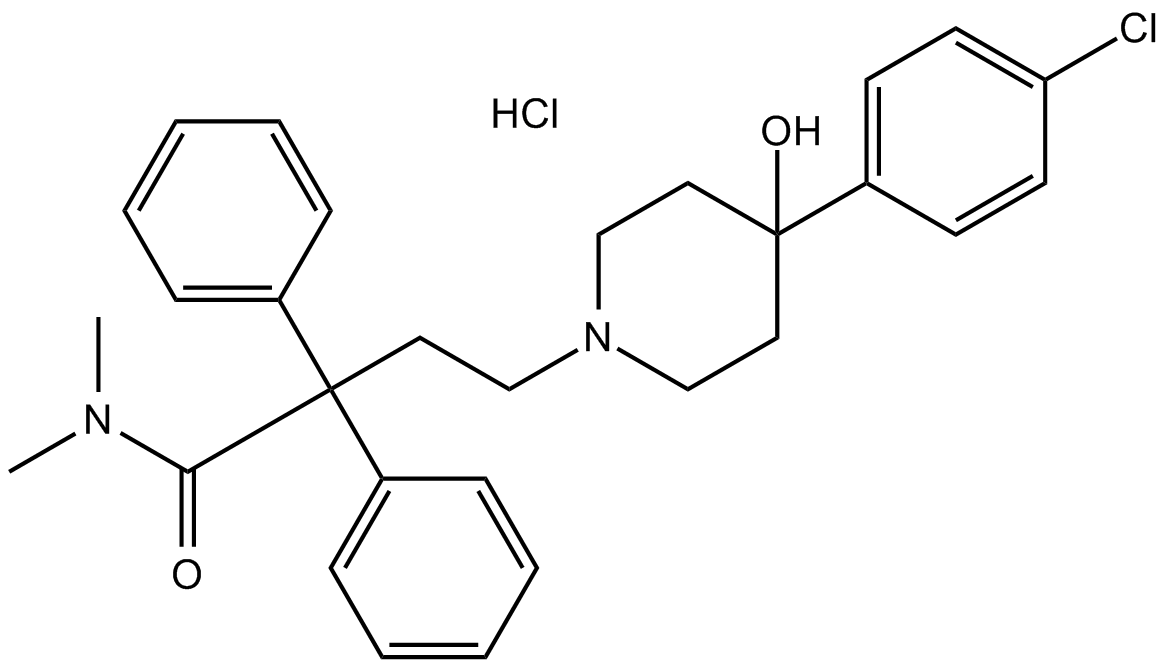
Loperamide hydrochloride (CAS No.: 34552-83-5) is a peripherally acting μ-opioid receptor agonist. Its targets include peripheral μ-opioid receptors (where it acts as an agonist) and P-glycoprotein (competitively binding this efflux pump as a high-affinity substrate and inhibiting its drug efflux function). The biological pathways involved include tumor cell apoptosis pathways (inducing apoptosis in human tumor cells through activation of the caspase-3 pathway) and cell cycle regulation pathways (inducing G0/G1 phase arrest in canine tumor cells and G2/M phase arrest in human tumor cells). It can also reverse tumor multidrug resistance by inhibiting P-glycoprotein efflux function and synergistically enhance the cytotoxicity of chemotherapeutic drugs.
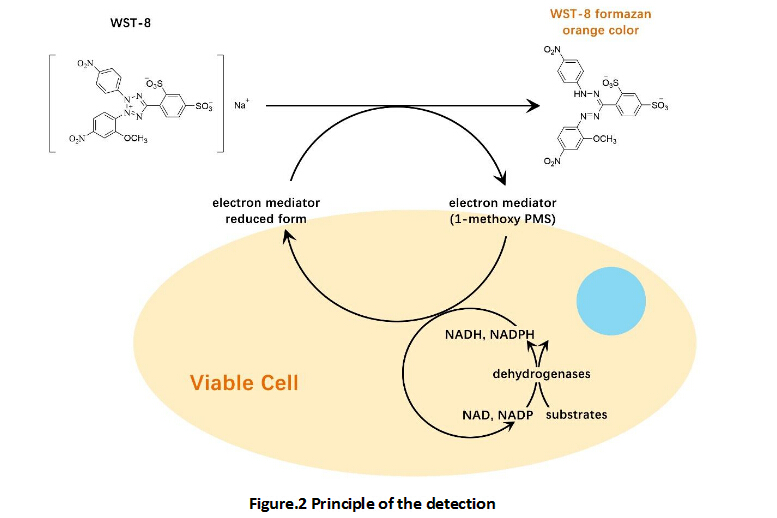
In in vitro cell experiments, its inhibition of proliferation in canine tumor cells was dose- and time-dependent, with the maximum inhibitory effect reached at 24 h. The 72 h IC₅₀ values for four canine cancer cell lines were: D-17 osteosarcoma 7.2 μM (highest sensitivity), CML-1 melanoma 14.8 μM, CTAC thyroid carcinoma 19.3 μM, and CMT-12 mammary carcinoma 25.8 μM; the IC₅₀ range for multiple human tumor cell lines was 12~41 μM, with osteosarcoma cells likewise being the most sensitive. The commonly used concentration range in cell experiments is 0.01~100 μM: 10 μM is mostly used in combination chemotherapy sensitization experiments with doxorubicin (Cat. No.: A3966, CAS No.: 23214-92-8), 25 μM is used for chemotherapy sensitization experiments in CMT-12 cells, and treatment with 30 μM for 24~48 h can induce significant apoptosis and G0/G1 phase cell cycle arrest; combination treatment experiments showed that it has a synergistic killing effect with doxorubicin in CTAC and CMT-12 canine cancer cell lines, while no synergy was observed in D-17 and CML-1 cell lines.
In clinical and animal applications, this drug is routinely used for the treatment of chemotherapy-associated diarrhea in canine and human cancer patients. After oral administration of 0.2 mg/kg in dogs, the blood drug concentration is approximately 0.02 μM; when the dose reaches 1.25 mg/kg, toxic reactions such as vomiting, diarrhea, and central nervous system depression may occur.
References:
[1] Regan RC, Gogal RM Jr, Barber JP, Tuckfield RC, Howerth EW, Lawrence JA. Cytotoxic effects of loperamide hydrochloride on canine cancer cells. J Vet Med Sci. 2014 Dec;76(12):1563-8. doi: 10.1292/jvms.13-0537. Epub 2014 Sep 15. PMID: 25649936; PMCID: PMC4300369.
| Storage | Store at -20°C away from moisture |
| M.Wt | 513.5 |
| Cas No. | 34552-83-5 |
| Formula | C29H33ClN2O2·HCl |
| Solubility | Soluble in DMSO > 10 mM |
| Chemical Name | 4-(4-(4-chlorophenyl)-4-hydroxypiperidin-1-yl)-N,N-dimethyl-2,2-diphenylbutanamide hydrochloride |
| Canonical SMILES | Cl.O=C(N(C)C)C(C=1C=CC=CC1)(C=2C=CC=CC2)CCN3CCC(O)(C4=CC=C(Cl)C=C4)CC3 |
| Shipping Condition | Small Molecules with Blue Ice, Modified Nucleotides with Dry Ice. |
| General tips | We do not recommend long-term storage for the solution, please use it up soon. |
Quality Control & MSDS
- View current batch:
Chemical structure