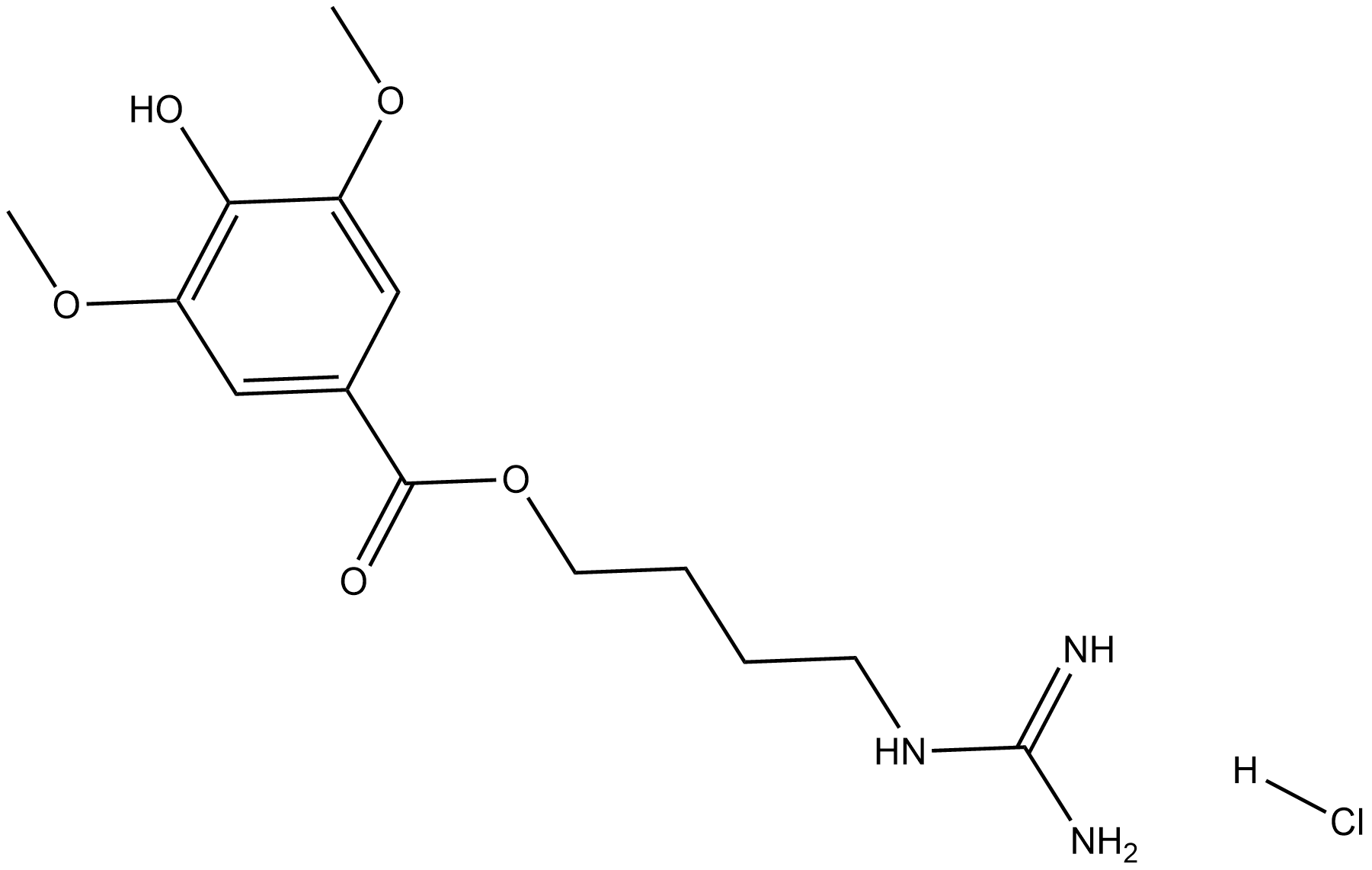
Leonurine HCl
Leonurine HCl (CAS No.: 24735-18-0) is a plant-derived alkaloid hydrochloride from the Lamiaceae genus Leonurus (such as Leonurus japonicus Houtt. and Herba leonuri), and is commonly used as a research-grade chemical probe in life sciences and drug discovery to elucidate signaling regulatory networks in areas such as redox biology, inflammatory responses, vascular biology, and tumor biology; in cellular systems, it can activate Nrf2-dependent cytoprotective transcriptional programs and inhibit NF-κB-driven expression of pro-inflammatory factors, interacts in cross-regulation with the PI3K/Akt and MAPK/ERK cascade pathways, and is often accompanied by effects on apoptosis-related regulators (such as the Bcl-2 family and caspases); in endothelial models, studies show that it enhances nitric oxide bioavailability through PI3K/Akt-mediated eNOS activation and supports cell survival and angiogenesis-related signaling under oxidative stress conditions; in tumor-related research, it is often used to jointly modulate pathways such as PI3K/Akt/mTOR, STAT3, MAPK/ERK, NF-κB, and TRAIL death receptors, to examine effects on cell proliferation, invasion, and survival phenotypes, and to induce apoptosis and autophagy to support mechanistic interpretation; in addition, as an anti-glycation tool compound, it can inhibit the formation of advanced glycation end products in model systems and is used to study carbonyl stress and protein damage pathways; in vitro activity is commonly observed at low micromolar to tens of micromolar levels, with the specific effective range affected by cell type, experimental endpoint, and exposure time; typical applications include mechanistic validation and lead compound screening in HUVECs, macrophage cell lines, neuron-like cells, cardiomyocyte surrogate models, and corresponding rodent models, with the concentration or dose used in experiments typically depending on the specific experimental design and research objective; this product is for laboratory research use only and is not intended for human or veterinary use.
| Storage | Store at -20°C |
| M.Wt | 347.79 |
| Cas No. | 24735-18-0 |
| Formula | C14H22ClN3O5 |
| Synonyms | SCM-198 HCl |
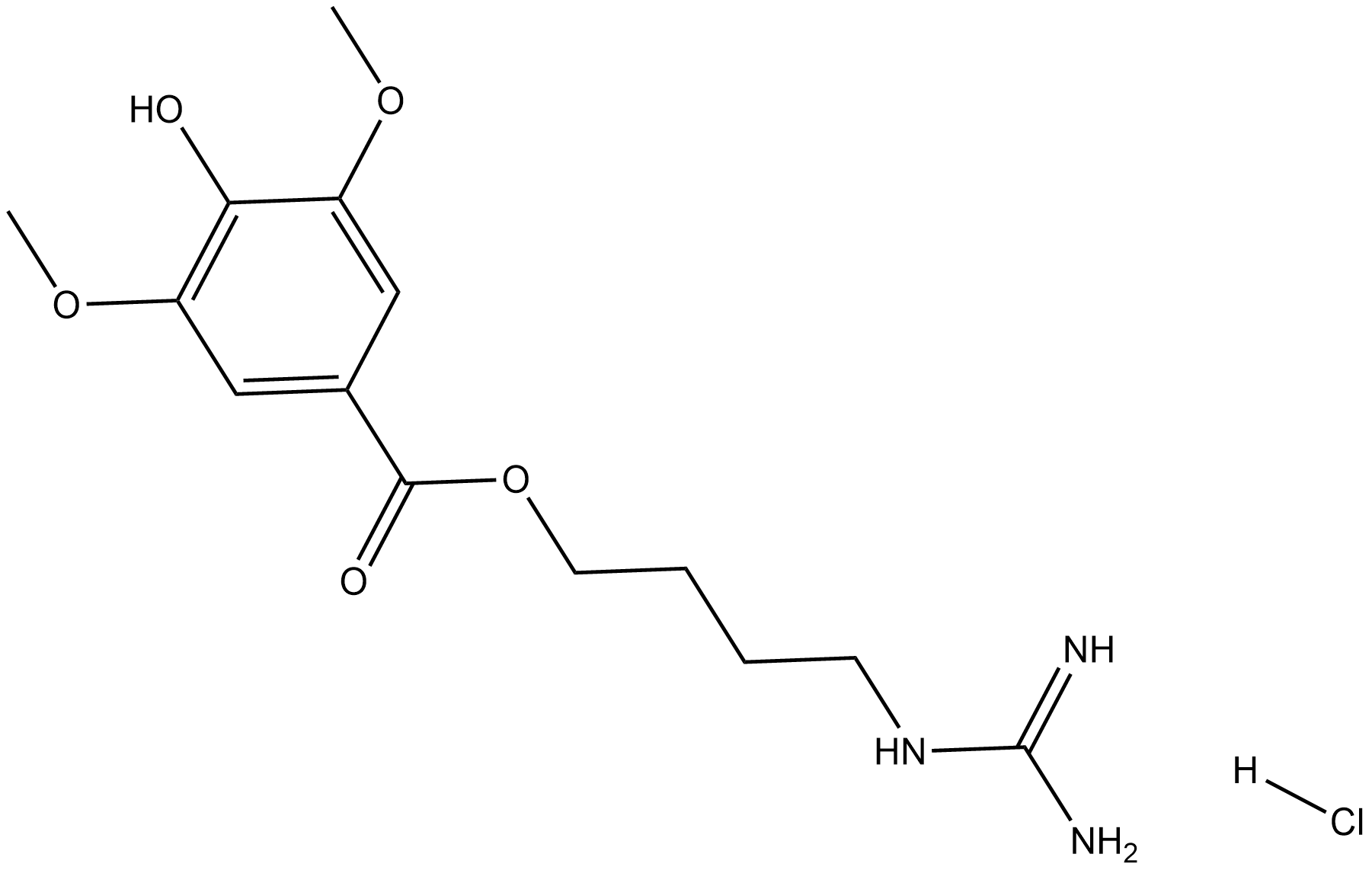
| Chemical Name | 4-guanidinobutyl 4-hydroxy-3,5-dimethoxybenzoate hydrochloride |
| Canonical SMILES | O=C(OCCCCNC(N)=N)C1=CC(OC)=C(O)C(OC)=C1.[H]Cl |
| Shipping Condition | Small Molecules with Blue Ice, Modified Nucleotides with Dry Ice. |
| General tips | We do not recommend long-term storage for the solution, please use it up soon. |
Quality Control & MSDS
- View current batch:
Chemical structure