


L-Pyroglutamic acid
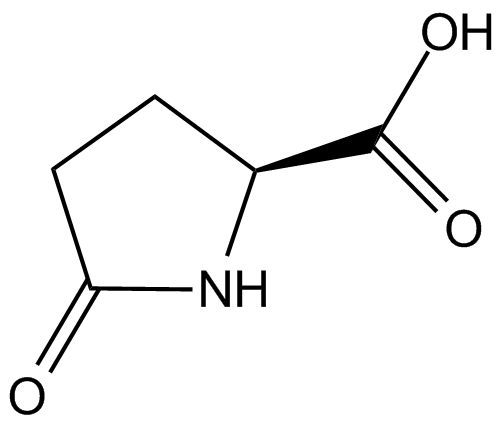
L-Pyroglutamic acid (CAS No.: 98-79-3) is the biologically active levo-isomer of pyroglutamic acid, a cyclized derivative of L-glutamic acid that arises enzymatically or non-enzymatically and functions as an endogenous intermediate in glutathione metabolism. Widely distributed in human tissues, particularly in the brain and skin where it often exists in bound forms, this small amino acid derivative participates in cellular redox homeostasis and amino acid cycling, and its accumulation in biological fluids has been associated with perturbations in glutamine and glutathione metabolic pathways. In biomedical research, L-pyroglutamic acid is of interest as a metabolic biomarker, including in studies of systemic autoimmune conditions such as systemic lupus erythematosus and in renal dysfunction, as well as in neurodegenerative disease research where pyroglutamate-modified amyloid-β peptides exhibit enhanced aggregation properties. Although it does not act as a classical receptor-targeted pharmacological agent, its functional role is linked to metabolic flux through the γ-glutamyl cycle and downstream effects on oxidative stress responses and cellular signaling environments. Experimental applications include its use in cell-based assays to probe redox balance and peptide modification, in animal models investigating neurobehavioral or metabolic outcomes, and as a building block or intermediate in the synthesis of bioactive molecules such as enzyme inhibitors. Reported biological effects in preclinical systems, including modulation of anxiety-like behavior and peptide aggregation kinetics, generally occur at concentrations or doses that vary with experimental design, typically spanning low micromolar ranges in vitro to higher systemic exposures in vivo. Despite its inclusion in some nutritional formulations, there are no well-established clinical indications, and its primary utility remains in mechanistic studies and early-stage drug discovery contexts.
| Physical Appearance | A solid |
| Storage | -20°C |
| M.Wt | 129.11 |
| Cas No. | 98-79-3 |
| Formula | C5H7NO3 |
| Synonyms | NSC 143034; (S)-5-Oxoproline; (–)-Pyroglutamic Acid |
| Solubility | ≥105.8 mg/mL in DMSO; ≥121.4 mg/mL in H2O; ≥8.09 mg/mL in EtOH |
| Chemical Name | (S)-5-oxopyrrolidine-2-carboxylic acid |
| Canonical SMILES | O=C1N[C@H](C(O)=O)CC1 |
| Shipping Condition | Small Molecules with Blue Ice, Modified Nucleotides with Dry Ice. |
| General tips | We do not recommend long-term storage for the solution, please use it up soon. |