


L(-)-Pipecolinic acid
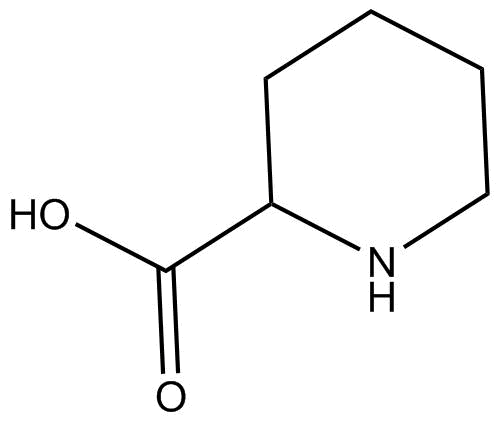
L(-)-Pipecolinic acid (CAS No.: 3105-95-1) is a cyclic imino acid derivative generated as a metabolite in the lysine degradation pathway and is tightly regulated under normal physiological conditions, making it a relevant biochemical intermediate in amino acid metabolism and peroxisomal function studies. It is primarily oxidized to downstream metabolites via enzymes such as α-aminoadipic semialdehyde dehydrogenase and peroxisomal sarcosine oxidase, linking it to cellular redox and metabolic homeostasis pathways. Aberrant accumulation of L(-)-pipecolinic acid has been observed in inherited metabolic disorders, including Zellweger syndrome and neonatal adrenal insufficiency, where elevated levels in biological fluids support its use as a diagnostic biomarker and as a tool for investigating peroxisomal dysfunction and lysine metabolism defects. Functionally, it has been reported to modulate neurotransmission by inhibiting GABA binding in neural tissue preparations with activity in the nanomolar to low micromolar range under specific conditions, suggesting relevance in neurochemical signaling studies. Additionally, it has been associated with enhanced protein synthesis and support of muscle cell growth, as well as contributions to intestinal health, positioning it as a molecule of interest in metabolic, neuromuscular, and gastrointestinal research. In experimental settings, L(-)-pipecolinic acid is commonly utilized in cell-based assays and disease models to probe metabolic flux, enzyme activity, and biomarker validation, with concentrations or dosing regimens tailored to specific experimental designs and research objectives.
| Physical Appearance | A solid |
| Storage | -20°C |
| M.Wt | 129.16 |
| Cas No. | 3105-95-1 |
| Formula | C6H11NO2 |
| Synonyms | (S)-Piperidine-2-Carboxylic Acid; L-Homoproline; NSC 93089 |
| Solubility | insoluble in EtOH; insoluble in DMSO; ≥23 mg/mL in H2O |
| Chemical Name | piperidine-2-carboxylic acid |
| Canonical SMILES | O=C(O)C1CCCCN1 |
| Shipping Condition | Small Molecules with Blue Ice, Modified Nucleotides with Dry Ice. |
| General tips | We do not recommend long-term storage for the solution, please use it up soon. |