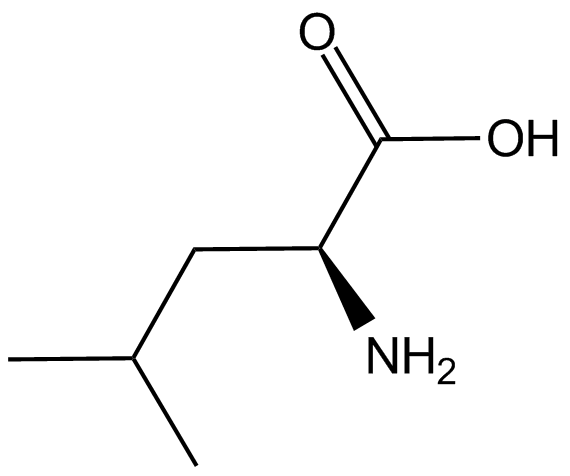
L-Leucine
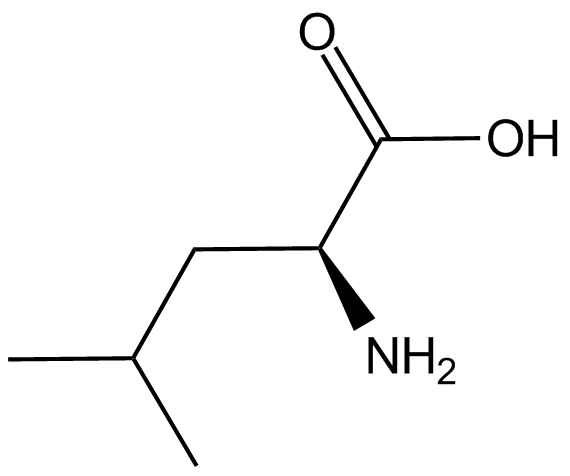
L-Leucine (CAS No.: 61-90-5) is an essential branched-chain amino acid widely utilized in biomedical research as a key regulator of cellular metabolism and protein homeostasis. As a naturally occurring amino acid involved in hemoglobin formation and nutrient signaling, L-leucine plays a central role in anabolic processes, most notably through activation of the mechanistic target of rapamycin (mTOR) signaling pathway, a critical regulator of cell growth, proliferation, and autophagy. In cellular systems, including pancreatic β-cell models such as INS-1E rat insulinoma cells, L-leucine modulates metabolic function by enhancing basal insulin secretion while attenuating glucose-stimulated insulin release at millimolar concentrations, and influences lipid metabolism by reducing triglyceride levels and promoting cholesterol accumulation. In vivo, it has been shown to stimulate skeletal muscle protein synthesis under both exercise and nutrient-deprived conditions in an mTOR-dependent manner, supporting its relevance in studies of muscle physiology, metabolic disorders, and nutrient sensing. L-leucine is commonly applied in cell-based assays and animal models to investigate amino acid signaling, metabolic regulation, and protein synthesis, with experimental concentrations or doses varying according to specific study designs and research objectives.
| Physical Appearance | A solid |
| Storage | -20°C |
| M.Wt | 131.17 |
| Cas No. | 61-90-5 |
| Formula | C6H13NO2 |
| Synonyms | Leu; NSC 46709 |
| Solubility | insoluble in EtOH; insoluble in DMSO; ≥17.43 mg/mL in H2O |
| Chemical Name | (S)-2-amino-4-methylpentanoic acid |
| Canonical SMILES | CC(C)C[C@H](N)C(O)=O |
| Shipping Condition | Small Molecules with Blue Ice, Modified Nucleotides with Dry Ice. |
| General tips | We do not recommend long-term storage for the solution, please use it up soon. |
Quality Control & MSDS
- View current batch:
Chemical structure