


L-Histidine monohydrochloride monohydrate
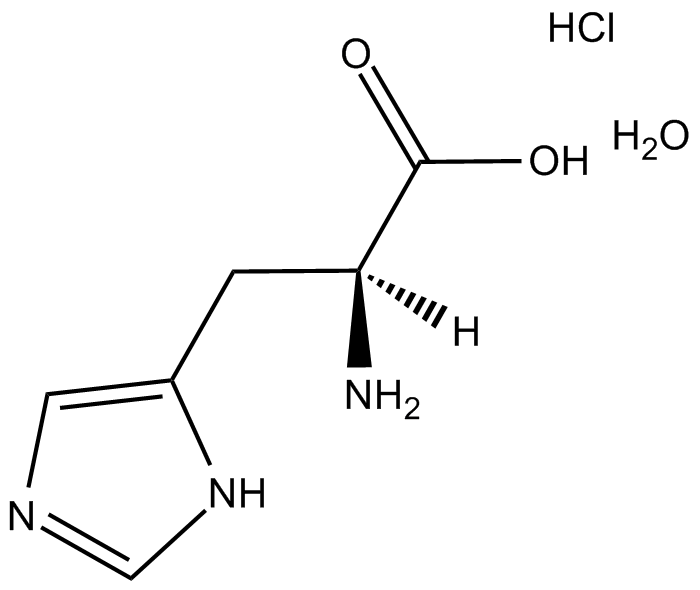





L-Histidine monohydrochloride monohydrate (CAS No.: 5934-29-2) is a salt form of the proteinogenic L-histidine, an endogenous, polar amino acid widely utilized in biochemical and metabolic research due to its central role in protein structure, enzymatic catalysis, and cellular homeostasis. Characterized by an imidazole side chain with acid–base buffering capacity, histidine residues are frequently located in enzyme active sites where they function as nucleophiles and proton donors or acceptors, thereby contributing to catalytic mechanisms and regulation of enzymatic activity. This compound participates in metabolic networks linked to nucleotide biosynthesis and amino acid catabolism, and it can influence cellular signaling pathways associated with growth, oxidative stress responses, and immune regulation. Experimental studies indicate that L-histidine derivatives can scavenge reactive oxygen species such as hydroxyl radicals and singlet oxygen, modulate metal ion homeostasis including zinc, copper, and iron uptake, and exhibit measurable activity in biochemical assays typically within the nanomolar to micromolar range depending on assay conditions. Owing to its endogenous origin and biochemical versatility, L-histidine monohydrochloride monohydrate is commonly applied in cell-based assays, enzyme kinetics studies, redox biology investigations, and metabolic pathway analyses, as well as in model systems exploring blood–brain barrier permeability and nutrient signaling, where concentrations are selected according to specific experimental designs and research objectives.
| Physical Appearance | Solid |
| Storage | -20°C |
| M.Wt | 209.63 |
| Cas No. | 5934-29-2 |
| Formula | C6H12ClN3O3 |
| Solubility | ≥2.68 mg/mL in DMSO with ultrasonic; insoluble in EtOH; ≥52.7 mg/mL in H2O |
| Chemical Name | (S)-2-amino-3-(1H-imidazol-5-yl)propanoic acid hydrochloride hydrate |
| Canonical SMILES | N[C@@](C(O)=O)([H])CC1=CN=CN1.Cl.O |
| Shipping Condition | Small Molecules with Blue Ice, Modified Nucleotides with Dry Ice. |
| General tips | We do not recommend long-term storage for the solution, please use it up soon. |