L-(+)-Ergothioneine
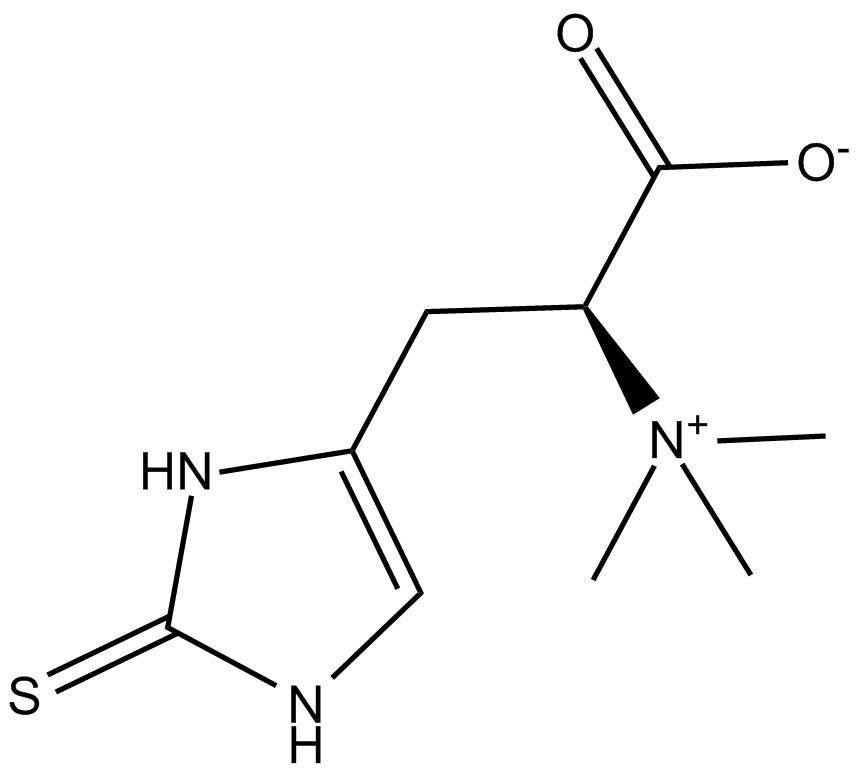
L-(+)-Ergothioneine (CAS No.: 497-30-3) is a naturally occurring histidine-derived amino acid and stable antioxidant that functions as a biologically active thiol compound widely studied in oxidative stress and cell signaling research. As a histidine betaine derivative, it exhibits potent free radical scavenging and detoxifying activity, enhances intracellular thiol homeostasis, and modulates redox-sensitive pathways, including suppression of nuclear factor-κB activation and downstream inflammatory gene expression. L-(+)-Ergothioneine has been reported to selectively inhibit key stress-responsive signaling pathways such as p38-MAPK and Akt, thereby attenuating apoptosis induced by oxidative or environmental stressors and contributing to cytoprotective effects. Additional mechanisms include inhibition of peroxynitrite-mediated protein nitration, prevention of oxidative DNA damage, and regulation of purine metabolism-associated oxidative processes. Cellular uptake is mediated by the organic cation/carnitine transporter 1, linking its biological distribution to tissues involved in immune and inflammatory responses. In vitro studies typically demonstrate activity in the low micromolar to micromolar range, depending on assay conditions and cell types. This compound is extensively utilized in studies of apoptosis, redox biology, inflammation, and signal transduction, as well as in experimental models investigating protection against oxidative damage, with concentrations or dosing regimens varying according to specific experimental designs and research objectives.
| Physical Appearance | A solid |
| Storage | -20°C |
| M.Wt | 229.3 |
| Cas No. | 497-30-3 |
| Formula | C9H15N3O2S |
| Synonyms | 2-Mercaptohistidine Betaine; NSC 7175 |
| Solubility | insoluble in DMSO; insoluble in EtOH; ≥5.2 mg/mL in H2O |
| Chemical Name | (S)-3-(2-thioxo-2,3-dihydro-1H-imidazol-4-yl)-2-(trimethylammonio)propanoate |
| Canonical SMILES | C[N+]([C@H](C([O-])=O)CC(N1)=CNC1=S)(C)C |
| Shipping Condition | Small Molecules with Blue Ice, Modified Nucleotides with Dry Ice. |
| General tips | We do not recommend long-term storage for the solution, please use it up soon. |