


L-Aspartic acid
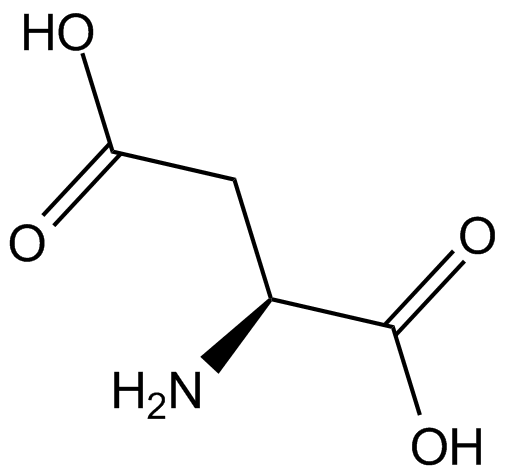





L-Aspartic acid (CAS No.: 56-84-8) is a naturally occurring, non-essential amino acid predominantly found in the L-configuration across a wide range of plant and animal tissues, with notable abundance in sources such as sugar cane and sugar beets, and is extensively utilized as a reference standard in biochemical and analytical research. Functionally, it participates in central metabolic pathways including amino acid biosynthesis, the tricarboxylic acid cycle, and nitrogen metabolism, and is recognized for its role as an excitatory signaling molecule in neuronal systems through interactions with glutamatergic receptor families and related transport mechanisms. In research settings, L-aspartic acid is frequently employed as a model compound to investigate amino acid transporters, enzymatic transformations, and metabolic flux, as well as to support the design of prodrug conjugates for site-specific delivery to intestinal regions such as the colon and cecum. It is also applied in studies of cellular responses associated with inflammatory processes and metabolic regulation. Experimental use typically involves in vitro and in vivo models where concentration ranges are selected based on study design, often spanning low micromolar to millimolar levels to probe biochemical and physiological responses.
| Physical Appearance | Solid |
| Storage | -20°C |
| M.Wt | 133.1 |
| Cas No. | 56-84-8 |
| Formula | C4H7NO4 |
| Solubility | insoluble in H2O; insoluble in DMSO; insoluble in EtOH |
| Chemical Name | (S)-2-aminosuccinic acid |
| Canonical SMILES | O=C(O)C[C@H](N)C(O)=O |
| Shipping Condition | Small Molecules with Blue Ice, Modified Nucleotides with Dry Ice. |
| General tips | We do not recommend long-term storage for the solution, please use it up soon. |