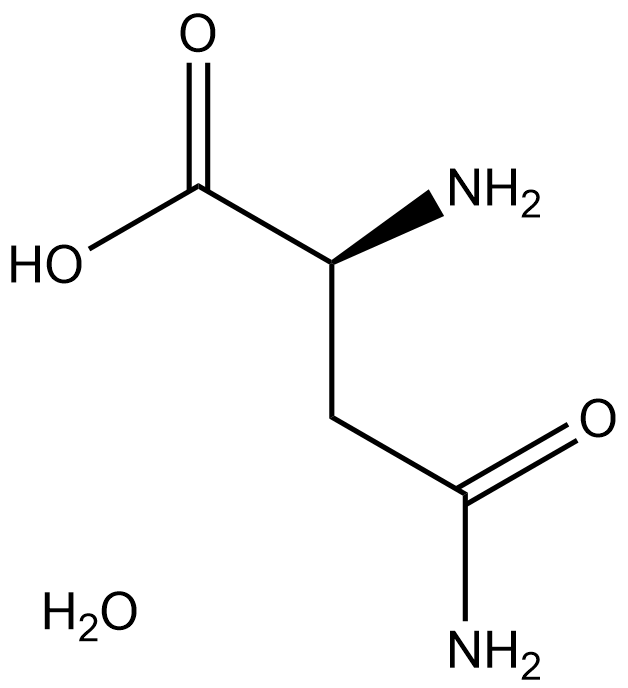
L(+)-Asparagine monohydrate
L(+)-Asparagine monohydrate (CAS No.: 5794-13-8) is a naturally occurring non essential amino acid derivative and a biochemical nitrogen donor that is broadly classified as a metabolic research reagent for amino acid dependency studies, oncology metabolism, and enzymology in life sciences discovery workflows, with biological relevance rooted in endogenous amino acid biosynthesis and interorgan nitrogen flux in mammalian systems; in mechanistic research settings it is principally used as a substrate level modulator in the asparagine axis, including interrogation of asparaginase driven nutrient depletion biology, where reduction of extracellular asparagine and associated glutamine utilization can suppress protein biosynthesis and constrain nucleotide synthesis programs linked to RNA and DNA production in susceptible cellular backgrounds, particularly models with low asparagine synthetase expression; accordingly, the most established functional framework involves amino acid response and nutrient stress networks rather than a single receptor pharmacology paradigm, with downstream effects commonly examined through integrated readouts of translational control, cell cycle progression, and apoptosis related signaling under defined media conditions; direct potency style metrics such as IC50 or EC50 are often not universally transferable for this nutrient class compound because experimental outcomes are context dependent, but reported activity patterns in metabolism focused assays are generally characterized qualitatively across nanomolar to micromolar concentration regimes depending on medium composition, enzyme presence, and cell genotype; typical use cases include leukemic and lymphoid cell culture paradigms, comparative nutrient rescue experiments, biomarker and biosensor development for asparagine associated phenotypes, and exploratory in vivo metabolic studies in preclinical animal models, while concentrations or doses used in experiments typically depend on specific experimental designs and research objectives, and all use is restricted to controlled laboratory research and analytical applications only.
| Storage | -20°C for 3 years |
| M.Wt | 150.13 |
| Cas No. | 5794-13-8 |
| Formula | C4H10N2O4 |
| Solubility | insoluble in DMSO; insoluble in EtOH; ≥6.93 mg/mL in H2O with ultrasonic |
| Chemical Name | L-asparagine hydrate |
| Canonical SMILES | [C@H](CC(N)=O)(C(O)=O)N.O |
| Shipping Condition | Small Molecules with Blue Ice, Modified Nucleotides with Dry Ice. |
| General tips | We do not recommend long-term storage for the solution, please use it up soon. |
Quality Control & MSDS
- View current batch:
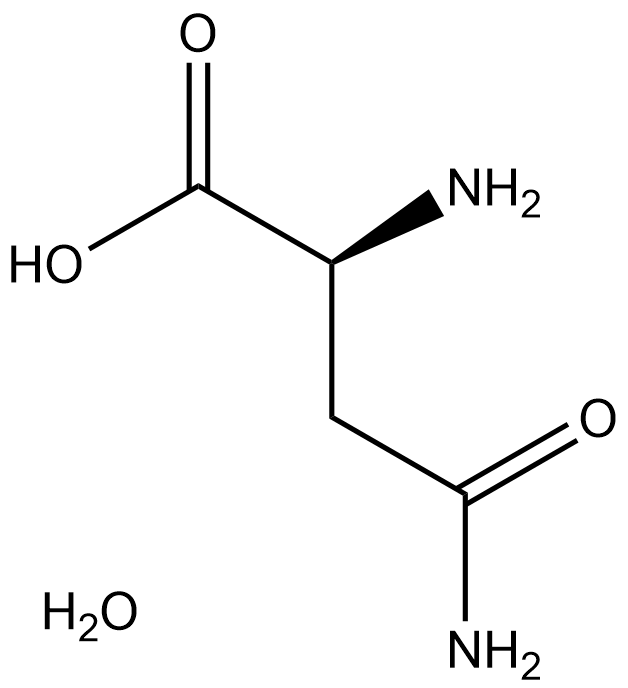
Chemical structure