KKL10
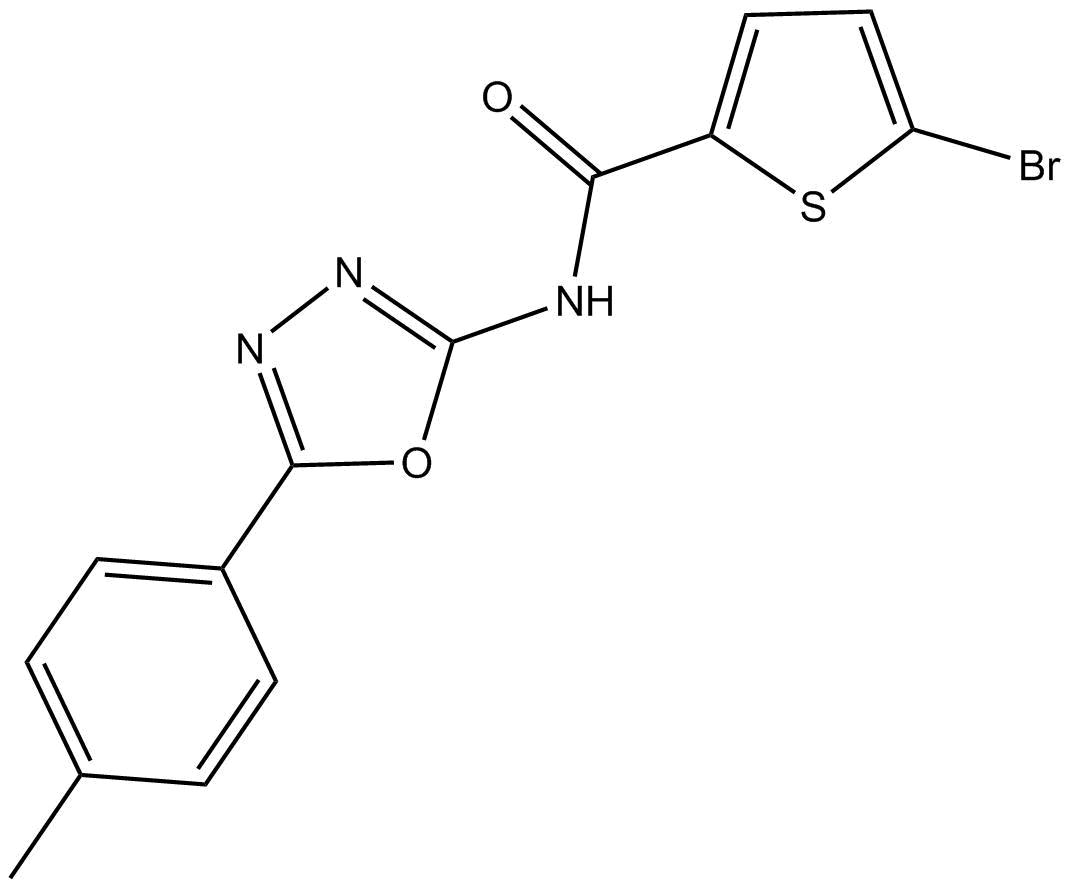
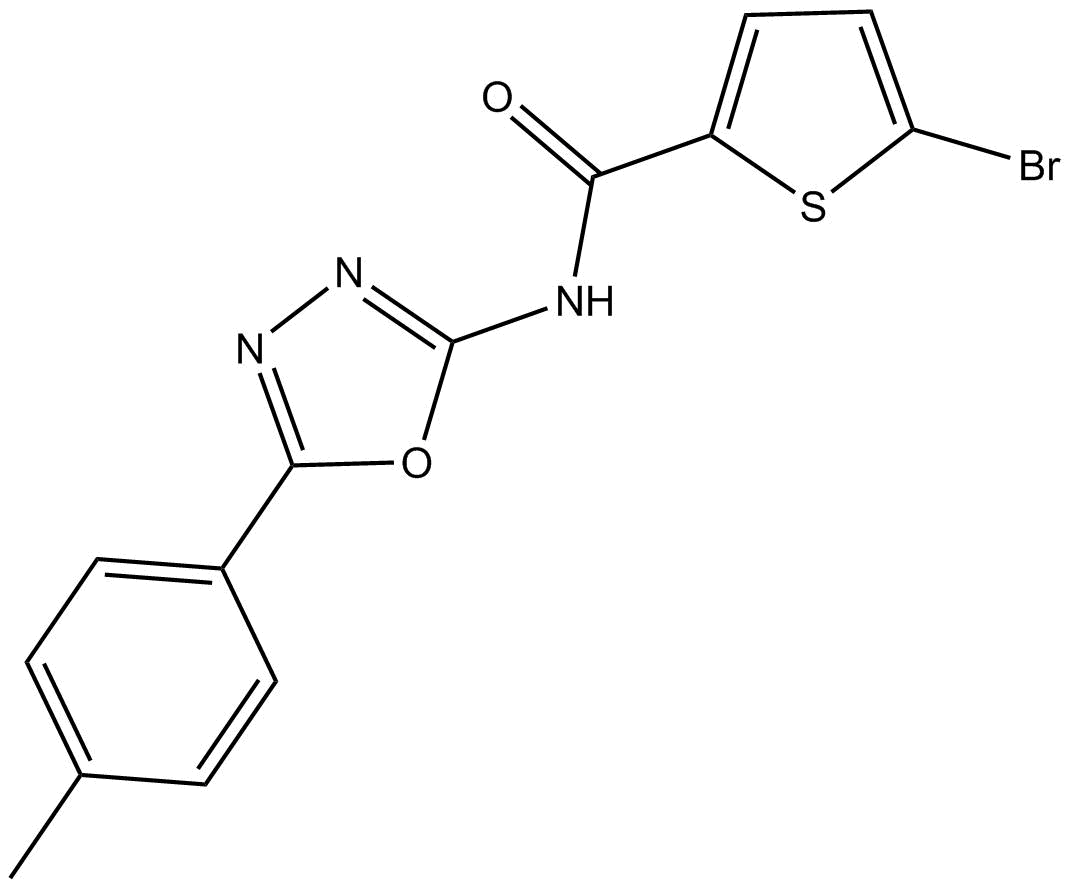
KKL10 (CAS No.: 952849-76-2) is a small-molecule inhibitor of ribosome rescue pathways that exhibits broad-spectrum antibacterial activity, making it a valuable tool for studying bacterial translational quality control mechanisms. This compound disrupts trans-translation, a conserved process essential for resolving stalled ribosomes and maintaining protein synthesis under stress conditions, thereby impairing bacterial viability. KKL10 has demonstrated potent in vitro activity against Francisella tularensis, including both attenuated and virulent strains, with minimal inhibitory concentrations in the sub-microgram per milliliter to low microgram per milliliter range, and effectively suppresses intracellular bacterial replication across multiple stages of infection. Notably, it shows minimal cytotoxicity toward host macrophages at concentrations substantially exceeding its antibacterial activity range, supporting its utility in host–pathogen interaction studies. KKL10 is widely applied in microbiology and antimicrobial research to investigate ribosome rescue pathways, evaluate antibacterial efficacy in cellular infection models, and serve as a lead scaffold in antibacterial drug discovery programs, with experimental concentrations typically optimized according to specific assay conditions and study objectives.
| Physical Appearance | Solid |
| Storage | -20°C |
| M.Wt | 364.22 |
| Cas No. | 952849-76-2 |
| Formula | C14H10BrN3O2S |
| Synonyms | KKL 10 |
| Solubility | ≥4.7 mg/mL in DMSO with ultrasonic |
| Chemical Name | 5-bromo-N-(5-(p-tolyl)-1,3,4-oxadiazol-2-yl)thiophene-2-carboxamide |
| Canonical SMILES | O=C(C1=CC=C(Br)S1)NC2=NN=C(C3=CC=C(C)C=C3)O2 |
| Shipping Condition | Small Molecules with Blue Ice, Modified Nucleotides with Dry Ice. |
| General tips | We do not recommend long-term storage for the solution, please use it up soon. |
Quality Control & MSDS
- View current batch:
Chemical structure