


Isovaleroylglycine
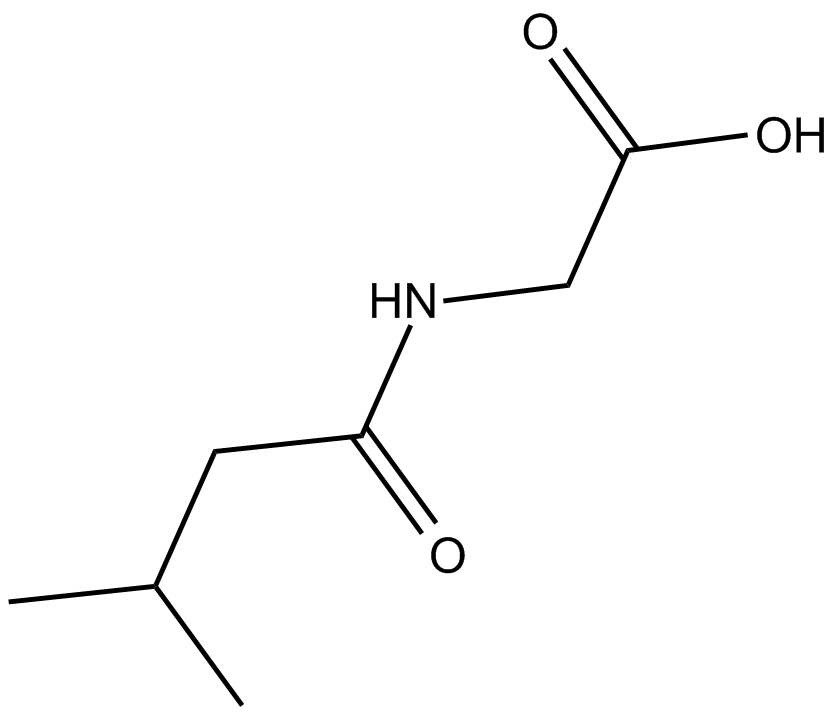





Isovaleroylglycine (CAS No.: 16284-60-9) is an endogenous acyl glycine metabolite generated through the conjugation of isovaleric acid with glycine in the leucine catabolic pathway, and is widely studied in metabolomics as a functional indicator of intermediary metabolism and mitochondrial activity. It is primarily detected in biological fluids such as urine, where its levels reflect perturbations in branched-chain amino acid metabolism, fatty acid β-oxidation, and overall energy homeostasis. Elevated urinary excretion of isovaleroylglycine has been associated with inherited metabolic disorders such as isovaleric acidemia, arising from deficiencies in isovaleryl-CoA dehydrogenase, as well as with broader metabolic dysfunctions including obesity and altered lipid utilization, supporting its role as a non-invasive biomarker for metabolic imbalance and disease progression. Although it does not directly act on classical pharmacological targets, its formation and clearance are closely linked to mitochondrial enzymatic pathways and detoxification mechanisms involving acyl-CoA intermediates. In research settings, isovaleroylglycine is commonly employed in metabolic profiling, disease modeling, and biomarker validation studies using cell-based systems and animal models, where concentration ranges are typically explored from low micromolar to millimolar levels depending on experimental design. Its utility in drug discovery lies in its capacity to report on pathway perturbations and treatment responses, particularly in studies focused on metabolic disorders, mitochondrial dysfunction, and nutrient signaling networks.
| Physical Appearance | A solid |
| Storage | -20°C |
| M.Wt | 159.18 |
| Cas No. | 16284-60-9 |
| Formula | C7H13NO3 |
| Synonyms | N-Isovalerylglycine |
| Solubility | ≥101.8 mg/mL in EtOH; ≥124.2 mg/mL in DMSO; ≥61.7 mg/mL in H2O |
| Chemical Name | 2-(3-methylbutanamido)acetic acid |
| Canonical SMILES | OC(CNC(CC(C)C)=O)=O |
| Shipping Condition | Small Molecules with Blue Ice, Modified Nucleotides with Dry Ice. |
| General tips | We do not recommend long-term storage for the solution, please use it up soon. |