


Isonicotinic acid
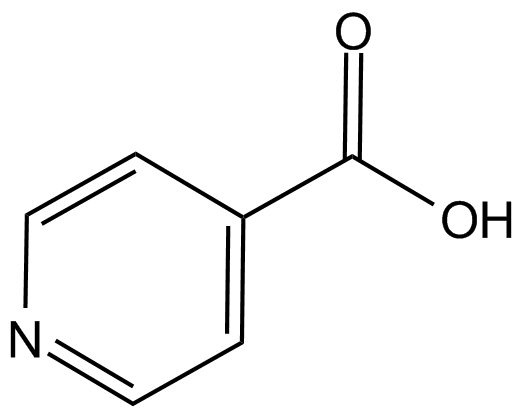
Isonicotinic acid (CAS No.: 55-22-1) is a small heteroaromatic carboxylic acid that functions as a key metabolite of isoniazid, generated through enzymatic transformation mediated in part by cytochrome P450 isoforms such as CYP2C, as well as by chemical hydrazinolysis pathways. As an isomer of nicotinic acid, it is widely utilized in biochemical and pharmacological research to investigate drug metabolism, enzyme regulation, and pyridine-related metabolic processes. Experimental evidence indicates that isonicotinic acid can modulate enzyme activity through interactions with specific signaling pathways, although its precise molecular targets remain under active investigation and may involve indirect regulation of oxidative metabolism systems. In vitro studies generally employ concentrations in the micromolar range to explore its effects on enzymatic function and cellular responses, reflecting its role as a metabolic intermediate rather than a high-affinity ligand. Additionally, derivatives of isonicotinic acid, such as enisamium, have demonstrated antiviral activity in cell-based assays, highlighting the relevance of this scaffold in antiviral compound development. Isonicotinic acid is therefore commonly applied in studies of xenobiotic metabolism, pathway elucidation, and compound screening in both cellular and biochemical assay systems, with experimental conditions varying according to specific research objectives.
| Physical Appearance | Solid |
| Storage | -20°C |
| M.Wt | 123.11 |
| Cas No. | 55-22-1 |
| Formula | C6H5NO2 |
| Solubility | insoluble in EtOH; insoluble in H2O; ≥9.55 mg/mL in DMSO with ultrasonic |
| Chemical Name | isonicotinic acid |
| Canonical SMILES | OC(C1=CC=NC=C1)=O |
| Shipping Condition | Small Molecules with Blue Ice, Modified Nucleotides with Dry Ice. |
| General tips | We do not recommend long-term storage for the solution, please use it up soon. |