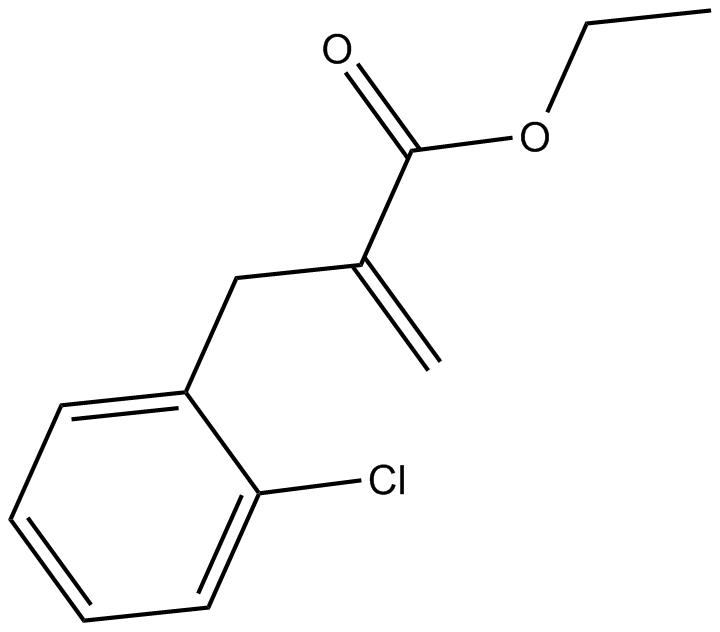
INF39
INF39 is a nontoxic, irreversible inhibitor of the nucleotide-binding oligomerization domain, leucine-rich repeat and pyrin domain containing protein 3 (NLRP3). NLRP3 is an intracellular sensor that detects a variety of endogenous danger signals, microbial motifs as well as environmental irritants, resulting in the formation and activation of the NLRP3 inflammasome. Assembly of the NLRP3 inflammasome leads to caspase 1-dependent release of pro-inflammatory cytokines (e.g. IL-1β and IL-18), as well as to gasdermin D-induced pyroptotic cell death. Pharmacological inhibition of NLRP3 inflammasome activation has been shown to offer a new option in the treatment of inflammatory bowel disease.
References:
1. Cocco M, Pellegrini C, Martínez-Banaclocha H, et al. Development of an acrylate derivative targeting the NLRP3 inflammasome for the treatment of inflammatory bowel disease. Journal of Medicinal Chemistry, 2017, 60(9): 3656-3671.
2. Swanson KV, Deng M, Ting JP. The NLRP3 inflammasome: molecular activation and regulation to therapeutics. Nature Reviews Immunology, 2019, 19(8): 477-489.
| Storage | Store at -20°C |
| M.Wt | 224.68 |
| Cas No. | 866028-26-4 |
| Formula | C12H13ClO2 |
| Solubility | ≥22.5 mg/mL in DMSO; ≥41.9 mg/mL in H2O; ≥47.9 mg/mL in EtOH |
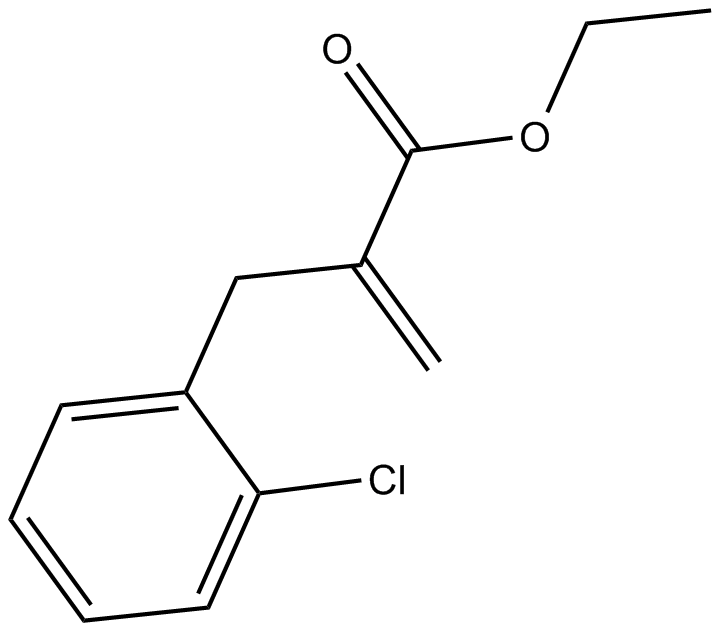
| Chemical Name | ethyl 2-(2-chlorobenzyl)acrylate |
| Canonical SMILES | CCOC(C(Cc(cccc1)c1Cl)=C)=O |
| Shipping Condition | Small Molecules with Blue Ice, Modified Nucleotides with Dry Ice. |
| General tips | We do not recommend long-term storage for the solution, please use it up soon. |
| Cell experiment:[1] | |
|
Cell lines |
LPS-primed mouse bone marrow derived macrophages (BMDMs) |
|
Reaction Conditions |
10 or 100 μM INF39 for 1 h incubation |
|
Applications |
INF39 was able to significantly inhibit ATP- and nigericin-induced IL-1β release at 10 μM. Furthermore, INF39 reduced caspase-1 activation and pyroptosis in these macrophages. |
| Animal experiment:[1] | |
|
Animal models |
Male Sprague-Dawley rats, 200 ~ 250 g |
|
Dosage form |
12.5, 25.0, 50.0 mg/kg Once daily by intragastric route for 6 days |
|
Applications |
Oral administration of INF39 reduced systemic and colonic Inflammation in rats treated with 2,4-dinitrobenzenesulfonic acid (DNBS). Meanwhile, INF39 dose-dependently attenuated increment of spleen weight and decrease in colonic length caused by DNBS. |
|
Note |
The technical data provided above is for reference only. |
|
References: 1. Cocco M, Pellegrini C, Martínez-Banaclocha H, et al. Development of an acrylate derivative targeting the NLRP3 inflammasome for the treatment of inflammatory bowel disease. Journal of Medicinal Chemistry, 2017, 60(9): 3656-3671. 2. Swanson KV, Deng M, Ting JP. The NLRP3 inflammasome: molecular activation and regulation to therapeutics. Nature Reviews Immunology, 2019, 19(8): 477-489. |
|
Quality Control & MSDS
- View current batch:
Chemical structure