


Indole
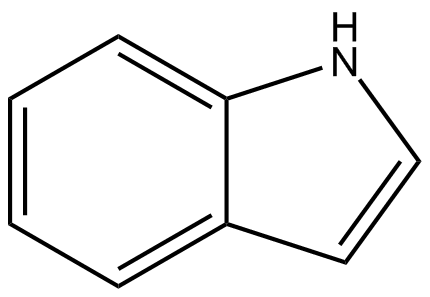
Indole (CAS No.: 120-72-9) is a prototypical aromatic heterocyclic compound belonging to the indole class, widely distributed in natural environments and commonly generated by microbial metabolism, particularly through the degradation of tryptophan. As a key microbial signaling molecule, indole plays a significant role in regulating bacterial physiology, including modulation of spore formation, plasmid stability, stress responses, antimicrobial tolerance, biofilm development, and virulence-associated pathways, thereby contributing to intercellular communication within microbial communities. It is frequently employed in microbiology and chemical biology research as a tool compound to investigate quorum sensing-like mechanisms and host–microbe interactions, as well as to study metabolic pathways involving aromatic amino acid catabolism. In vitro studies indicate that indole and its derivatives exert concentration-dependent effects, typically in the low micromolar to millimolar range, influencing gene expression and cellular behavior across diverse bacterial species. In experimental settings, indole is utilized in cell-based assays and microbial culture systems to probe regulatory networks and evaluate the impact of small-molecule signals on microbial ecology and pathophysiology, with dosing regimens adjusted according to specific experimental designs and research objectives.
| Physical Appearance | Solid |
| Storage | -20°C |
| M.Wt | 117.15 |
| Cas No. | 120-72-9 |
| Formula | C8H7N |
| Solubility | ≥23 mg/mL in DMSO |
| Chemical Name | 1H-indole |
| Canonical SMILES | C1(NC=C2)=C2C=CC=C1 |
| Shipping Condition | Small Molecules with Blue Ice, Modified Nucleotides with Dry Ice. |
| General tips | We do not recommend long-term storage for the solution, please use it up soon. |