


hydroxyphenylacetate
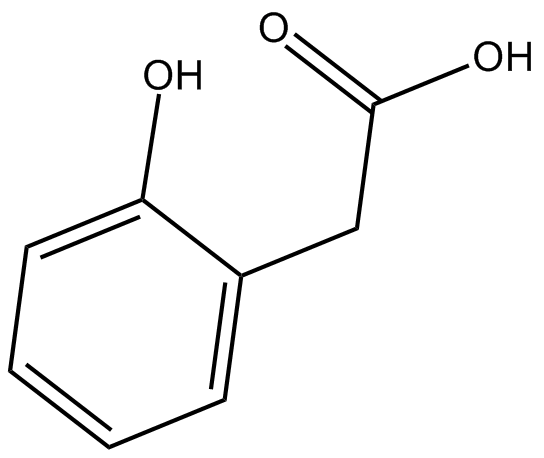





hydroxyphenylacetate (CAS No.: 614-75-5) is an endogenous aromatic metabolite derived from phenylalanine and tyrosine metabolism and is also generated through microbial biotransformation processes, positioning it as a small-molecule metabolic intermediate of interest in biochemical and metabolomics research. It participates in pathways associated with aromatic amino acid catabolism, and fluctuations in its levels in biological matrices such as blood, urine, and feces have been investigated as indicators of altered metabolic states, particularly in studies of hyperphenylalaninemia and related metabolic dysfunctions. Mechanistically, hydroxyphenylacetate has been reported to exert modest regulatory effects on cellular reporter systems, such as slight induction of green fluorescent protein expression, suggesting potential utility in probing cellular signaling or transcriptional responses, although no highly specific molecular targets have been definitively established. In vitro studies generally employ concentrations in the low micromolar to millimolar range depending on assay sensitivity and design, reflecting its role as a metabolite rather than a high-affinity ligand. Additionally, its occurrence in certain plant-derived foods and its detectability in biofluids support its application as a biomarker in nutritional and metabolomic profiling. In research settings, hydroxyphenylacetate is commonly utilized in cell-based assays, metabolic flux analysis, and analytical method development, as well as in studies exploring host–microbiome metabolic interactions, with experimental concentrations or dosing regimens tailored to specific investigative objectives.
| Physical Appearance | Solid |
| Storage | -20°C |
| M.Wt | 152.15 |
| Cas No. | 614-75-5 |
| Formula | C8H8O3 |
| Solubility | ≥34.2 mg/mL in H2O with ultrasonic; ≥61 mg/mL in EtOH; ≥62.1 mg/mL in DMSO |
| Chemical Name | 2-(2-hydroxyphenyl)acetic acid |
| Canonical SMILES | OC1=CC=CC=C1CC(O)=O |
| Shipping Condition | Small Molecules with Blue Ice, Modified Nucleotides with Dry Ice. |
| General tips | We do not recommend long-term storage for the solution, please use it up soon. |