

histamine
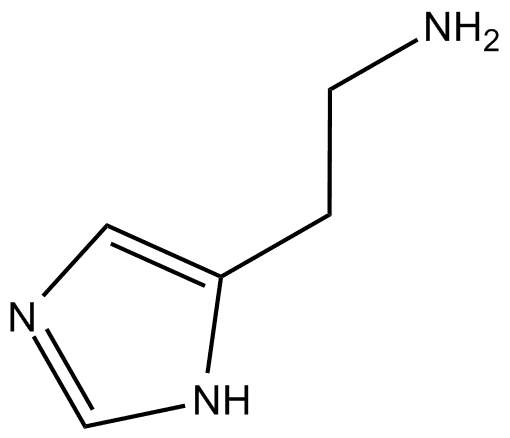
Histamine (CAS 51-45-6) is an endogenous biogenic amine generated from histidine by enzymatic decarboxylation. It is a non-selective agonist of the H1–H4 histamine receptors (G protein-coupled receptors) and is widely distributed in mast cells, basophils, gastrointestinal enterochromaffin-like (ECL) cells, and histaminergic neurons. It activates NOS and acts as a potent gastric acid secretion stimulant, a bronchial smooth muscle constrictor, and a vasodilator, and serves as a centrally acting neurotransmitter.
Histamine is commonly used to establish models of acute bronchoconstriction and airway hyperresponsiveness (bronchial challenge), anaphylactoid reactions, acute gastric ulcers, and pulmonary hypertension.
Histamine signaling activates intracellular pathways such as p38 MAPK and Akt, participating in cell proliferation, differentiation, and inflammatory regulation. It is also used in models of acute myeloid leukemia, malignant melanoma, and renal cell carcinoma to investigate histamine receptor pharmacology and signaling dynamics.
| Physical Appearance | A solid |
| Storage | -20°C |
| M.Wt | 111.15 |
| Cas No. | 51-45-6 |
| Formula | C5H9N3 |
| Synonyms | NSC 33792; Histamine |
| Solubility | ≥11.1 mg/mL in H2O; ≥12.75 mg/mL in DMSO; ≥24.7 mg/mL in EtOH |
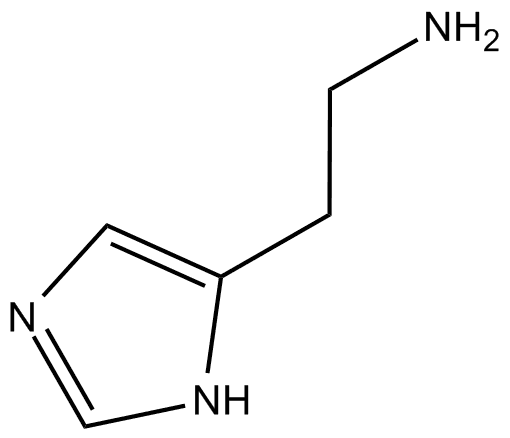
| Chemical Name | 2-(1H-imidazol-5-yl)ethanamine |
| Canonical SMILES | NCCC1=CN=CN1 |
| Shipping Condition | Small Molecules with Blue Ice, Modified Nucleotides with Dry Ice. |
| General tips | We do not recommend long-term storage for the solution, please use it up soon. |
Quality Control & MSDS
- View current batch:
Chemical structure