hippurate
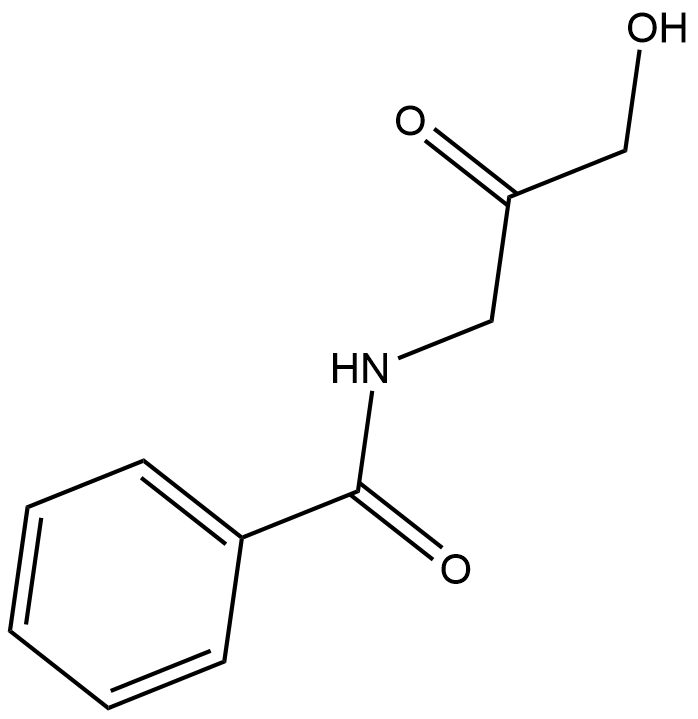
Hippurate (CAS No.: 495-69-2) is an endogenous acyl glycine belonging to the class of hippuric acids, formed through the conjugation of benzoic acid with glycine and widely recognized as a normal metabolic component detected in urine. It is generated primarily via host–microbiome co-metabolism, where dietary polyphenols and related aromatic compounds are converted by intestinal microorganisms into benzoic acid, followed by hepatic conjugation, making it a relevant biomarker for metabolic flux and gut microbial activity. In biochemical and cellular research, hippurate has been associated with modulation of oxidative stress and extracellular matrix remodeling pathways, including reported effects on NRF2 signaling, MMP9 expression, and intracellular reactive oxygen species accumulation, as well as activation of the TGFβ/SMAD signaling axis. These mechanistic features position hippurate as a useful probe in studies of redox regulation, inflammation-related pathways, and host–microbiome metabolic interactions. In vitro investigations typically employ concentrations in the micromolar range depending on cell type and assay design, while in vivo studies utilize dosing regimens tailored to specific experimental models. Hippurate is broadly applied in metabolomics, systems biology, and disease modeling research, particularly in the context of cardiovascular, renal, and gastrointestinal physiology, where it serves as a functional metabolite for elucidating biochemical pathways and evaluating metabolic perturbations.
| Physical Appearance | A solid |
| Storage | -20°C |
| M.Wt | 193.20 |
| Cas No. | 495-69-2 |
| Formula | C10H11NO3 |
| Solubility | insoluble in H2O; ≥26.25 mg/mL in EtOH with ultrasonic; ≥53.8 mg/mL in DMSO |
| Chemical Name | N-(3-hydroxy-2-oxopropyl)benzamide |
| Canonical SMILES | O=C(CO)CNC(C1=CC=CC=C1)=O |
| Shipping Condition | Small Molecules with Blue Ice, Modified Nucleotides with Dry Ice. |
| General tips | We do not recommend long-term storage for the solution, please use it up soon. |