Haloprogin
Haloprogin (CAS No. 777-11-7) is a broad-spectrum topical antimicrobial agent whose core biological activities include antifungal, anti-yeast, and selective anti–Gram-positive bacterial effects. Its presumed targets are pathways related to fungal cell membrane synthesis and Gram-positive bacterial metabolic pathways (the specific targets have not been clearly identified). MIC values are microorganism-specific: for dermatophytes such as Microsporum and Trichophyton, the MIC is 0.0015~0.39 μg/mL; for yeasts such as Candida albicans, MIC<1 μg/mL; for Staphylococcus aureus, MIC is 1.56~3.12 μg/mL; and for Streptococcus pyogenes, MIC is 0.78 μg/mL. The minimum fungicidal concentration (MFC) is close to the MIC (usually differing by one dilution step). Common experimental application concentrations: for in vitro antimicrobial assays, 0.19~100 μg/mL (serial dilution method); for in vivo guinea pig infection models, a 1% topical formulation is used (containing 10 mg Haloprogin per gram/mL), with vehicles including water-dispersible semisolid bases, Plastibase, polyethylene glycol 400, etc. The effective therapeutic concentration corresponds to a 1% topical formulation in clinical use, applied locally 1~2 times daily for 7~12 consecutive days, showing good efficacy against human dermatophytosis and Candida infections. In guinea pig models, cure rates can reach 56%~88%, and antimicrobial activity is maintained even in steroid-induced chronic infections.
References:
[1] Harrison EF, Zwadyk P Jr, Bequette RJ, Hamlow EE, Tavormina PA, Zygmunt WA. Haloprogin: a topical antifungal agent. Appl Microbiol. 1970 May;19(5):746-50. doi: 10.1128/am.19.5.746-750.1970. PMID: 5422306; PMCID: PMC376781.
| Physical Appearance | A solid |
| Storage | -20°C |
| M.Wt | 361.39 |
| Cas No. | 777-11-7 |
| Formula | C9H4Cl3IO |
| Solubility | ≥51.7 mg/mL in DMSO; ≥16.67 mg/mL in EtOH; insoluble in H2O |
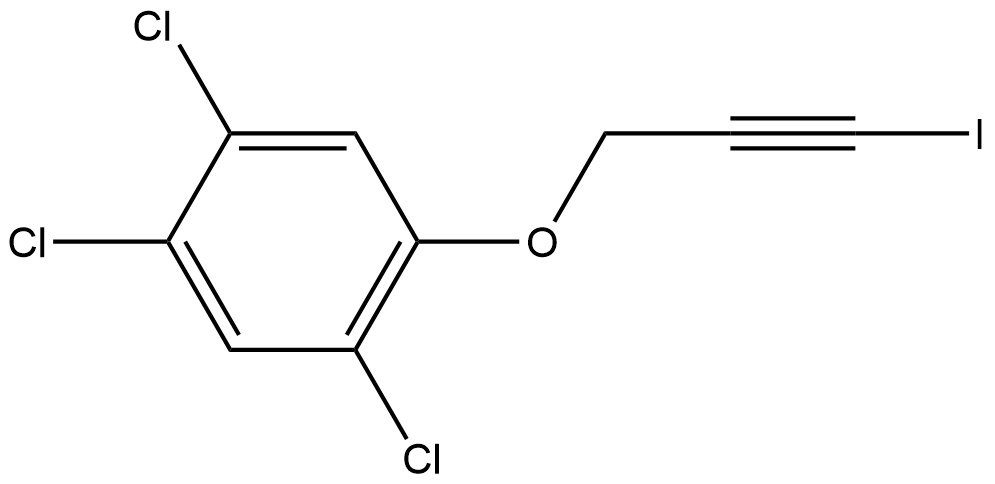
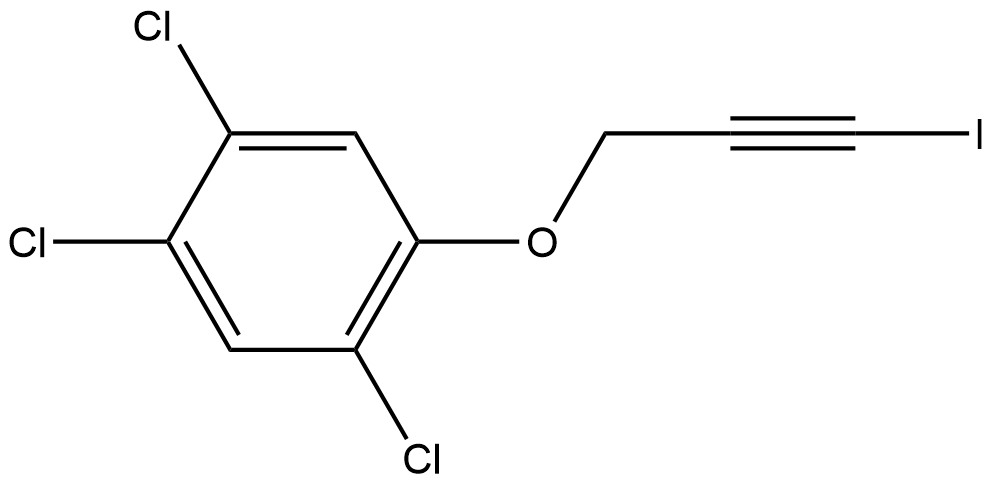
| Chemical Name | 1,2,4-trichloro-5-((3-iodoprop-2-yn-1-yl)oxy)benzene |
| Canonical SMILES | ClC=1C=C(Cl)C(OCC#CI)=CC1Cl |
| Shipping Condition | Small Molecules with Blue Ice, Modified Nucleotides with Dry Ice. |
| General tips | We do not recommend long-term storage for the solution, please use it up soon. |
Quality Control & MSDS
- View current batch:
Chemical structure