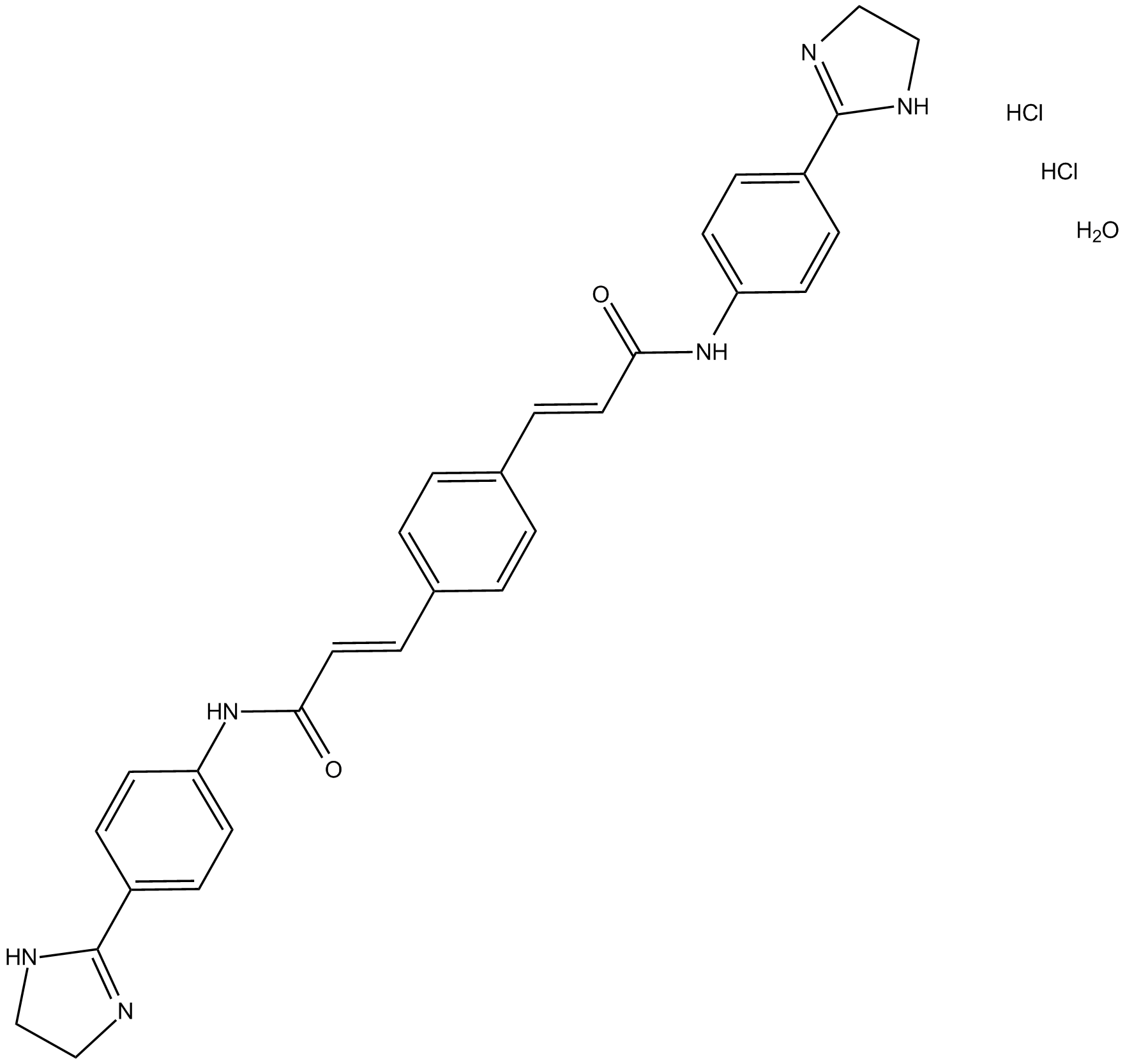
GW 4869 (hydrochloride hydrate)
GW 4869 (hydrochloride hydrate) (CAS No.: 6823-69-4) is a widely used small-molecule inhibitor of neutral sphingomyelinase (N-SMase), functioning as a noncompetitive modulator with activity in the low micromolar range, and is extensively applied in studies of sphingolipid metabolism and extracellular vesicle biology. By selectively inhibiting N-SMase without significant effects on acid sphingomyelinase or related phospholipases at comparable concentrations, GW 4869 suppresses the hydrolysis of sphingomyelin to ceramide, a key bioactive lipid involved in apoptosis, stress signaling, and membrane organization. In cellular systems, including breast cancer-derived cell lines, it effectively blocks tumor necrosis factor-induced sphingomyelin breakdown and ceramide accumulation, thereby attenuating downstream cell death signaling pathways. In addition to its role in modulating ceramide production, GW 4869 is widely recognized as an inhibitor of exosome biogenesis and release, making it a valuable tool for investigating intercellular communication, vesicle trafficking, and disease-associated extracellular vesicle dynamics. In endothelial and inflammatory models, it has been shown to influence cytokine responses and lipid-mediated signaling processes. In vivo studies further demonstrate its capacity to alter sphingolipid homeostasis and impact physiological functions such as vascular tone and cognitive processes, underscoring its utility in neurobiology and cardiovascular research. The concentrations or dosing regimens employed in experimental settings typically vary depending on cell type, model system, and specific research objectives, particularly in mechanistic studies and drug discovery efforts targeting lipid signaling pathways.
| Physical Appearance | A solid |
| Storage | -20°C |
| M.Wt | 595.52 |
| Cas No. | 6823-69-4 |
| Formula | C30H32Cl2N6O3 |
| Solubility | insoluble in H2O; insoluble in EtOH; ≥11.92 mg/mL in DMSO with gentle warming |
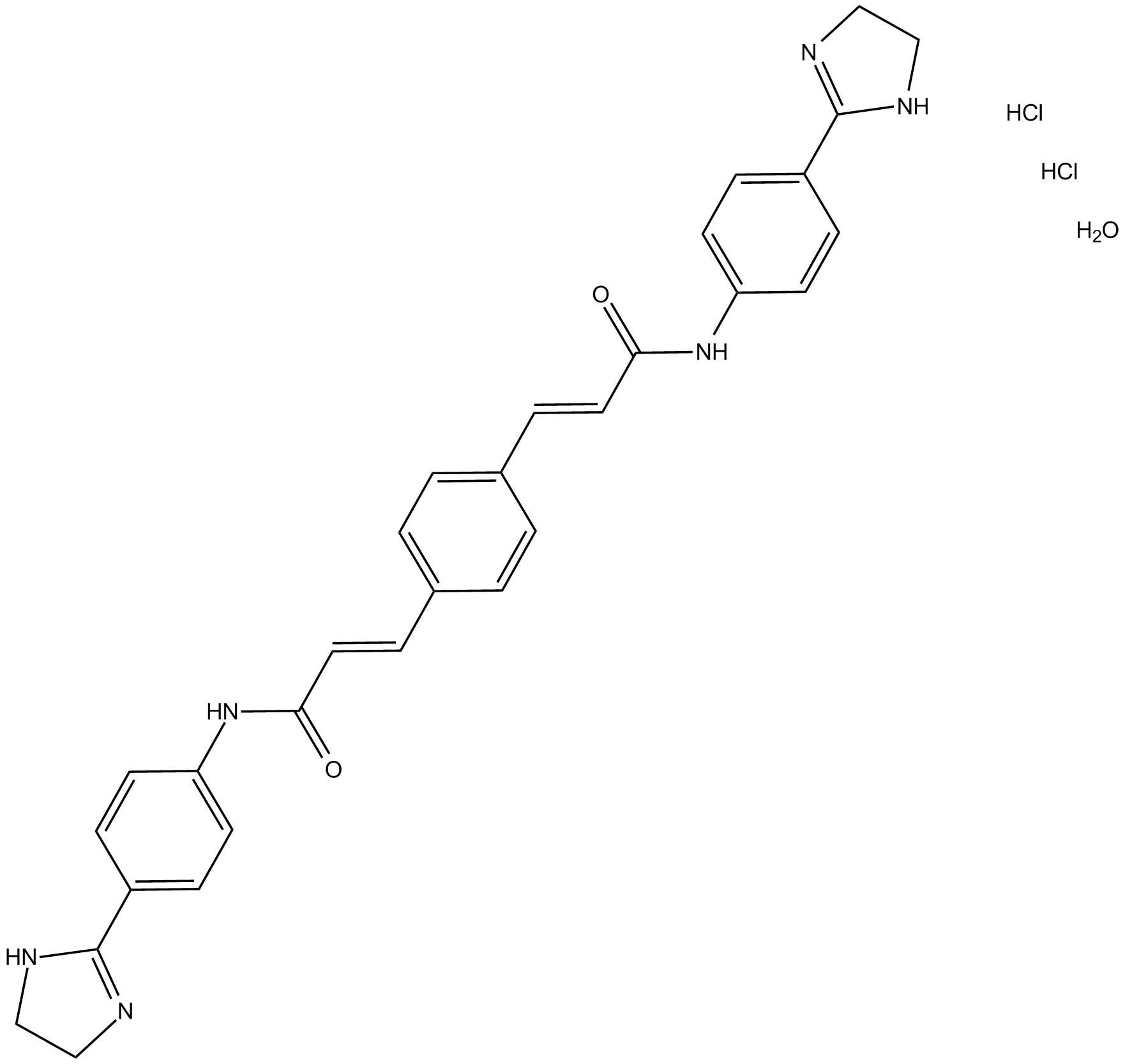
| Canonical SMILES | O=C(/C=C/C1=CC=C(C=C1)/C=C/C(NC2=CC=C(C=C2)C3=NCCN3)=O)NC4=CC=C(C=C4)C5=NCCN5.Cl.Cl.O |
| Shipping Condition | Small Molecules with Blue Ice, Modified Nucleotides with Dry Ice. |
| General tips | We do not recommend long-term storage for the solution, please use it up soon. |
Quality Control & MSDS
- View current batch:
Chemical structure