GO-203 TFA
GO-203 TFA (CAS No.: 1222186-26-6) is a synthetic, cell-permeable all-D-amino-acid peptide research tool intended for biomedical research and drug discovery applications, used to selectively target MUC1-C, the cytoplasmic C-terminal subunit of human transmembrane mucin MUC1; by binding to the MUC1-C cytoplasmic tail and blocking homodimerization, it interferes with downstream functions associated with oncogenic signaling and stress adaptation. At the characterized molecular level, GO-203-mediated inhibition of dimerization is associated with attenuated activity of the PI3K–AKT–mTOR–S6K1 axis and inhibition of cap-dependent translation of TIGAR, thereby disrupting cellular redox homeostasis, increasing reactive oxygen species, and promoting loss of mitochondrial transmembrane potential in MUC1-positive tumor cells. In in vitro experiments, its activity is typically observed at low micromolar levels, consistent with the mechanism of peptide-mediated disruption of protein–protein interaction interfaces. As a life science research reagent, GO-203 TFA is suitable for dissecting MUC1-C dependency, target validation and pathway mapping, studying biological processes such as translation and metabolic regulation, oxidative stress, and apoptosis; it is commonly used in cell models of various solid tumors and hematologic malignancies, and may be evaluated in models such as mouse xenografts to assess MUC1-C-driven phenotypes and effects on tumor growth-related indicators. Its applications in drug discovery and screening include use as a chemical probe to explore MUC1-C-mediated signaling networks and their coupling with translational control and metabolic reprogramming; the specific concentration or dose used in experiments depends on the study design and objectives. This material is for laboratory research use only and is not intended for human or veterinary use.
| Storage | Store at -20°C |
| M.Wt | 2426.77 |
| Cas No. | 1222186-26-6 |
| Formula | C89H171F3N52O21S2 |
| Solubility | ≥51.5 mg/mL in DMSO; ≥50.8 mg/mL in EtOH; ≥51 mg/mL in H2O |
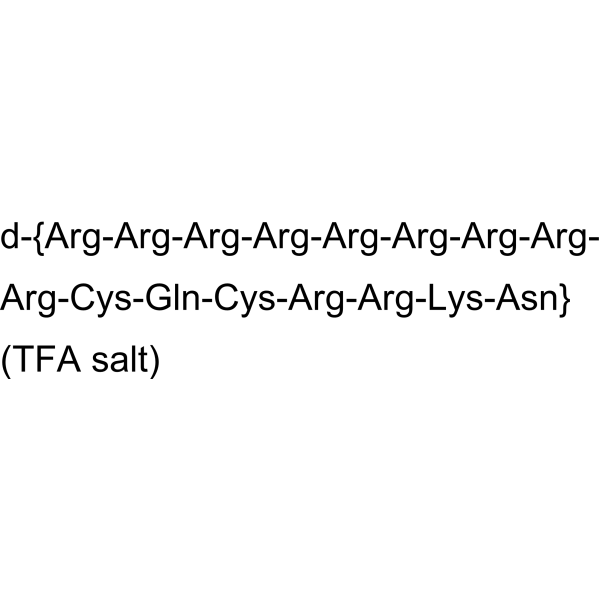
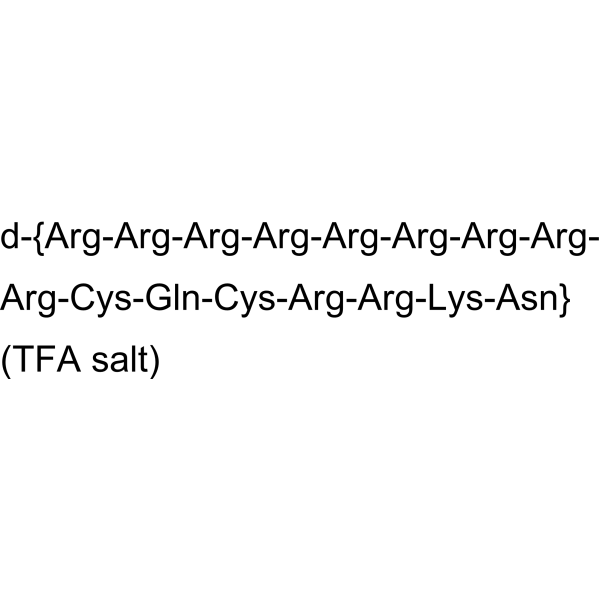
| Canonical SMILES | d-{Arg-Arg-Arg-Arg-Arg-Arg-Arg-Arg-Arg-Cys-Gln-Cys-Arg-Arg-Lys-Asn} (TFA salt) |
| Shipping Condition | Small Molecules with Blue Ice, Modified Nucleotides with Dry Ice. |
| General tips | We do not recommend long-term storage for the solution, please use it up soon. |
Quality Control & MSDS
- View current batch:
Chemical structure